Advertisements
Advertisements
Question
Match the following
| 1. | Petal | Opuntia |
| 2. | Fern | Chrysanthemum |
| 3. | Phylloclade | Attracts insect |
| 4. | Hooks | Spore |
| 5. | Sucker | Bignonia |
Advertisements
Solution
| 1. | Petal | Attracts insect |
| 2. | Fern | Spore |
| 3. | Phylloclade | Opuntia |
| 4. | Hooks | Bignonia |
| 5. | Sucker | Bignonia |
APPEARS IN
RELATED QUESTIONS
Explain the terms 'self pollination'
Name the part of a seed which grows into shoot.
What is meant by ‘unisexual flowers’?
One of the following occurs in the reproductive system of flowering plants as well as that of humans. This is :
(a) vas deferens
(b) anther
(c) ovary
(d) style
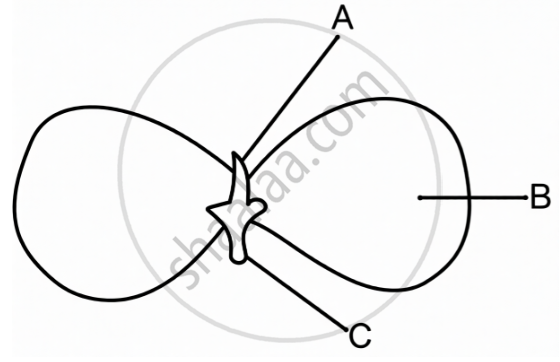
In the figure given alongside, the parts marked A, B and C are sequentially:
The part of a seed which grows and develops into root on germination is :
(a) cotyledon
(b) plumule
(c) follicle
(d) radicle
Put a tick mark (✓) against the correct alternative in the following statement
Pollen is produced in the:
Fill in the blanks and rewrite the completed statements:
Lymph flows in _______________ direction.
Write the functions of sepals
The seed that contains the future plant is called the ______
