Advertisements
Advertisements
Question
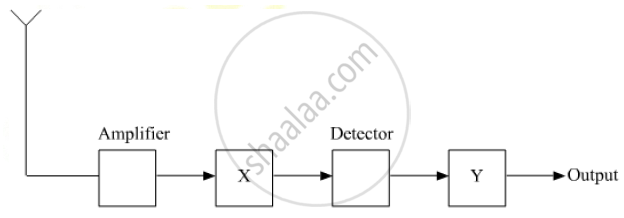
In the given block diagram of a receiver, identify the boxes labeled as X and Y and write their functions.
Advertisements
Solution
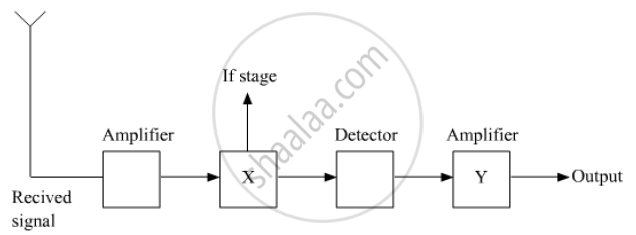
X → If stage → Intermediate frequency stage to change the carrier frequency to lower frequency.
Y → Amplifier → It amplifies the signal i.e. it increase the amplitude of the detected signal to compensate the attenuation of the signal. The detected signal may not be strong enough to use.
RELATED QUESTIONS
State three important factors showing the need for translating a low frequency signal into a high frequency wave before transmission
Draw a sketch of a sinusoidal carrier wave along with a modulating signal and show how these are superimposed to obtain the resultant amplitude modulated wave
Due to economic reasons, only the upper sideband of an AM wave is transmitted, but at the receiving station, there is a facility for generating the carrier. Show that if a device is available which can multiply two signals, then it is possible to recover the modulating signal at the receiver station.
State any two types of modulation
Given modulation index physical significance .For an amplitude modulated wave, the maximum amplitude is found to be 10 V while the minimum amplitude is 2 V. Determine the modulation index μ ?
A 100 m long antenna is mounted on a 500 m tall building. The complex can become a transmission tower for waves with λ.
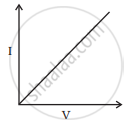
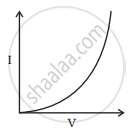
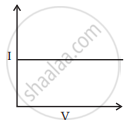
I-V characteristics of four devices are shown in Figures.
 |
 |
 |
|
| (i) | (ii) | (iii) | (iv) |
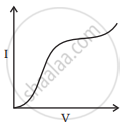
Identify devices that can be used for modulation.
A male voice after modulation-transmission sounds like that of a female to the receiver. The problem is due to ______.
An audio signal of 15kHz frequency cannot be transmitted over long distances without modulation because ______.
- the size of the required antenna would be at least 5 km which is not convenient.
- the audio signal can not be transmitted through sky waves.
- the size of the required antenna would be at least 20 km, which is not convenient.
- effective power transmitted would be very low, if the size of the antenna is less than 5 km.
A TV transmission tower antenna is at a height of 20 m. How much service area can it cover if the receiving antenna is (i) at ground level, (ii) at a height of 25 m? Calculate the percentage increase in area covered in case (ii) relative to case (i).
