Advertisements
Advertisements
Question
Explain the need for modulation related to the size of antenna (aerial).
Advertisements
Solution
1) For transmitting a signal, we need an antenna or an aerial. This antenna should have length comparable to the quarter wavelength of the signal (λ/4) so that the antenna properly senses the time variation of signal
2)For an electromagnetic wave of frequency 20 kHz, wavelength λ is 15 km. Thus, vertical antenna of this size required at audio frequencies (< 20 KHZ) is impracticable. Hence, direct transmission of such baseband signals is not practical.
APPEARS IN
RELATED QUESTIONS
Define modulation and transducer
How are side bands produced?
A carrier wave of peak voltage 12 V is used to transmit a message signal. What should be the peak voltage of the modulating signal in order to have a modulation index of 75%?
Due to economic reasons, only the upper sideband of an AM wave is transmitted, but at the receiving station, there is a facility for generating the carrier. Show that if a device is available which can multiply two signals, then it is possible to recover the modulating signal at the receiver station.
Why is Modulation index kept low?
What is the role of a bandpass filter?
In a communication system, what is meant by modulation?
State any two types of modulation
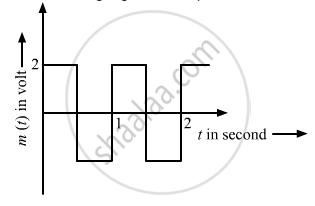
The carrier wave is represented by
Define the term modulation. Draw a block diagram of a simple modulator for obtaining AM signal ?
Given modulation index physical significance .For an amplitude modulated wave, the maximum amplitude is found to be 10 V while the minimum amplitude is 2 V. Determine the modulation index μ ?
Broadcasting antennas are generally ______.
A 100 m long antenna is mounted on a 500 m tall building. The complex can become a transmission tower for waves with λ.
A speech signal of 3 kHz is used to modulate a carrier signal of frequency 1 MHz, using amplitude modulation. The frequencies of the sidebands will be ______.
I-V characteristics of four devices are shown in Figures.
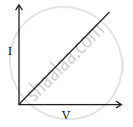 |
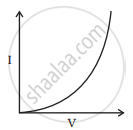 |
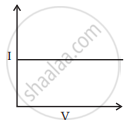 |
|
| (i) | (ii) | (iii) | (iv) |
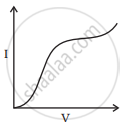
Identify devices that can be used for modulation.
A male voice after modulation-transmission sounds like that of a female to the receiver. The problem is due to ______.
An audio signal of 15kHz frequency cannot be transmitted over long distances without modulation because ______.
- the size of the required antenna would be at least 5 km which is not convenient.
- the audio signal can not be transmitted through sky waves.
- the size of the required antenna would be at least 20 km, which is not convenient.
- effective power transmitted would be very low, if the size of the antenna is less than 5 km.
A TV transmission tower antenna is at a height of 20 m. How much service area can it cover if the receiving antenna is (i) at ground level, (ii) at a height of 25 m? Calculate the percentage increase in area covered in case (ii) relative to case (i).
A 25 m long antenna is mounted on an antenna tower. The height of the antenna tower is 75 m. The wavelength (in meter) of the signal transmitted by this antenna would be ______.
A carrier wave Vc(t) = 160 sin(2π × 106t) volts is made to vary between Vmax = 200 V and Vmin = 120 V by a message signal Vm(t) = Am sin(2π × 103t) volts. The peak voltage Am of the modulating signal is ______.
A transmitting antenna has a height of 320 m and that of receiving antenna is 2000 m. The maximum distance between them for satisfactory communication in line of sight mode is 'd'. The value of 'd' is ______ km.
