Advertisements
Advertisements
Questions
How do you convert the following:
Ethanol to propanenitrile
How the following conversion can be carried out?
Ethanol to propanenitrile
Advertisements
Solution 1
\[\ce{\underset{Ethanol}{CH3 - CH2 - OH} ->[red P/Br2] \underset{Bromoethane}{CH3 - CH2 - Br} ->[KCN, aq.ethanol]\underset{Propanenitrile}{CH3 - CH2 - CN}}\]
Solution 2
\[\ce{\underset{Ethanol}{CH3CH2OH} ->[P/I2, \Delta] \underset{Iodoethane}{CH3CH2I} ->[KCN/EtOH-H2O][nucleophilic substitution] \underset{Propanenitrile}{CH3CH2CN}}\]
Notes
Students can refer to the provided solutions based on their preferred marks.
APPEARS IN
RELATED QUESTIONS
Write the major products(s) in the following:

Write the structure of the major product in each of the following reaction :

Write the structures of A, B and C in the following:

Which compound in the following pair will react faster in SN2 reaction with OH−?
CH3Br or CH3I
The treatment of alkyl chlorides with aqueous KOH leads to the formation of alcohols but in the presence of alcoholic KOH, alkenes are major products. Explain.
SN1 reactions are accompanied by racemization in optically active alkyl halides.
Which of the following is optically inactive?
Halogenation of alkanes is ____________.
The order of reactivity of the given haloalkanes towards nucleophile is:
Which of the following is a chiral compound?
SN1 reaction of alkyl halides lead to ___________.
The correct order of increasing the reactivity of C–X bond towards nucleophile in following compounds.

(I)

(II)
(CH3)3CCl
(III)
(CH3)2CHCl
(IV)
Which of the following is the definition of chirality?
When CH3CH2CHCl2 is treated NaNH2 product formed is:-
In which reaction mechanism carbocation is formed?
Assertion (A) : Nucleophilic substitution of iodoethane is easier than chloroethane.
Reason (R) : Bond enthalpy of C-I bond is less than that of C-Cl bond.
Arrange the following compounds in increasing order of reactivity towards SN2 reaction.
2-Bromopentane, 1-Bromopentane, 2-Bromo-2-methylbutane
Acetic anhydride from acetic acid
Which alkyl halide from the following pair would you expect to react more rapidly by an SN2 mechanism? Explain your answer.
\[\begin{array}{cc}\ce{CH3CHCH2CH2Br}\\|\phantom{.........}\\\ce{CH3}\phantom{......}\end{array}\] or \[\begin{array}{cc}\ce{CH3CH2CHCH2Br}\\\phantom{}|\\\phantom{...}\ce{CH3}\end{array}\]
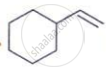 HCI, Major product ______.
