Advertisements
Advertisements
प्रश्न
How do you convert the following:
Ethanol to propanenitrile
How the following conversion can be carried out?
Ethanol to propanenitrile
Advertisements
उत्तर १
\[\ce{\underset{Ethanol}{CH3 - CH2 - OH} ->[red P/Br2] \underset{Bromoethane}{CH3 - CH2 - Br} ->[KCN, aq{.} ethanol]\underset{Propanenitrile}{CH3 - CH2 - CN}}\]
उत्तर २
\[\ce{\underset{Ethanol}{CH3CH2OH} ->[P/I2, \Delta] \underset{Iodoethane}{CH3CH2I} ->[KCN/EtOH-H2O][nucleophilic substitution] \underset{Propanenitrile}{CH3CH2CN}}\]
APPEARS IN
संबंधित प्रश्न
Discuss the mechanism of alkaline hydrolysis of bromomethane.
Write the major products(s) in the following:

Write the structure of the major product in each of the following reaction :

Write the structure of the major organic product in the following reaction:
\[\ce{CH3CH2Br + KCN ->[aq{.} ethanol]}\]
What happens when chlorobenzene is subjected to hydrolysis?
SN1 reactions are accompanied by racemization in optically active alkyl halides.
Given reasons: SN1 reactions are accompanied by racemization in optically active alkyl halides.
The order of reactivity of the given haloalkanes towards nucleophile is:
Which of the following is an optically active compound?
Which of the following compounds is optically active?
Which of the following is a chiral compound?
The increasing order of nucleophilicity would be:
The increasing order of reactivity towards SN1 mechanism is:
(I) \[\begin{array}{cc}
\ce{CH3-CH-CH2-CH3}\\
|\phantom{........}\\
\ce{CH3}\phantom{.....}
\end{array}\]
(II) CH3CH2CH2Cl
(III) P–CH3O–C6H4–CH2Cl
Ethylene chloride and ethylidene chloride are isomers. Identify the correct statements.
(i) Both the compounds form same product on treatment with alcoholic KOH.
(ii) Both the compounds form same product on treatment with aq.NaOH.
(iii) Both the compounds form same product on reduction.
(iv) Both the compounds are optically active.
Write the structures and names of the compounds formed when compound ‘A’ with molecular formula, \[\ce{C7H8}\] is treated with \[\ce{Cl2}\] in the presence of \[\ce{FeCl3}\].
The decreasing order of reactivity of the following compounds towards nucleophilic substitution (SN2) is ______.

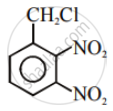

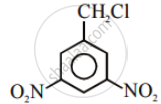
Racemisation occurs in ______.
Assertion (A) : Nucleophilic substitution of iodoethane is easier than chloroethane.
Reason (R) : Bond enthalpy of C-I bond is less than that of C-Cl bond.
Retention of configuration is observed in ______.
Complete the reaction with the main product formed:

