Advertisements
Advertisements
प्रश्न
Give reasons for the following:
(CH3)3C–O–CH3 on reaction with HI gives (CH3)3C–I and CH3–OH as the main products and not (CH3)3C–OH and CH3–I.
Advertisements
उत्तर १
Usually, iodide, being a big nucleophile, attacks on the group with low steric hindrance and the reaction proceeds by SN2 mechanism.
However, in this case, methanol, on leaving generates a tertiary carbocation, which is more stable. Hence, this reaction proceeds by SN1 mechanism and therefore, we get (CH3)3C-I and CH3-OH as the major products.

उत्तर २
CH3)3-C–O–CH3 is an ether with two different alkyl groups, of which (CH3)3-C-, a tertiary alkyl group, on reaction with hydrogen halide (HI) forms a tertiary halide. This occurs as the reaction is an SN1 reaction. The reaction involves the formation of a stable carbocation. If the ether has a primary alkyl group, then the reaction follows the SN2 mechanism.
APPEARS IN
संबंधित प्रश्न
Which would undergo SN2 reaction faster in the following pair and why ?

Write the isomers of the compound having the formula C4H9Br.
Out of C6H5CH2Cl and C6H5CHClC6H5, which is more easily hydrolysed by aqueous KOH.
In the reaction, \[\ce{R - X + NaOR' -> ROR’ + X}\] ( – ve ion). The main product formed is:
Which of the following is an example of SN2 reaction?
Complete the following analogy:
Same molecular formula but different structures: A : : Non superimposable mirror images: B
Which one is the correct order of nucleophilic strength (pKa) of following nucleophiles?
Convert bromoethane to propanamine.
Explain why Grignard reagents should be prepared under anhydrous conditions.
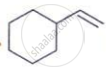 HCI, Major product ______.
