Advertisements
Advertisements
Question
How is the following conversion carried out?
\[\ce{Benzyl chloride -> Benzyl alcohol}\]
Advertisements
Solution 1
If benzyl chloride is treated with NaOH (followed by acidification), then benzyl alcohol is produced.

Solution 2

APPEARS IN
RELATED QUESTIONS
Write the main product(s) in each of the following reactions:

Name the reagents used in the following reactions:

Show how is the following alcohol prepared by the reaction of a suitable Grignard reagent on methanal?
\[\begin{array}{cc}
\ce{CH3 - CH - CH2OH}\\
|\phantom{........}\\
\ce{CH3}\phantom{....}\\
\end{array}\]
Predict the major product of acid catalysed dehydration of 1-methylcyclohexanol.
Show how will you synthesize 1-phenylethanol from a suitable alkene.
Name the reagent used in the following reaction:
Butan-2-one to butan-2-ol.

Show how you would synthesise the following alcohol from an appropriate alkene?

Show how you would synthesise the following alcohol from an appropriate alkene?
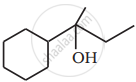
Name the reagents used in the following reactions:

Aldehydes react with Grignard reagent to produce ____________.
Benzaldehyde differs from acetaldehyde in that:
Commercially carboxylic acids are reduced to alcohols by converting them to the ______.
Why is the reactivity of all the three classes of alcohols with conc. \[\ce{HCl}\] and \[\ce{ZnCl2}\] (Lucas reagent) different?
Explain a process in which a biocatalyst is used in industrial preparation of a compound known to you.
A compound does not react with 2, 4 dinitrophenylhydrazine, the compound is:
An aldehyde isomeric with allyl alcohol gives phenyl hydrazone. Pick out a ketone that too gives a phenyl hydrazone containing the same percentage of nitrogen.
How are the following conversion carried out?
\[\ce{Methyl magnesium bromide -> 2-Methylpropan-2-ol}\]
