Advertisements
Advertisements
Question
Given below is an interesting combination of words. Explain why they have been used together.
funerary treasures
Advertisements
Solution
funerary treasures- reference is to the fact that the king was buried with numerous things which were no less than treasures as most of the items were made of pure gold.
APPEARS IN
RELATED QUESTIONS
Explain the importance of rythm in the poem.
Name Kaspar’s grandchildren? Why did the boy come home?
What is the activity referred to later in the poem, that sharpens their brains?
It was roses, roses, all the way,
With myrtle mixed in my path like mad;
The house-roofs seemed to heave and sway,
The church-spires flamed, such flags they had,
A year ago on this very day.
Read the above lines and answer the question that follow.
When was the patriot welcomed?
Explain ‘may his tribe increase.’
Discuss trans-culturation as represented in Seattle’s speech.
How does the seemingly small incident described in the story reveal a significant truth about life?
What is the main message of the short story “A Horse and Two Goats” by R.K. Narayan?
You have recently moved to a new neighborhood in your city. Describe the new neighbourhood, comparing it to the one you have just left.
The ailing company was taken________by the government.
Read the following passage carefully and answer the questions that follow:
Lying in bed, Swami realized with a shudder that it was Monday morning. It looked as though only a moment ago, it had been the last period on Friday; already, Monday was here. He hoped that an earthquake would reduce the school building to dust but that my good building, Albert Mission School, had withstood similar prayers for over a hundred years now.
At nine o'clock, Swaminathan wailed, “I have a headache.”
His mother said, “Why don’t you go to school in a bullock cart?”
“So that I may be completely dead at the other end? Have you any idea what it means to be jolted in a cart?”
“Have you any important lessons today?”
“Important! Bah! That geography teacher has been teaching the same lesson for over a year now. And we have arithmetic, which means for a whole period we are going to be beaten by the teacher............ Important lessons!”
And Mother generously suggested that Swami might stay at home.
At 9:30, when he ought to have been lining up in the school prayer hall, Swami was lying on the bench in Mother’s room.
Father asked him, “Have you no school today?”
“Headache,” Swami replied,
“Nonsense! Dress up and go.”
“Headache.”
“Loaf about less on Sundays, and you will be without a headache on Monday.”
Swami knew how stubborn his father could be and changed his tactics.
“I can’t go so late to class.”
“I agree, but you’ll have to; it is your own fault. You should have asked me before deciding to stay away.”
“What will the teacher think if I go so late?”
“Tell him you had a headache, and so are late.”
“He will beat me if I say so.”
“Will he? Let us see. What is his name?”
“Mr. Samuel.”
“Does he beat the boys?”
“He is very violent, especially with boys who come late. Some days ago, a boy was made to stay on his knees for a whole period in a corner of the class because he came late, and after getting six cuts from the cane and having his ears twisted, I wouldn’t like to go late to Mr Samuel’s class.”
“If he is so violent, why not tell your headmaster about it?”
“They say that even the headmaster is afraid of him. He is such a violent man.”
And then Swami gave a lurid account of Samuel’s violence; how when he started caning, he would not stop till he saw blood on the boy’s hand, which he made the boy press to his forehead like a Vermillion marking. Swami hoped his father would be made to see that he couldn’t go to his class late. But his father’s behaviour took an unexpected turn. He became excited.
“What do these people mean by beating our children? They must be driven out of service. I will see…..”
The result was that he proposed to send Swami late to his class as a kind of challenge. He was also going to send a letter with Swami to the headmaster. No amount of protest from Swami was of any avail: Swami had to go to school.
By the time he was ready, his father had composed a long letter to the headmaster, put it in an envelope, and sealed it.
“What have you written, father?” Swaminathan asked apprehensively.
“Nothing for you. Give it to your headmaster and go to your class.”
Swami’s father did not know the truth—that, actually, Mr. Samuel was a very kind gentleman.
(a) Give the meaning of each of the following words as used in the passage. (3)
One-word answers or short phrases will be accepted.
- jolted
- stubborn
- avail
(b) Answer the following questions briefly in your own words:
- What did Swami wish for on a Monday morning? Why was his wish unlikely to be answered? (2)
- Which sentence tells us that Swami’s father was completely unsympathetic to his son’s headache? (2)
- In what way was Swami’s mother’s response different from his father’s? (2)
- Why did Swami give a colourful account of Mr. Samuel to his father? (2)
- In what way did Father’s behaviour take an unexpected turn? (2)
- What was Swami finally ordered to do by his father? (2)
(c)
(i) In not more than 60 words, describe how Swami tries to prove that Mr. Samuel is a violent man. (8)
(ii) Give a title to your summary in 3
(c). Give a reason to justify your choice. (2)
Answer the following questions with reference to Ray Douglas Bradbury’s short story, ‘All Summer in a Day’:
Why was there so much excitement in the schoolroom that morning? What sets Margot apart from the other children?
Name some leaves and flowers that are used as adornments in our country.
Distinguish between the following pairs of sentences.
He was visually impaired.
We add ‘un-’ to make opposites. For example, true — untrue. Add ‘un’– to the word below to make its opposite. Then look up the meaning of the word you have formed in the dictionary.
trained: ____________
Given below are some words that are spelt differently in British and American English. Fill in the blanks accordingly.
| British | American |
| 1. colour | ______ |
| 2. ______ | labor |
| 3. ______ | traveler |
| 4. counsellor | ______ |
| 5. centre | ______ |
| 6. ______ | theater |
| 7. ______ | organize |
| 8. realise | ______ |
| 9. ______ | defense |
| 10. offence | ______ |
Look at these sentences.
|
|
| ‘Would’ tells us what the author used to do, or what used to happen. | ‘Could’ tells us what the author was usually able to do, or grandfather is now not able to do. |
Choose would and could to replace the italicised words in the following sentences.
Choose would and could to replace the italicised words in the following sentences.
Grandfather says, in the old days,
1. elephants were able to fly in the sky, like clouds. They were also able to change their shapes. They used to fly behind clouds and frighten them. People used to look up at the sky in wonder.
2. because there was no electricity, he used to get up with the sun, and he used to go to bed with the sun, like the birds.
3. like the owl, he was able to see quite well in the dark. He was able to tell who was coming by listening to their footsteps.
Imagine you are journeying through a desert. Write a couple of paragraphs describing what you see and hear.
Write your views/opinions in brief on the following topic.
Steps to be taken to eradicate inequality.
Discuss with your partner and describe the atmosphere in the woods when Peter Crouch didn’t knock before entering Mrs. Adis’s house.
The reason was -
- _________________________
- _________________________
- _________________________
What vocation / profession / business would you like to take up in the future? Prepare a fact file for the same using the following points.
- Name of the vocation / profession / business ____________
- Educational qualifications required ____________
- Work profile / description ____________
- Opportunities for advancement ____________
- Your personal skills / talents for the choice ____________
Let’s compose a poem. Two lines are given. Add two of your own.
There is another sky,
Ever serene and fair
Write a summary of the poem.
- Title
- Introductory paragraph (about the poem, type, nature, tone)
- Main body (central idea, the gist of the poem)
- Conclusion (opinion, views, appeal).
Complete the table. One is done for you.
| The World around you | What we should aim to be | |
| 1. | Callous | Caring for people, environment, life |
| 2. | Violent | |
| 3. | Greedy | |
| 4. | Corrupt |
Study the following format of an informal letter carefully. Using the format,

Write an informal letter to your friend who has gone to another town for a month.
Write in your own words:-
What are the latest modern methods of depositing money in your own or somebody else’s account?
Create a Personal Particular for your class with support from your teacher and collect personal and educational information.
Following are the ways to preserve ‘World Heritage Sites.’ Transfer these points into a small paragraph. Suggest a suitable title.
- Practical conservation of posterity
- Human/animal trespassing
- Unmonitored/uncontrolled/unrestricted access
- Threat of local administrative negligence
Complete the Interview with an imaginary Captain of the Ladies Cricket Team of your Town/City/State.
Interview
| Interviewer | J Prasad (J. P.) |
| Captain | Vijetha Bhide (V. B.) |
| J. P. | the presence of the Captain of our State Women’s Cricket Team, which won the final of the Inter State series in Mumbai, last week. Hello Vijetha, welcome to our show. |
| V. B. | Thank you for inviting me. |
(Now continue the interview adding about 4 to 5 Questions/Answers and conclude it with a farewell message.)
Prepare attractive advertisement using the hints given below.
Mobile Galaxy – Smartphones – accessories – SIM cards – Recharge – Free Power banks on Mobile purchase – No.1, Toll gate, Trichy
Collect information from newspapers, magazines, periodicals, and books about any two famous sports women. Prepare their profiles. Use the following format.
| Name | Details |
| Date of birth | |
| State/Team she represents | |
| Sports/ Games she is associated with | |
| Debut (first entry) | |
| Best in her career | |
| Hobbies | |
| Awards/ Medals received |
Work in groups and discuss. Then write a diary entry in about 60-80 words describing your feelings and emotions for the given situation.
Imagine, you are Pongo.
Your feelings and emotions when you came back and found the oranges gone.
Look at the picture given below and frame your own slogan.

Imagine that you have parked your vehicle (two-wheeler)/ bicycle inside the school premises. You find it missing in the evening. Write a complaint to the head of the school regarding this issue.
Fill in the template given for limerick.
There once was a ______(8 syllable)
______(8 syllable)
______(5 syllable)
______ (5 syllable)
______(8 syllable)
Draft Letter for the following.
You are Sadasivam. You recently visited your native town in Vellore. You happened to accompany your grandmother to your family temple. You were shocked to notice the poor condition and maintenance of the temple. Write a letter to the Editor of the local newspaper highlighting the poor condition of the temple. Also, give some suggestions and request the HRC to take steps to improve the situation.
Write a letter of inquiry for the following.
Venkat hails from a remote village of Kancheepuram District, Tamil Nadu who aspires to become an IAS officer. Currently, he is in class X. He notices an advertisement on free classes for the IAS aspirants by a trust in a news paper. He writes a letter to the coordinator of the trust inquiring for further details.
Create a pamphlet for the following.
Make a pamphlet on ‘Dengue Awareness’ (Focus on its causes, preventions, symptoms, and precautions).
What are the themes of the singers’ songs?
“I cannot come.” Mala said that ______
Two stories got mixed up. Sort them out and write them in the appropriate boxes.
- We thought the lion had eaten someone.
- Suddenly the kite lifted him off the ground and took him over the treetops.
- He saw a shoe in the lion's cage.
- Finally, the kite brought him back to the park.
- Our class had gone to the zoo.
- Puran was flying the brand new kite in the park.
- Some children stood and screamed, and some ran to the Director of the zoo.
- Puran was frightened and excited.
- The lion had not eaten anyone, because the shoe was one of the lion's toys.
Fill in the blanks according to the example given below
| tiny | tinier | tiniest |
| big | ______ | biggest |
| sleepy | sleepier | ______ |
| ______ | lovelier | loveliest |
| ______ | later | ______ |
| round | ______ | ______ |
| small | ______ | ______ |
| good | ______ | best |
Find one word from the story that means
- to walk fast h ___________ .
What did Hiawatha love?
Some word have similar sound, but different meaning. Choose the correct word from the option and fill in the blank.
He is our school ______.
Write these sentences in the correct order. Also, choose the right word from the box and add it before each sentence. Remember to put a comma after it, for example, Finally...
| First, Then, After, that, Finally |
- It gave him its branches to make a house.
- It asked him to sit on the stump.
- It gave him its trunk to make a boat.
- The tree gave its apples to the boy.
Look at these sentences in the story –
- Should we go to the big market?
- Should we go to the small shop?
- Should I buy a thin book?
The coloured words above are describing words. Now fill in more describing words into the passage below –
It was a______ night. A ______ girl sat up in bed listening to her mother tell a ______ story. Her ______ eyes opened wide and she gave a ______ smile. “Now go to sleep, Paro,” her mother closed the book. “______ dreams.”
Read Sheela's notice. Discuss the questions that follow.
|
Notice The Drama Committee will meet in the classroom on Monday, at two o’clock. We’ll plan a play for our Annual Day. Will each one of you please bring a play? SHEELA |
- Who was to meet?
- When were they to meet?
- Where were they to meet?
- What were they to do?
The ______of robbers escaped.
I can do the sum ________. [easy}
Describe the photographer.
Fill in the following forms with imaginary details.
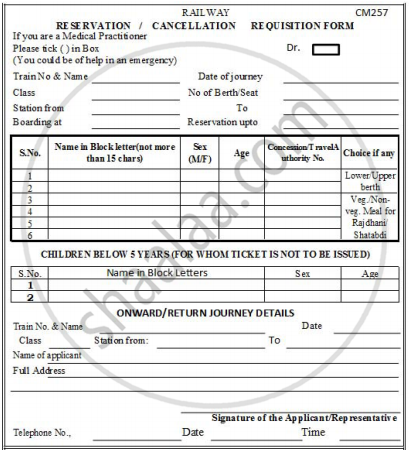
Summarizing is to briefly sum up the various points from the notes made from the below passage.
The Sherpas were nomadic people who first migrated from Tibet approximately 600 years ago, through the Nangpa La pass and settled in the Solukhumbu District, Nepal. These nomadic people then gradually moved westward along salt trade routes. During 14th century, Sherpa ancestors migrated from Kham. The group of people from the Kham region, east of Tibet, was called “Shyar Khamba”. The inhabitants of Shyar Khamba, were called Sherpa. Sherpa migrants travelled through Ü and Tsang, before crossing the Himalayas. According to Sherpa oral history, four groups migrated out of Solukhumbu at different times, giving rise to the four fundamental Sherpa clans: Minyagpa, Thimmi, Sertawa and Chawa. These four groups have since split into the more than 20 different clans that exist today.
Sherpas had little contact with the world beyond the mountains and they spoke their own language. AngDawa, a 76-year-old former mountaineer recalled “My first expedition was to Makalu [the world’s fifth highest mountain] with Sir Edmund Hillary’’. We were not allowed to go to the top. We wore leather boots that got really heavy when wet, and we only got a little salary, but we danced the Sherpa dance, and we were able to buy firewood and make campfires, and we spent a lot of the time dancing and singing and drinking. Today Sherpas get good pay and good equipment, but they don’t have good entertainment. My one regret is that I never got to the top of Everest. I got to the South Summit, but I never got a chance to go for the top.
The transformation began when the Sherpa Tenzing Norgay and the New Zealander Edmund Hillary scaled Everest in 1953. Edmund Hillary took efforts to build schools and health clinics to raise the living standards of the Sherpas. Thus life in Khumbu improved due to the efforts taken by Edmund Hillary and hence he was known as ‘Sherpa King’.
Sherpas working on the Everest generally tend to perish one by one, casualties of crevasse falls, avalanches, and altitude sickness. Some have simply disappeared on the mountain, never to be seen again. Apart from the bad seasons in 1922, 1970 and 2014 they do not die en masse. Sherpas carry the heaviest loads and pay the highest prices on the world’s tallest mountain. In some ways, Sherpas have benefited from the commercialization of the Everest more than any group, earning income from thousands of climbers and trekkers drawn to the mountain. While interest in climbing Everest grew gradually over the decades after the first ascent, it wasn’t until the 1990s that the economic motives of commercial guiding on Everest began. This leads to eclipse the amateur impetus of traditional mountaineering. Climbers looked after each other for the love of adventure and “the brotherhood of the rope” now are tending to mountain businesses. Sherpas have taken up jobs as guides to look after clients for a salary. Commercial guiding agencies promised any reasonably fit person a shot at Everest.
Write the contraction for the following phrase.
do not - ______
Read the given sentence and underline the no word.
Can no one help him?
You are the editor of your school magazine. You want to bring about awareness among the students on the topic -Noise Pollution: A threat to all life forms. Write an article in about 300 words based on the following points:
Causes of noise pollution - effects on humans - effects on other living creatures - measures to reduce noise pollution - role of authorities - conclusion.
What might success mean to the following people? Think about it and write.
A parent
What provisions should be made in public places so that everyone gets the same access to public facilities?
