Advertisements
Advertisements
Question
What provisions should be made in public places so that everyone gets the same access to public facilities?
Advertisements
Solution
- Modifying buses, aeroplanes, and train compartments to make them more accessible to people with disabilities.
- Creating essential sidewalks, price hikes, and slopes in pavement for wheelchair users.
- Providing ramps in all public areas.
- Printing the edges of train platforms to aid the visually handicapped.
APPEARS IN
RELATED QUESTIONS
Transform the following sentence as per the given instruction.
How cruel Shylock was to demand his pound of flesh!
(Begin: It was cruel………………….)
“The best things in life come free”. Write for or against the statement.
Name Kaspar’s grandchildren? Why did the boy come home?
In “Caged Bird,” what does the line “and his shadow shouts on a nightmare scream” mean?
What kind of person was Abou Ben Adhem?
Discuss trans-culturation as represented in Seattle’s speech.
What does “I think the sun is a flower” mean in Ray Bradbury’s short story “All Summer in a Day”?
(A) If you are not ready to come with me, I will not go.
(B) Unless…………………………..
What could the narrator hear as he was lying down?
Fill in each of the numbered blanks with the correct form of the word given in brackets. Do not copy the passage, but write in correct serial order the word or phrase appropriate to the blank space.
Example:
(0) From his perch behind the clock, Hugo could (0)……. (see) everything.
Re-write the following sentence according to the instructions are given. Make other changes that may be necessary, but do not change the meaning of the sentence.
Harish was so tired that he could not keep his eyes open.
(Begin: Harish was too……….)
Why do you think people undertake such adventurous expeditions in spite of the risk involved?
Here are some commonly used medical terms. Find out their meanings.
| CT scan | MRI | tomography |
| Autopsy | dialysis | ECG |
| Post mortem | angiography | biopsy |
Rewrite the following incomplete sentences carefully, so that the reader does not have to guess what is left out.
1. more and more books
2. too difficult
3. got up late, missed the bus
4. solved the mystery
Your teacher will speak the word given below. Write against two new words that rhyme with it.
bed ______ ______
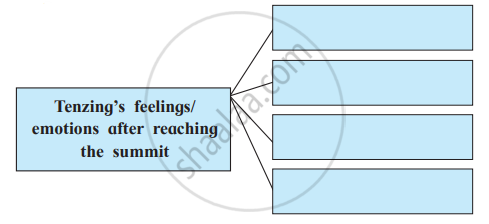
Complete the web highlighting the feelings/emotions of Tenzing after reaching the summit.
Find out more career opportunities in the field of agriculture, organic farming, sales, storage, distribution, and marketing research.
| Educational qualifications | Job opportunities | Work Profile |
| 1. | ||
| 2. | ||
| 3. | ||
| 4. |
'Agriculture is the backbone of the Indian economy'. Fill in the boxes supporting this statement. Complete the following web diagram.
Think and respond with ‘YES’ or ‘NO’.
When you are faced with a very serious problem or some grave danger, what do you experience?
| Your feelings | panic | |
| wishing you were never born | ||
| hopelessness | ||
| helplessness | ||
| no emotion | ||
| calmness and composure | ||
| willingness to tackle it | ||
| Your reactions | break down and cry | |
| run away and hide | ||
| pray to God | ||
| ask for help | ||
| build up courage | ||
| take it as a challenge |
Write about the daily routine of the 'Lord of Tartary' in 8-10 lines.
Archaic words are those that are no longer used in a language, but sometimes their usage adds a historical or old-times flavour to a piece of writing.
Examples:
- behold – look
- afeared – frightened
- forsooth – indeed
- hither – this place
Now find out some archaic words from your mother tongue or another language that you are proficient in and write down at least ten of them, and against each, their modern equivalent and meaning in English.
| Archaic Language | |||
| Archaic Word | Modern Equivalent | Meaning in English | |
| 1. | |||
| 2. | |||
| 3. | |||
| 4. | |||
| 5. | |||
| 6. | |||
| 7. | |||
| 8. | |||
| 9. | |||
| 10. | |||
Write a report of the following event in about 100-120 words.
You are the School Pupil Leader. You have been asked to write a report on the Inaugural Ceremony of English Literary Association of your school which was held recently. Write a report on the same in not more than 120 words.
Read the telephonic conversation between Malar and Selvi. Malar needs to leave a message for her father.
| Malar: | Hello, my name is Malar. Could I talk to Mr. Rao, please? I’m his colleague Mr. Vishvanath’s daughter. |
| Selvi: | I’m sorry, my father is out for his morning walk. Do you want to leave a message for him? |
| Malar: | Yes, please. My father had to leave for Madurai all of a sudden since my grandfather is ill. So he won’t be able to come to work for a few days. It would be really nice if your father could inform the office. |
| Selvi: | Don’t worry, I’ll leave the message for my father. |
| Malar: | Thanks a lot. |
| Selvi: | You’re welcome. |
|
This is the message that Selvi left for her father the previous day. Write a similar message based on her conversation with Malar. ______ (Date) 4.30 p.m. (Time) Dear Papa, I have my music class at 5.00 p.m. so I am leaving now. I’ve prepared tea and samosa and kept it in the kitchen. Please come and pick me up at 7 p.m. |
|
Message ______(Date) ______(Time) Dear Papa, _____________________________________________________________ |
Draft Letter for the following
You are Sudha. Your neighbour has a pet dog that barks continuously. Write a letter to the Editor of a weekly newspaper of your locality, highlighting the nuisance and noise pollution created thus. Also, suggest ways to solve the problem.
Complete the following picture board.
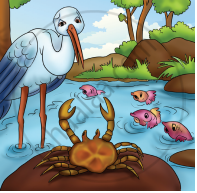 |
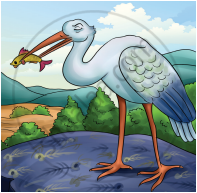 |
 |
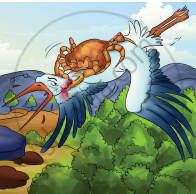 |
How did the grandmother spend the last few hours of her life?
Describe the man awaiting the arrival of his friend.
Develop the following hints into a paragraph.
Two kings - ruled neighboring kingdoms. King Arya - great warrior - looked after - subjects - very well - People loved him - looking - their safety and welfare - all his subjects - very happy - healthy life - King Vaishali on the other hand - very lazy man - spent his time - entertaining - dancing – ignoring - needs or developmental - people - His people - angry - never met them - never listened to their woes.
Powerful Sultan attacked - with his strong army - King Arya’s army - alert - ready - preparedness - enemy - more powerful - love for King even women and children - came to the war-front - fought - protected their King -a different story - King Vaishal - impending war - people started fleeing - King all by himself - not interested to protect - King - did nothing for their welfare.
King Vaishal - realized his foolishness - too late - defeated in the war and fled for his life - King Arya - defeated the Sultan - people to live in peace - King Arya - welfare of his people at heart at all times - subjects - returned his love - loyal and supportive - during testing times.
Attempt a description of the following process, in about 100 word each, either using the imperative or the passive.
Sending a letter by courier service
Despite being a half monster and half human, Caliban comes across as superior to Stephano and Trinculo. Justify the statement with supporting evidence from the Acts studied in 200-250 words.
