Advertisements
Advertisements
Question
Give the IUPAC name of the following ether:
\[\begin{array}{cc}
\ce{C2H5OCH2 - CH - CH3}\\
\phantom{.........}|\\
\phantom{.............}\ce{CH3}
\end{array}\]
Advertisements
Solution
1-Ethoxy-2-methylpropane
APPEARS IN
RELATED QUESTIONS
Name the following compound according to the IUPAC system.
\[\begin{array}{cc}
\phantom{..................}\ce{CH2OH}\\
\phantom{.........}|\\
\ce{CH3 - CH2 - CH - CH - CH - CH3}\\
\phantom{.........}|\phantom{...................}|\\
\phantom{.............}\ce{CH2Cl}\phantom{..........}\ce{CH3}\phantom{}
\end{array}\]
Write the IUPAC name of the following compound:
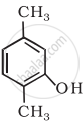
Write the IUPAC name of the following compound:
C6H5 – O – C2H5
Give the IUPAC name of the following ether:
O2N – C6H4 – OCH3(p)
Ethylidene dichloride when boiled with aqueous solution of NaOH yields _______.
(A) formaldehyde
(B) acetaldehyde
(C) acetone
(D) ethyl methyl ketone
3-Methylbutane-2-ol on heating with HI gives ______
How is phenol converted into the following?
Benzene
Write IUPAC name of the following compound (CH3)2 N − CH2CH3
C6H5OCH2CH3 is called:
1-Propanol and 2-propanol can be best distinguished by:
The product of acid catalysed hydration of 2-phenylpropene is:
Among the following sets of reactants which one produces anisole?
The correct acidic strength order of the following is:

(I)

(II)

(III)
Write steps to carry out the conversion of phenol to aspirin.
Assertion: Addition reaction of water to but-1-ene in acidic medium yields butan-1-ol.
Reason: Addition of water in acidic medium proceeds through the formation of primary carbocation.
Identify A and B in the following:

Write structural formulae for:
p-Nitrophenol
Write the IUPAC name.
\[\begin{array}{cc}
\phantom{................}\ce{CH3}\\
\phantom{.............}|\\
\ce{CH3 - CH - CH - C -CH3}\\
\phantom{.}|\phantom{......}|\phantom{......}|\\
\phantom{....}\ce{CH3\phantom{...}\ce{OH}\phantom{...}\ce{CH3}}\
\end{array}\]
