Advertisements
Advertisements
Question
Discuss briefly how a probe is used in molecular diagnostics.
Advertisements
Solution
A single-stranded DNA or RNA, tagged with a radioactive molecule (probe) is allowed to hybridise to its complementary DNA in a clone of cells followed by detection using autoradiography. The clone having the mutated gene will hence not appear on the photographic film, because the probe will not have complementarity with the mutated gene.
APPEARS IN
RELATED QUESTIONS
Explain enzyme – replacement therapy to treat adenosine deaminase deficiency. Mention two disadvantages of this procedure.
Expand the Given and mention one application of each:
PCR
Compare and contrast the advantages and disadvantages of the production of genetically modified crops.
What is gene therapy? Illustrate using the example of adenosine deaminase (ADA) deficiency.
Describe the role of primers.
How many amino acids are arranged in the two chains of Insulin?
How is the amplification of a gene sample of interest carried out using PCR?
What are DNA vaccines?
C-peptide of human insulin is ______.
A probe which is a molecule used to locale-specific sequences in a mixture of DNA or RNA Mole cubs could be ______.
ADA is an enzyme which is deficient in a genetic disorder SCID. What is the full form of ADA?
Eli Lilly's contribution for diabetic patients through r-DNA technology has been overwhelmingly accepted. Explain how?
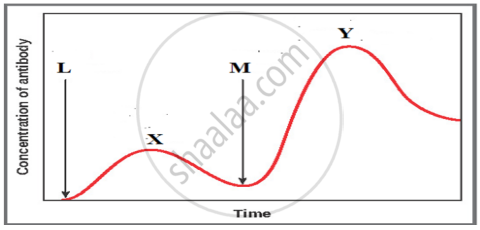
The graph given below indicates the administration of the first (L) and second dose (M) of a vaccine. The corresponding response of the body is indicated by X, and Y. Interpret the graph and explain the reason for such a response shown by the body.
In humans, somatic gene therapy was carried out to correct an immunodeficiency disease. Name this disease.
Give a reason for the following:
Streptokinase is administered to the patients having myocardial infarction.
Atherosclerosis can be treated with recombinant protein called ______
In the recombinant production of humulin using Escherichia coli, which plasmid vector and bacterial gene are fused with the human insulin A and B chain sequences?
The first edible vaccine was developed in tobacco plants to express which specific antigen?
Which molecular diagnostic tool relies on the hybridisation of labelled single-stranded DNA to detect specific complementary sequences or mutant alleles?
