Advertisements
Advertisements
Question
Collect photographs of typical rural houses and clothing of people from different regions of India. Examine whether they reflect any relationship with the climatic condition and relief of the area.
Advertisements
Solution
Housing:
Desert areas-
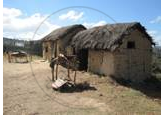
The climate in the deserts is extreme. The summers are very hot and dry. Sandstorms are common in this season. Water becomes scarce and in many places, there is a severe drought. Most places receive little or no rainfall.
North-eastern areas-
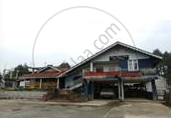
Northeast is not a single unit. It consists of 7 states with people belonging to diverse cultures, ethnic groups, and religions. A person living in Assam will have a very different lifestyle from an individual living in Manipur. Life in the cities and small towns is different from life in far-flung villages. However, there’s one characteristic in most Northeastern states that is common and that is simplicity.
South India:
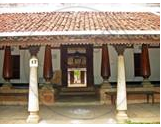
Different states of South India have different cultures. Different states have their own festivals, dance forms, and food preferences. The climate, however, is similar in these states due to their close geographical proximity.
Clothing:
- You might find in Rajasthan, people wearing loose cotton clothes as day experiences real hot weather and night experiences real chilly weather, and people at nightwear warm clothes.
- In Jammu and Kashmir, people experience cold all time and so their dresses are designed likewise to avoid chillness.
- Chennai and places like Bangalore experience moderate climate so they wear cotton or synthetic clothes. (type of clothing style changes from season to season in these areas)
RELATED QUESTIONS
Give reason as to why.
The delta region of the eastern coast is frequently struck by cyclones.
There is a peculiar uniformity in the climate of India due to its unique ______.
The Predominant soil in the coastal plains and north Indian Plains is ______.
Shrub vegetation is found in ______.
Match the Column I with Column II.
| Column I | Column II | |
| A. | Western Disturbance | Driest place on Earth |
| B. | Norwesters | North East monson |
| C. | Burst of monsoon | Bihar- Assam |
| D. | Cyclonic Depression | Marine Biosphere Reserve |
| E. | Gulf of mannar | South west monsoon |
| F. | Atacama desert | Punjab - Haryana |
The pressure belts and the wind systems follow the apparent movements of the ______.
Where is monsoon experienced mainly?
Write a short note.
Comparison of the climate of India and Brazil.
Why is it that the houses in the Tarai region and in Goa and Mangalore have sloping roofs?
Why houses in Assam are built on stilts?
