Advertisements
Advertisements
Questions
What is pollination?
What is meant by pollination?
Advertisements
Solution
Pollination is the transfer of pollen grains from the male part of a flower, the anther, to the female part, the stigma. This process is crucial for fertilization, leading to the development of seeds and fruits and ensuring the plant species survival.
APPEARS IN
RELATED QUESTIONS
How does fertilisation occur in flowers? Name the parts of the flower that develop into (i) seed, and (ii) fruit after fertilisation.
In the following diagram showing the structure of embryo of a dicot seed, what are the parts marked I, II and III sequentially?

State significance of pollination.
Mention the changes a flower undergoes after fertilisation.
Sketch the reproductive parts of a flower.
Name the swollen lower part of the carpel.
What is made in anther of a flower?
What is made in ovary of a flower?
How do the insects help in cross-pollination?
Explain the term 'fertilisation'.
Give some examples of different modes of fertilisation in nature?
Name the part of a seed which grows into root.
In tobacco plant, the male gametes have 24 chromosomes.
What is the number of chromosomes in the zygote?
What changes take place in the flower after fertilisation which lead to the formation of seeds and fruit?
Which of the following statements are true for sexual reproduction in flowering plants?
(i) it requires two types of gametes
(ii) fertilisation is a compulsory event
(iii) it always results in the formation of zygote
(iv) offsprings formed are clones
(a) (i) and (iv)
(b) (i), (ii) and (iv)
(c) (i), (ii) and (iii)
(d) (ii), (iii) and (iv)
The flask-shaped organ A at the centre of a flower is surrounded by a number of little stalks B having swollen tops which lie just inside the ring of petals.
(a) Name A. What are the various parts of A?
(b) Which part of A contains gametes?
(c) Name B. What is the swollen top of B known as?
(d) What does the swollen top of b contain?
(e) Out of A and B, which one is (i) male part, and (ii) female part of the flower?
In what ways is fertilisation in a plant different from fertilisation in a human?
Fill in the blank by selecting suitable word:
A flower that bears both the male and the female parts is known as __________ flower.
Multiple choice question. Tick (✓) the correct choice:
Unisexual flowers are found in
- mulberry
- mustard
- pea
- sunflower
Fill in the blanks:
A carpel consists of ________ , ________ and ________.
Mention the function of Flower.
Mention the function of Stigma.
What part is played by stamens and carpels in reproduction?
You have to perform the experiment, "To identify the different parts of an embryo of a gram seed." Describe the procedure that you would follow.
In the figure, the parts marked A, B and C are sequentially:

(A) Plumule, Radicle and Cotyledon
(B) Radicle, Plumule and Cotyledon
(C) Plumule, Cotyledon and Radicle
(D) Radicle, Cotyledon and Plumule
Write the names of male and female reproductive parts of a flower.
What is phototropism?
Sketch the labelled diagram.
Flower with its sexual reproductive organs.
Draw a diagram of the longitudinal section of a flower and label the following parts.
Differentiate between self-pollination and cross-pollination.
What is cleistogamy? Write one advantage and one disadvantage of it, to the plant.
Bisexual : Hibiscus : : Unisexual : ___________
Define.
Inflorescence
Observe the figure below. Write functions of the labelled parts.

Identify the parts A, B, C, and D?
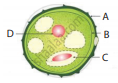
In which part of the flower germination of pollen grains takes place?
Generally, in a pollen tube, which of the following moves to the tip of the tube?
Which type of development is observed in male gametophytes of plants?
In a flowering plant, archesporium gives rise to ______.
Pineapple fruit develops from ______.
What are the agents for pollination?
The figure below shows the concept of double fertilization. Complete the flow chart showing the progress at each step:

Triple fusion involves ______.
Sexual maturation of reproductive tissues and organs are necessary link for reproduction. Elucidate.
In flowering plants, the pollen grains are transferred to stigma by pollination but the female germ cells are present in the ovary.
Explain with the help of a labelled diagram (only concerned parts), how the male germ cell reaches the ovary.
Explain the post fertilization changes that occur in the ovary of a flower.
