Advertisements
Advertisements
Question
Answer the following in one or two sentences.
How do the half-lives of the first order and zero-order reactions change with the initial concentration of reactants?
Advertisements
Solution
i. The half-life of the first-order reaction is independent of the initial concentration of the reactant.
ii. The half-life of zero-order reactions is proportional to the initial concentration of the reactant.
APPEARS IN
RELATED QUESTIONS
Answer the following in brief.
Obtain the relationship between the rate constant and half-life of a first-order reaction.
Answer the following in brief.
What is a zeroth-order reaction?
Solve
A first-order reaction takes 40 minutes for 30% decomposition. Calculate its half-life.
Rate constant of a reaction is 3.6 × 10⁻³ s–1. The order of reaction is ______.
What is half life of first order reaction if time required to decrease concentration of reactants from 0.8 M to 0.2 M is 12 hours?
Explain with the help of a potential energy diagram that the catalyst increases the rate of the reaction.
Write units of rate constants for:
- First-order reaction
- Zero-order reaction
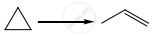
This reaction follows first-order kinetics. The rate constant at particular temperature is 2.303 × 10⁻² hour−1. The initial concentration of cyclopropane is 0.25 M. What will be the concentration of cyclopropane after 1806 minutes? (log 2 = 0.3010)
Describe the graphical representation of first order reaction.
Give two examples for zero order reaction.
A zero order reaction is 20% complete in 20 minutes. Calculate the value of the rate constant. In what time will the reaction be 80% complete?
The integrated rate law is a direct relationship between ____________ and ____________.
What is the value of rate constant of first order reaction, if it takes 15 minutes for consumption of 20% of reactants?
A reaction that is of the first order with respect to reactant A has a rate constant 6 min−1. If we start with [A]0 = 0.5 mol dm−3, when would [A] reach the value 0.05 mol dm−3?
Which among the following reaction is an example of a zero order reaction?
The rate constant of a first order reaction is 3 × 10⁻⁶ per s. If the initial concentration is 0.10 mol dm−3, the initial rate of reaction is ____________.
In a first order reaction, the concentration of the reactant is reduced to 25% in one hour. The half-life period of the reaction is ____________.
If time required to decrease concentration of reactant from 0.8 M to 0.2 M is 12 hours, the half life of this first order reaction is ____________.
The time taken for 80% of a first order reaction to be complete is approximately ____________.
A certain zero order reaction has rate constant 0.025 M s-1. What will be the concentration of reactant 'A' after 15 seconds, if initial concentration is 0.50 M?
A first order reaction, A → B takes 100 minutes for it's 90% completion. What is the rate constant of reaction?
Which is the unit of rate constant for the first-order reaction if time is expressed in seconds?
The expression to calculate time required for completion of zero order reaction is ______.
If the rate constant for a first-order reaction is k, the time (t) required for the completion of 99% of the reaction is given by:
Which of the following reactions is not of the first order?
The half-life of first order reaction is 1.7 hour. What is its rate constant?
The plot that represents the zero order reaction is:
If the half-life of a first-order reaction is 10 minutes, find the time required to decrease the concentration of the reactant from 0.08 M to 0.02 M.
