Advertisements
Advertisements
Question
What are pseudo-first-order reactions?
Advertisements
Solution
Certain reactions that are expected to be of higher order follow the first-order kinetics. Such reactions are said to be pseudo-first-order reactions.
RELATED QUESTIONS
Answer the following in one or two sentences.
How do the half-lives of the first order and zero-order reactions change with the initial concentration of reactants?
Answer the following in brief.
Obtain the relationship between the rate constant and half-life of a first-order reaction.
Answer the following in brief.
How will you represent the zeroth-order reaction graphically?
How will you represent first order reactions graphically.
Solve
A first-order reaction takes 40 minutes for 30% decomposition. Calculate its half-life.
Time required for 100% completion of a zero order reaction is _______.
Explain pseudo first order reaction with a suitable example.
Derive an expression for the relation between half-life and rate constant for first-order reaction.
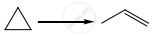
This reaction follows first-order kinetics. The rate constant at particular temperature is 2.303 × 10⁻² hour−1. The initial concentration of cyclopropane is 0.25 M. What will be the concentration of cyclopropane after 1806 minutes? (log 2 = 0.3010)
For a first-order reaction, the rate constant is 6.909 min−1 the time taken for 75% conversion in minutes is
From the following data, show that the decomposition of hydrogen peroxide is a reaction of the first order:
| t (min) | 0 | 10 | 20 |
| V (ml) | 46.1 | 29.8 | 19.3 |
Where t is the time in minutes and V is the volume of standard KMnO4 solution required for titrating the same volume of the reaction mixture.
The following reactions follow zero order kinetics, EXCEPT ____________.
How long would it take to electroplate a spoon with 0.1 mol of silver (108 g/mol) at a constant current of 2.0 A using AgNO3?
A first order reaction has rate constant 1 × 10⁻² s−1. What time will, it take for 20 g or reactant to reduce to 5 g?
A first order reaction completes its 10% in 20 minutes, then the time required to complete its 19% is ____________.
The rate constant of a first order reaction is 3 × 10⁻⁶ per s. If the initial concentration is 0.10 mol dm−3, the initial rate of reaction is ____________.
If time required to decrease concentration of reactant from 0.8 M to 0.2 M is 12 hours, the half life of this first order reaction is ____________.
The rate and the rate constants of the reaction, \[\ce{A + 2B -> C + D}\] are 8 × 10⁻³ mol dm−3 s−1 and 2 × 10⁻³ s−1 respectively. The concentrations of A and B are 4 mol dm−3 each. The overall order of the reaction is ____________.
The slope of a graph, log [A]t versus 't' for a first order reaction is −2.5 × 10⁻³ s−1. The rate constant for the reaction is ____________.
For a zero order reaction, the plot of [A]t vs t is linear. The slope of the line is equal to ____________.
The initial concentration of reactant (A) is 2 mol dm−3 for a zero order reaction \[\ce{A -> B}\]. The rate constant (k) is related to its half-life `("t"_(1//2))` by the equation:
The half-life of a first order reaction is 6.0 hour. How long will it take for the concentration of reactant to decrease from 0.4 M to 0.12 M?
The time required to decompose SO2Cl2 to half of it's initial amount is 60 minutes. Calculate rate constant for this first order reaction.
For the first order reaction A → B, the rate constant is 0.25 s-1, if the concentration of A is reduced to half, the value of rate constant will be ________.
What is the unit of rate constant for the zero order reaction?
Which is the relation between half life and rate constant for a zero order?
A radioactive isotope decayed to 17/32 of its original mass after 60 minutes. Find the half-life of this radioisotope.
Which of the following correctly represents integrated rate law equation for a first order reaction in a gas phase?
A first order reaction takes 10 minute for 30% completion. Find rate constant of the reaction.
