Advertisements
Advertisements
Question
An orchid plant is growing on the branch of a mango tree. How do you describe this interaction between the orchid and the mango tree?
Advertisements
Solution
- An orchid growing as an epiphyte on a mango branch is an example of commensalism.
- Commensalism is a connection between members of two species in which one benefits while the other is unaffected, mainly, i.e., neither is benefited nor hurt.
- A commensal may get shelter (protection), transportation, or assistance instead of or in addition to food.
- Epiphytes are space parasites that use trees merely for attachment and produce their own nourishment through photosynthesis.
- Vanda, an epiphytic orchid, has unique aerial roots (hanging roots) that hang freely in the air and collect moisture using velamen, a specific absorptive tissue.
APPEARS IN
RELATED QUESTIONS
Give the role of VAM related to soil fertility.
Apart from being a part of the food chain, predators play other important roles. Mention any two such roles supported by examples.
Write what do phytophagous insects feed on.
Define the following term:
Interspecific competition
Name the two intermediate hosts which the human liver fluke depends on to complete its life cycle so as to facilitate parasitization of its primary host.
Answer the following question.
Mention the term used to describe a population interaction between an orchid growing on a forest tree.
Select the statement which explains the best parasitism.
Give one example of interspecific competition.
Name important defense mechanisms in plants against herbivores.
Define community.
The cattle egret and grazing cattle in close association is a classic example of ______.
How absolute Natality differs from Realized Natality
Define mutualism.
The interaction in nature, where one gets to benefit on the expense of other is _________.
Using '-' to depict inhibition and '+' to depict benefit, mutualism between two species can be represented as ____________.
Which principle/theory states that 'Two closely related species competing for the same resources cannot co-exist indefinitely and the competitively inferior will be eliminated eventually.'?
Two species competing for the same resources, avoid competition by choosing different times for feeding, also known as ______
Which of the following is TRUE for amensalism?
In the given picture, identify the type of interspecific interaction.
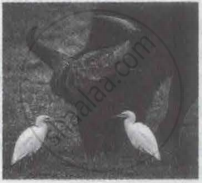
Match the Columns.
| Column A | Column B | ||
| i. | Lice on humans | a. | Endoparasites |
| ii. | Ectoparasites on marine fishes | b. | Grows on hedge plants |
| iii. | Cuscuta | c. | Ectoparasites |
| iv. | Plasmodium and humans | d. | Copepods |
Which of the following is NOT an example of mutualism?
Which one of the following pair does NOT show commensalism?
Which one of the following is NOT an example of mutualism?
Which of the following is not an example of commensalism?
In an association of two animal species, one is a termite which feeds on wood and the other is a protozoan Trichonympha present in the gut of the termite. What type of association they establish?
Give one example for the following type.
Phytophagous animal
Give one example for the following type.
Chemical defense agent
Observe the set of 4 figures A, B, C and D and, answer the following questions
- Which one of the figures shows mutualism?
- What kind of association is shown in D?
- Name the organisms and the association in C.
- What role is the insect performing in B?
 Fig. (A) |
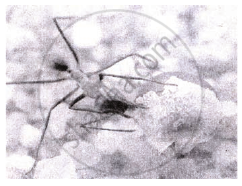 Fig. (B) |
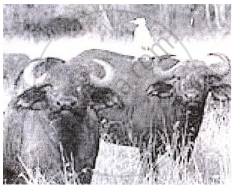 Fig. (C) |
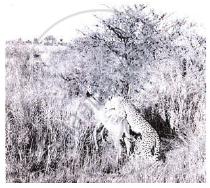 Fig. (D) |
Give one example for the following:
A parasitic angiosperm
The interaction between cattle egret and the buffalo is ______.
"Some species of insects and frogs have evolved with various specific features that help them from being detected."
- Justify the statement giving reasons.
- Mention any two such features.
Select the statement which best describes parasitism.
What happens to an inferior competitor if a superior competitor is present in the same environment?
Give one example of Camouflage.
Explain one type of mutualism.
