Advertisements
Advertisements
Question
Give one example of camouflage.
Advertisements
Solution
The praying mantis (Mantis religiosa) is green and resembles a thin stem, helping it blend with the surroundings and remain unnoticed by prey.
APPEARS IN
RELATED QUESTIONS
Explain mutualism with the help of any two examples.
Name and explain the interaction that is seen between clownfish and sea anemones.
Association between sea anemone and Hermit crab in gastropod shell is that of.
Give one example of mutualism.
Name important defense mechanisms in plants against herbivores.
The interaction in nature, where one gets to benefit on the expense of other is _________.
Predation and parasitism are which type of interactions?
Competition between species leads to ________.
Tabulate and analysis of two species population interaction.
Define the following term:
Parasitism
Using '-' to depict inhibition and '+' to depict benefit, mutualism between two species can be represented as ____________.
______ is the adaptation of an organism i which it matches its colour with its surroundings to get protected from predators.
Identify the interspecific interaction depicted in the following figure.
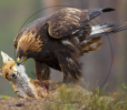
The interspecific interaction between Cuckoo and Crow is ______
In the given picture, identify the type of interspecific interaction.
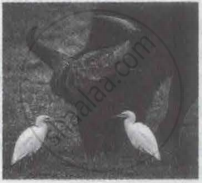
______ interaction is the biological interaction between organisms of same population.
Amensalism is an association between two species where ______.
What is mycorrhiza?
In a pond, we see plants which are free-floating; rooted–submerged; rooted emergent; rooted with floating leaves; Write the type of plant against the following examples.
| Plant Name | Type | |
| a. | Hydrilla | ______ |
| b. | Typha | ______ |
| c. | Nymphaea | ______ |
| d. | Lemna | ______ |
| e. | Vallisneria | ______ |
Give one example for the following type.
Phytophagous animal
Interaction between clown fish living among the stinging tentacles of sea anemone is an example of ______.
Give one example of parasitism.
Explain one type of mutualism.
Given below are two statements.
Statement I - The amount of energy available in an ecosystem increases at each successive trophic level.
Statement II - Transfer of energy from one trophic level to the other follows 10% law.
In light of the above statements, select the correct option given below.
What is the sign convention for the predation interaction?
In parasitism, which organism derives nourishment from the other?
What is the sign convention for commensalism?
Tall plants blocking sunlight for smaller nearby plants is an example of which population interaction?
