Advertisements
Advertisements
Questions
A first-order reaction is 50% complete in 30 minutes at 300 K and in 10 minutes at 320 K. Calculate activation energy (Ea) for the reaction. [R = 8.314 J K−1 mol−1]
[Given: log 2 = 0.3010, log 3 = 0.4771, log 4 = 0.6021]
A first order reaction is 50% completed in 30 minutes at 300 K and in 10 minutes at 320 K. Calculate the activation energy of the reaction. (R = 8.314 J K−1 mol−1)
Advertisements
Solution
Given: T1/2 = 30 min, T1 = 300 K
T1/2 = 10 min, T2 = 320 K
Formula: `log k_2/k_1 = E_a/(2.303 R) [1/T_1 - 1/T_2]`
k = `0.693/(t_(1//2))`
k1 at 300 K = `0.693/30` min−1
k2 at 320 K = `0.693/10` min−1
`log (k_2/k_1) = E_a/(2.303 R) [1/T_1 - 1/T_2]`
`log ((0.693/10)/(0.693/30)) = E_a/(2.303 R) [1/300 - 1/320]`
log (3) = `E_a/(2.303 R) [20/(300 xx 320)]`
0.4771 = `E_a/(2.303 xx 8.314) [20/(96000)]`
0.4771 = `E_a/(2.303 xx 8.314) [20/(96000)]`
Ea = `(0.4771 xx 2.303 xx 8.314 xx 96000)/20`
= `876969.73/20`
= 43848.48 J/mol
Ea = 43.8 kJ mol−1
Hence, the activation energy of the reaction is 43.8 kJ−1.
APPEARS IN
RELATED QUESTIONS
The rate constant for the first-order decomposition of H2O2 is given by the following equation:
`logk=14.2-(1.0xx10^4)/TK`
Calculate Ea for this reaction and rate constant k if its half-life period be 200 minutes.
(Given: R = 8.314 JK–1 mol–1)
The rate of the chemical reaction doubles for an increase of 10 K in absolute temperature from 298 K. Calculate Ea.
The rate constant for the decomposition of N2O5 at various temperatures is given below:
| T/°C | 0 | 20 | 40 | 60 | 80 |
| 105 × k/s−1 | 0.0787 | 1.70 | 25.7 | 178 | 2140 |
Draw a graph between ln k and `1/T` and calculate the values of A and Ea. Predict the rate constant at 30º and 50ºC.
The rate of a reaction quadruples when the temperature changes from 293 K to 313 K. Calculate the energy of activation of the reaction assuming that it does not change with temperature.
Write a condition under which a bimolecular reaction is kinetically first order. Give an example of such a reaction. (Given : log2 = 0.3010,log 3 = 0.4771, log5 = 0.6990).
Predict the main product of the following reactions: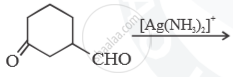
What happens to most probable kinetic energy and the energy of activation with increase in temperature?
Total number of vibrational degrees of freedom present in CO2 molecule is
The rate constant for a reaction is 1.5 × 10⁻⁷ sec–1 at 50°C. What is the value of activation energy?
The slope of Arrhenius Plot `("In" "k" "v"//"s" 1/"T")` of first-order reaction is −5 × 10³ K. The value of Ea of the reaction is. Choose the correct option for your answer. [Given R = 8.314 JK−1mol−1]
