Dr. Manu Sood solutions for फिजिकल एड्युकेशन [इंग्रजी] इयत्ता १२ chapter 10 - Unit-10: Training in Sports [Latest edition]
Chapters
2: Unit-2: Children and Women in Sports
3: Unit-3: Yoga as Preventive Measure for Lifestyle Disease
4: Unit-4: Physical Education and Sports for CWSN
5: Unit-5: Sports and Nutrition
6: Unit-6: Test and Measurement in Sports
7: Unit-7: Physiology and Injuries in Sports
8: Unit-8: Biomechanics and Sports
9: Unit-9: Psychology and Sports
▶ 10: Unit-10: Training in Sports
Advertisements
Advertisements
Solutions for Chapter 10: Unit-10: Training in Sports
Below listed, you can find solutions for Chapter 10 of CBSE Dr. Manu Sood for फिजिकल एड्युकेशन [इंग्रजी] इयत्ता १२.
Advertisements
Dr. Manu Sood solutions for फिजिकल एड्युकेशन [इंग्रजी] इयत्ता १२ 10 Unit-10: Training in Sports MULTIPLE CHOICE QUESTIONS [Pages 333 - 339]
The training related with improving abilities of an athlete or a sports person is called ______.
Exercise
Sports training
Practice
None of the above
The performance of a sports person depends upon:
Strength
Speed and endurance
Flexibility and coordination abilities
All of the above
Sports training programmes:
Improve physical fitness
Improve health
Lead to wellness
All of the above
The ability of the muscles to overcome resistance is called ______.
Force
Power
Strength
None of these
Strength is necessary for:
The physical activities associated with daily living
Moderate intensity activities
High intensity activities
All of the above
The ability of the muscles to act against resistance in the static position is called ______.
Dynamic strength
Static strength
Strength endurance
None of the above
A ______ cycle is the shortest training cycle.
micro
macro
meso
None of the above
______ cycles are typically three or four weeks in length.
Micro
Macro
Meso
None of the above
A ______ cycle is an annual plan that works towards peaking for the goal competition of the year.
micro
macro
meso
None of the above
The ability of the muscles to carry out work against a resistance when the body is in motion is called ______.
Dynamic strength
Static strength
Strength endurance
None of the above
The ability of the muscles to act against maximum resistance in a single effort is called ______.
Explosive strength
Strength endurance
Maximum strength
None of the above
The ability of the muscles to overcome resistance with high speed is called ______.
Maximum strength
Explosive strength
Strength endurance
None of the above
The ability of an individual to overcome resistance under the conditions of fatigue is called ______.
Maximum strength
Explosive strength
Strength endurance
None of the above
Which of the following is not an objective of the sports training?
To accelerate athlete's growth and development processes
To make athletes dream about winning only
To bring about change in athlete attitude, habits and behaviour
To make the athlete highly skillful technically and tactically
Ability of a muscle (or group of muscles) to work continuously for a long period of time:
Muscular Endurance
Aerobic capacity
Muscular Power
Muscular strength
Isokinetic method was developed by:
H.C. Buck
Joy Perrny
J.J. Perrine
J.J.Coubertin
What aspect of fitness does the following define: "The ability to use strength quickly to produce an explosive effort".
Agility
Muscular Power
Stamina
Balance
Ability to move or change direction quickly:
Agility
Muscular Power
Stamina
Balance
It is also called as Isometric strength:
Maximum Strength
Explosive strength
Static Strength
Strength endurance
The word Isometric also means:
The same size
The small size
The large size
The largest size
In this Exercise no movement takes place:
Isometric
Isotonic
Isokinetic
Isonomic
Under which kind of strength would you put shotput?
Strength endurance
Explosive strength
Maximum strength
Speed strength
General exercises:
Develop the whole body
Are good for warming up
Are good for conditioning
All of the above
Isometric exercises are also known as ______.
Dynamic strength training
Static strength training
Isokinetic training
None of the above
Which of the following is not an isometric exercise?
Hanging from rope or horizontal bar
Pushing a wall
Exercising with dumbbells
Stand with heavy weight on head or back
Which of the following is/are the advantage/advantages of isometric exercises?
They require little space and can be performed anywhere
No equipment is required
They need less time
All of the above
Which of the following is/are the disadvantage/disadvantages of isometric exercises?
They develop static strength and not the dynamic strength
The strength is not developed through the entire range of motion
Loss of interest after few days
All of the above
Hiettinger and Muller published a research on isometric exercises in Germany in the year:
1951
1953
1955
1956
The isotonic exercises were introduced by:
J.J. Perrine
De Lorme
Muller
None of the above
Isotonic exercises were introduced in the year:
1951
1953
1954
1955
Isokinetic exercises were introduced in the year:
1961
1963
1968
1969
Isokinetic training can improve:
Explosive strength
Endurance
Both Explosive strength as well as Endurance
None of the above
Isokinetic stands for:
Equal tension
Equal measuring
Equal movement
None of the above
Absolute strength is ______.
the amount of force one can exert one time
the amount of force that can be exerted in relation to body weight
The amount of force that can be exerted over time
All of the above
Pushing against a brick wall is an example of:
isometric workout
isotonic workout
isokinetic workout
none of the above
'Fartlek Training' was first devised and adopted in:
USA
Sweden
England
Switzerland
'Fartlek Training' is used best to develop:
Flexibility
Strength
Endurance
Neuromuscular coordination
In which method, the exercises are done for longer duration without any interval?
Interval Method
Continuous Method
Fartlek Method
All of the Above
Which is not a type of endurance according to nature of activities?
Basic Endurance
General Endurance
Specific Endurance
Speed Endurance
Which of the following is not a type of endurance according to the nature of activity?
Basic endurance
General endurance
Aerobic endurance
Specific endurance
Which of the following is a type of endurance according to the nature of activity?
Long term endurance
Specific endurance
Speed endurance
Anaerobic endurance
Which of the following is/are a type of endurance according to the duration of activity?
Speed endurance
Anaerobic endurance
Aerobic endurance
All of the above
Which of the following is/are a continuous method/methods of developing endurance?
Slow pace
Fast pace
Variable pace
All of the above
400m sprint event comes under:
Speed Endurance
Short Endurance
Medium Endurance
Long Endurance
There will be no variation in pace in activity in:
Fartlek Method
Continuous Method
Interval Method
None of Above
Which is not a type of Speed?
Reaction
Sprinting
Acceleration
Speed endurance
It is the ability to perform an action as quickly as possible to a signal:
Movement Speed
Reaction Ability
Acceleration ability
Locomotor ability
The ability of a joint to do movements with external help:
Passive flexibility
Active flexibility
Neuro Flexibility
Continuous flexibility
In which method is stretching done in a rhythmic way?
Slow stretch
Slow stretch and hold
Ballistic method
PNF
An important benefit of endurance training is that the body gradually is trained to ______.
tackle emergency situations too well
store and burn fuel more efficiently
remain fit in a fighting condition
slow down the ageing process
A classic demonstration of explosive strength can be seen in a/an:
gymnast's arm hang
shot-putter in action
soccer player chipping the ball
archer drawing the bow
Speed is considered to be a determining factor in:
Precision sports
power sports
explosive sports
endurance sports
This training method is usually conducted over a hilly region track, and it allows variation in pace:
Fartlek method
Interval method
Acceleration run
None of the above
Ability to coordinate body part movements with one another and in relation to a definite goal oriented body movement is known as ______.
Balance Ability
Adaptation Ability
Rhythm Ability
Coupling Ability
Ability to attain high level of fine tuning of movement phases is known as ______.
Differentiation Ability
Orientation Ability
Adaptation Ability
Coupling Ability
To help you improve your abdominal strength for preventing low-back pain, you should do:
Sit-ups
pull-ups
push-ups
run-ups
Basic coordination ability/abilities is/are:
Orientation ability
Coupling ability
Reaction ability
All of the above
In slow or extensive interval training method, the total distance to be covered is ______.
2 to 3 km
5 to 10 km
2 to 5 km
3 to 7 km
In slow or extensive interval training method, the time of work out is ______.
30 minutes to 1 hour
20 minutes to 45 minutes
10 minutes to 30 minutes
15 minutes to 40 minutes
In slow or extensive interval training method, the heart rate is kept around ______ beats per minute.
100 to 120
120 to 130
140 to 180
130 to 160
Slow or extensive interval training method is very effective for developing:
Aerobic endurance
Anaerobic endurance
Speed endurance
Specific endurance
In fast or intensive interval training method, the total distance to be covered is ______.
2 to 5 km
3 to 4 km
5 to 10 km
3 to 7 km
In fast or intensive interval training method, the time of workout is ______.
10 minutes to 15 minutes
15 minutes to 30 minutes
20 minutes to 40 minutes
20 minutes to 1 hour
In fast or intensive interval training method, the heart rate is kept around ______ beats per minute.
120 to 140
130 to 160
170 to 200
140 to 180
Fast or intensive interval training method is very effective for developing:
Aerobic endurance
Anaerobic endurance
Speed endurance
Specific endurance
Which of the following is/are the advantage/advantages of interval training method?
There are less chances of fatigue
Proper overloading can be done
Progress can be measured easily
All of the above
Fartlek training method was first introduced in ______.
1937
1935
1939
1942
Fartlek training method is ______.
A type of Push-ups
A type of cross-country running
100-metre running
None of the above
Fartlek training method can be performed:
At hilly path
River bed
Muddy road
All of the above
Speed:
Is the ability of an individual to perform a sports event at a faster rate
Is an important component or part of every sports event, especially sprints.
Is the ability to complete a race or work within minimum time
All of the above
Which one of the following is an effect of lactic acid?
Gives you a feeling of excitement
Causes extreme hunger pains
Helps to create oxygen in the lungs
Causes muscle fatigue during exercise
Which property of the joint enables it to have maximum range of motion without undue strain?
Strength
Flexibility
Endurance
Neuro-muscular coordination
Which amongst these is not a method to improve flexibility?
Ballistic
Static stretching
PNF
Fartlek
Which type of run includes running the whole distance at a constant speed?
Pace run
Acceleration run
Practice run
All of the above
Acceleration runs are used to improve ______.
Strength
Endurance
Speed
Flexibility
Interval Training is used for developing:
Flexibility
Agility
Endurance
Speed
Resistance ability against fatigue is called ______.
Strength
Speed
Endurance
Agility
Ability to achieve maximum speed from stationary position is called ______.
Speed endurance
Acceleration ability
Locomotor ability
Movement speed
For developing or improving flexibility:
Exercise should be done regularly
Jerky movements should be avoided
Muscles should be relaxed after any flexibility exercise
All of the above
In which year, the Interval Training Method was introduced?
1918
1919
1920
1921
What is the other name of Interval Training?
Fartlek training
Overload training
Pace training
Terrace Training
Who developed Fartlek Training Method?
Gosta Holmer
Bikila
Morgan and Adamson
Jetopack
What does 'Fartlek' mean?
Effort play
Speed play
Interval play
Overload play
What should be the minimum duration for Continuous Training method?
10 minutes
20 minutes
40 minutes
30 minutes
______ is the ability of muscles to overcome resistance.
Strength
Endurance
Speed
Flexibility
Continuous training is one of the best methods for improving ______.
Strength
Endurance
Speed
Flexibility
______ is the range of movements of joints.
Strength
Endurance
Speed
Flexibility
Ballistic method is used to improve ______.
Strength
Endurance
Speed
Flexibility
Passive flexibility is always ______ than active flexibility.
more
less
equal
None of the above
Which one of the following methods is helpful in improving flexibility?
Ballistic Method
Static Stretching Method
Dynamic Stretching Method
All the above
Which one of the following is not the type of coordinative abilities?
Balancing ability
Coupling ability
Handling ability
Reaction ability
Which one of the following methods is used to develop endurance?
Continuous Training Method
Interval Training Method
Fartlek Training Method
All the above
Which type of exercise was developed by Perrine?
Isotonic exercise
Isometric exercise
Isokinetic exercise
None of the above
Which one of the following is not a part of dynamic strength?
Maximum strength
Strength endurance
Explosive Strength
Static Strength
What is the other name of static strength?
Isotonic
Isometric
Isokinetic
None of these
In which type of exercises, the direct movements are not clearly visible?
Isokinetic exercises
Isotonic exercises
Isometric exercises
None of these
According to the nature of activity, which one of the following is not the type of endurance?
Basic endurance
Specific endurance
Speed endurance
General endurance
Fartlek Training is best used to develop:
Endurance
Strength
Flexibility
Speed
It is the ability to react immediately or quickly and effectively to a signal.
Reaction ability
Adaptation ability
Rhythm ability
Differentiation ability
Static strength is also called ______.
Maximum strength
Explosive strength
Strength endurance
Isometric strength
The performance enhancement in the future can be predicted based on:
Physiological factor
Physical factor
Talent indicators
All of the above
Psychological factors contributing to talent identification is:
Cognitive
Emotional
Personality traits
All of the above
Talent identification is a ______ process.
General process
Scientific process
Specific process
None of the above
Meso cycle is training of:
one week
4 to 10 days
3 to 6 weeks
Three months
Transitional Phase is a ______.
rest and recovery period
training period
competition period
fitness period
Micro cycle is:
3 to 10 weeks
3 to 10 days
3 to 10 hours
None from above
Which of the following factors does NOT determine flexibility?
Joint Structure
Previous Injury
Efficiency of Lungs
Age and Gender
Fartlek Training is used to develop ______.
Endurance
Strength
Flexibility
Speed
Which type of coordinative ability is required in games like judo and wrestling?
Orientation ability
Coupling ability
Adaptation ability
Differentiation ability
The ability to tolerate higher concentrations of ______ can help in improving endurance performance.
Lactic acid
Hydrochloric acid
Acetic acid
Sulphuric acid
What do you mean by iso and metric?
Iso means constant and metric means length
Iso means change and metric means size
Iso means constant and metric means velocity
Iso means size and metric means constant
Explain the three somato types in detail.
In which of the following methods to develop flexibility, an individual performs the movement with swing and rhythm?
Slow stretching method
Slow stretch and hold method
PNF method
Ballistic method
Jump for smash in volleyball is an example of ______.
Static strength
Maximum strength
Explosive strength
Strength endurance
In which type of exercises movement can not be seen directly?
Iso-tonic
Iso-kinetic
Iso-metric
Plyometric
The Swedish word speed play is also known as ______.
Fartlek training
Interval method
Continuous method
Pace method
The method of training that involves repeated bouts of high-intensity work followed by periods of rest or low-intensity activity is known as ______.
Continuous Training
Interval Training
Fartlek Training
Circuit Training
Which one of the following is NOT correct regarding the training cycle in sports?
A mesocycle is termed as medium duration training.
The duration of a microcycle is 3 to 10 days.
The duration of the mesocycle is 3 to 6 weeks.
The macrocycle has the minimum duration of training.
Which of the following types of endurance is classified according to the nature of the activity?
Speed endurance
Medium time endurance
Specific endurance
Short-term endurance
Dr. Manu Sood solutions for फिजिकल एड्युकेशन [इंग्रजी] इयत्ता १२ 10 Unit-10: Training in Sports MATCH THE COLUMN [Pages 339 - 340]
Match List-I with List-II and select the correct answer from the code given below:
| List - I | List - II |
| Exercise |
Definition of exercise |
| A. Strength | i. Ability to sustain the necessary activity level for a specific period |
| B. Endurance | ii. Ability of muscles to overcome the resistance |
| C. Flexibility | iii. Ability which enables an individual to do various related activities accurately and efficiently |
| D. Coordination | iv. Maximum range of motion at a joint that is the about extent of movement possible a joint without undue strain |
A - iv, B - ii, C - i, D - iii
A - i, B - ii, C - iii, D - iv
A - iii, B - iv, C - ii, D - i
A - ii, B - i, C - iv, D - iii
Match List – I with List – II and select the correct option using the codes given below:
| List – I | List – II |
| (i) Weight training method | 1. Speed endurance |
| (ii) Interval Training Method | 2. Strength |
| (iii) Continuous Training Method | 3. Flexibility |
| (iv) Contract-Relax method/technique | 4. Basic endurance |
(i) - 2, (ii) - 1, (iii) - 4, (iv) - 3
(i) - 3, (ii) - 2, (iii) - 1, (iv) - 4
(i) - 1, (ii) - 3, (iii) - 4, (iv) - 2
(i) - 4, (ii) - 1, (iii) - 2, (iv) - 3
Match List – I with List – II and select the correct option using the codes given below:
| List – I | List – II |
| (i) Strength | 1. The ability to express force many times over |
| (ii) Maximum Strength | 2. The greatest force that is possible in a single maximum contraction |
| (iii) Explosive Strength | 3. The ability to overcome a resistance with a fast contraction |
| (iv) Strength Endurance | 4. Ability to exert a force against a resistance |
(i) - 1, (ii) - 2, (iii) - 3, (iv) - 4
(i) - 2, (ii) - 3, (iii) - 4, (iv) - 1
(i) - 4, (ii) - 2, (iii) - 3, (iv) - 1
(i) - 4, (ii) - 3, (iii) - 2, (iv) - 1
Match the following:
| (a) Static strength | (i) Ability of muscles to overcome resistance with high speed |
| (b) Dynamic strength | (ii) Ability of muscles to act against resistance in static position |
| (c) Maximum strength | (iii) Ability of muscles to carry out work against a resistance when the body is in motion |
| (d) Explosive strength | (iv) Ability of muscles to act against maximum resistance in a single effort |
(a) - (iii), (b) - (i), (c) - (ii), (d) - (iv)
(a) - (i), (b) - (iv), (c) - (iii), (d) - (ii)
(a) - (iv), (b) - (ii), (c) - (i), (d) - (iii)
(a) - (ii), (b) - (iii), (c) - (iv), (d) - (i)
Match the following:
| (a) Coupling ability | (i) Reaction of goalkeeper in football while facing ball from an opponent |
| (b) Adaptation ability | (ii) Ability to react quickly in a determined manner to a well-known signal |
| (c) Complex reaction ability | (iii) Team games and combat sports |
| (d) Simple reaction ability | (iv) Gymnastics |
(a) - (iii), (b) - (iv), (c) - (ii), (d) - (i)
(a) - (i), (b) - (ii), (c) - (iii), (d) - (iv)
(a) - (iv), (b) - (iii), (c) - (i), (d) - (ii)
(a) - (ii), (b) - (i), (c) - (iv), (d) - (iii)
Dr. Manu Sood solutions for फिजिकल एड्युकेशन [इंग्रजी] इयत्ता १२ 10 Unit-10: Training in Sports CASE STUDY [Pages 340 - 343]
| Roohi was a good middle-distance runner. She participated in the state level championship, but she could not win any medal. For the next State level championship, she aimed to win in 800 m race. Her Physical Education teachers advised her to improve flexibility and co-ordinative ability. He suggested several exercises to improve strength, flexibility and endurance. After six months of robust training, she won gold medal. |
1. Fartlek Training is best used to develop:
(a) Endurance
(b) Strength
(c) Flexibility
(d) Speed
2. Which one of the following methods is used to develop endurance?
(a) Continuous Training Method
(b) Interval Training Method
(c) Fartlek Training Method
(d) All the above
3. Continuous training is one of the best methods for improving
(a) Strength
(b) Endurance
(c) Speed
(d) Flexibility
4. Which training method involves varying speed, terrain and intensity in a single training session?
(a) Interval training
(b) Circuit training
(c) Continuous training
(d) Fartlek training
| Kushali wanted to have a career in gymnastic. She used to do regular practice and wanted to win the state level tournament. While training, she met Ashutosh sir, who was the District Gymnastic Coach. He carefully watched her and notices that she was lacking flexibility and some coordinative abilities like balance, rhythm, etc. He used various methods to improve her flexibility and coordinative abilities. After one year of training, Kushali became the state gymnastic champion. |
1. Ability to coordinate body part movements with one another and in relation to a definite goal oriented body movement is known as:
- Balance Ability
- Adaptation Ability
- Rhythm Ability
- Coupling Ability
2. Ability to attain high level of fine tuning of movement phases is known as:
- Differentiation Ability
- Orientation Ability
- Adaptation Ability
- Coupling Ability
3. Which amongst these is not a method to improve flexibility?
- Ballistic
- Static stretching
- PNF
- Fartlek
4. Rhythm ability refers to:
- The ability to perform movements with maximum speed
- The ability to coordinate movements with strength and endurance
- The ability to understand and perform movements with the required rhythm
- The ability to maintain balance during complex movements
Mr Nikhil is a renowned hockey coach. Recently he joined our school. He selected our hockey team and designed a training programme. During the training, he noted that some players were good attackers but due to lack of endurance, they were unable to play up to the last moment. He used various methods to enhance their endurance.
1. According to the nature of activity, which one of the following is not the type of endurance?
- Basic endurance
- Specific endurance
- Speed endurance
- General endurance
2. Fartlek Training is best used to develop:
- Endurance
- Strength
- Flexibility
- Speed
3. Which one of the following methods is used to develop endurance?
- Continuous Training Method
- Interval Training Method
- Fartlek Training Method
- All the above
4. Which training method involves alternating periods of high intensity work with rest or low intensity activity to improve endurance?
- Continuous training
- Circuit training
- Interval training
- Fartlek training
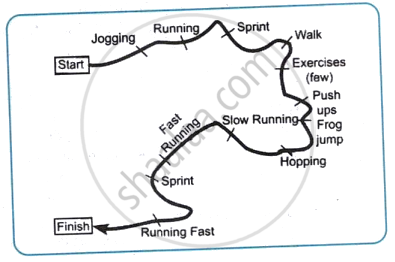
1. From the above picture, it is identified as ______ training method.
- Pace runs
- Fartlek
- Isometric
- Isotonic
2. The above training method helps in increasing the ______.
- Strength
- Speed
- Endurance
- Flexibility
3. The Swedish word meaning "Speed Play" is ______.
- Citius
- Fartlek
- Pace
- Altius
4. In the above training method, ______ plays an important role.
- Self-discipline
- Coach
- Guidance
- Support
Or
This training method was developed by ______.
- Holmer
- Fartlek
- Robert
- Johnson
Mr. Gopichand is a renowned badminton coach. When he started his academy, he selected our school badminton players and designed a training program. During the training, he noted that few players were good in defense but due to lack of endurance and strength, they were unable to play up to the last moment. He used various methods to enhance their endurance and strength.
1. This type of training and exercises help in increasing the static strength and maximal strength.
- Isometric
- Isotonic
- Isokinetic
- Aerobic
2. Isotonic exercise helps in enhancing:
- Speed
- Strength
- Agility
- Endurance
3. High pressure over muscles can be seen in these set of exercises:
- Isometric
- Isotonic
- Both Isometric & Isotonic
- Ballistic
4. The Swedish word meaning "Speed Play" is ______.
- Citius
- Fartlek
- Pace
- Altius
Or
This endurance training method involves periods of hard work followed by a time period of rest repeatedly.
- Interval
- Continuous
- Fartlek
- Pace runs
Ravi has the aim of joining any of the uniform services like police, army, air force etc. But he has not qualified the 1500 m run in their selection criteria. Without qualifying this run, he can't go for the next level.
1. 1500 m run is conducted to find the:
- Endurance ability
- Speed
- Strength
- Explosive
2. Which one of the following methods is used to develop endurance?
- Continuous Training Method
- Interval Training Method
- Fartlek Training Method
- All the above
3. In Interval training method is based on principle of ______.
- Overload
- Effort
- Effort & Recovery
- Recovery
Raghu was good thrower. When he joined a new training camp, where he observed some athletes were running on uneven surfaces like bushes, rocks, pits etc. He was in dilemma. Then the coach explained about that training in detail.
1. What type of training are they doing?
- Fartlek Training
- Ballistic method
- Interval Training
- Acceleration run
2. Stretching exercise improves ______.
- Flexibility
- Strength
- Coordination
- Explosive
3. Fartlek training is also known as ______.
- Pace runs
- Speed play
- Acceleration run
- 400 m run
Krishnan was a power lifting player. He wanted to practice heavy weight lifting so he talked about it to his trainer. And the coach guided him about the same.
Based on this case, answer the following questions:
1. To lift heavy weight, Krishnan should focus on improving his:
- Endurance
- Strength
- Power
- Flexibility
2. Which type of exercise, he should perform?
- Isometric exercises
- Isokinetic exercises
- Isotonic exercises
- Aerobic exercises
3. The word isotonic means:
- Increase tone
- Decreased tone
- Same tone
- Same length
| After getting their fitness levels assessed and with understanding of mechanical analysis of their movement, the three boys, Ram, Shyam and Vinay decide to improve the different components of fitness. Since they are in class XII and involved in competitive sports, their focus is also admission to the top colleges and universities on the basis of their sports performance. Their physical education teacher has informed them that most of the colleges give importance to physical fitness and sports skill tests. Their teacher felt their current fitness level was not up to the mark and stressed on the need for implementation of scientific sports training methods. The students were eager to know how this was different from the way they were training earlier. Their teacher explained the concept of 'Sports training' as a planned and controlled process in which, for achieving a goal, changes in complex motor performance, ability to act and behaviour are made through measures of content, methods and organisation. He emphasised that, sports training is the basic form of preparation of sportsmen and that the preparation of a sportsperson represents a multidimensional process of purposeful utilisation of the factors – means, methods and conditions – which help in enhancing the physical fitness levels of the sportsperson and ensure the required level of his sports performance ability. The boys started their training for speed, flexibility, coordination, strength with a scientific approach under the guidance of their teacher who created specialized and specific training plans for them along with periodization of their schedule for each of the three individuals. Maximal Strength, Explosive Strength and Strength Endurance were planned through Isometric, Isotonic and Isokinetic exercises. Another essential component of training was specific endurance, for which continuous method and Fartlek training methods were used. PNF stretching along with ballistic stretching method, static and dynamic stretching methods were also adopted in the training session. A training method with variety of exercises at multiple stations with controlled recovery period was also implemented with planned dosage, which was thoroughly enjoyed by the athletes and proved effective in developing aerobic capacity through increased Vo2 max and cardiovascular endurance. |
1. Which method is best suited for developing strength?
- Interval method
- Isometric method
- Ballistic method
- Continuous method
2. To develop muscular endurance; which method will be most suitable?
- Circuit training
- Isokinetic training
- Repetition method
- Static method
3. Aerobic capacity can be increased by ______ method.
- Circuit training
- Isokinetic training
- Isotonic training
- Static method
4. Ballistic method can used to develop ______.
- Strength
- Endurance
- Flexibility
- Speed
5. Which is the training referred with ‘multiple stations’?
- Interval Training
- Circuit Training
- Continuous Training
- Fartlek Training
Dr. Manu Sood solutions for फिजिकल एड्युकेशन [इंग्रजी] इयत्ता १२ 10 Unit-10: Training in Sports REASONING QUESTIONS [Page 344]
Given below are the two statements labelled Assertion (A) and Reason (R):
Assertion (A): Different sports require same level and type of strength.
Reason (R): Strength is largely developed through weight training.
In the context of the above two statements, which one of the following is correct?
Both (A) and (R) are true and (R) is the correct explanation of (A).
Both (A) and (R) are true, but (R) is not the correct explanation of (A).
(A) is true, but (R) is false.
(A) is false, but (R) is true.
Given below are the two statements labelled Assertion (A) and Reason (R):
Assertion (A): While doing strength training, appropriate supervision is a must.
Reason (R): Strength training can be dangerous if the exercise technique is not right.
In the context of the above two statements, which one of the following is correct?
Both (A) and (R) are true and (R) is the correct explanation of (A).
Both (A) and (R) are true, but (R) is not the correct explanation of (A).
(A) is true, but (R) is false.
(A) is false, but (R) is true.
Given below are the two statements labelled Assertion (A) and Reason (R):
Assertion (A): Aerobic endurance is required in sports where the action or the movement is required for a short duration.
Reason (R): Cross-country race requires aerobic endurance.
In the context of the above two statements, which one of the following is correct?
Both (A) and (R) are true and (R) is the correct explanation of (A).
Both (A) and (R) are true, but (R) is not the correct explanation of (A).
(A) is true, but (R) is false.
(A) is false, but (R) is true.
Given below are the two statements labelled Assertion (A) and Reason (R):
Assertion (A): Fartlek training method was first introduced by Gosta Holmer in 1937.
Reason (R): Equipment is required in Fartlek training method.
In the context of the above two statements, which one of the following is correct?
Both (A) and (R) are true and (R) is the correct explanation of (A).
Both (A) and (R) are true, but (R) is not the correct explanation of (A).
(A) is true, but (R) is false.
(A) is false, but (R) is true.
Given below are two statements, one of which is labelled as Assertion (A) and the other is labelled as (R).
Assertion (A): For improvement of performance in long distance running, continuous training is effective.
Reason (R): Continuous method of training improves basic endurance.
Which one of the following statement is correct?
Both (A) and (R) are true and (R) is the correct explanation of (A).
Both (A) and (R) are true but (R) is not the correct explanation of (A).
(A) is true, but (R) is false.
(A) is false, but (R) is true.
Dr. Manu Sood solutions for फिजिकल एड्युकेशन [इंग्रजी] इयत्ता १२ 10 Unit-10: Training in Sports FIGURE/PICTURE BASED QUESTIONS [Page 345]
Identify the type of exercises shown in the picture given below:

Isometric exercises
Isotonic exercises
Isokinetic exercises
None of the above
Identify the type of exercises shown in the picture given below:
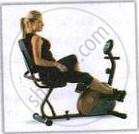
Isometric exercises
Isotonic exercises
Isokinetic exercises
None of the above
Identify the type of exercises shown in the picture given below:
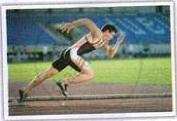
Fartlek training method
Acceleration run
Intensive interval method
None of the above
Training in sports
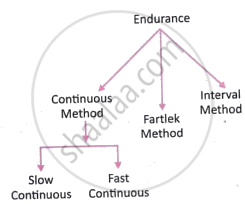
- The heart rate in continuous method of training should be about ______ beats per minute and duration for the activity should be ______.
- Interval Training Method is based on the principle of ______.
- Fartlek is a ______ term meaning speed play.
Dr. Manu Sood solutions for फिजिकल एड्युकेशन [इंग्रजी] इयत्ता १२ 10 Unit-10: Training in Sports VERY SHORT ANSWER TYPE QUESTIONS [Pages 347 - 348]
What do you mean by talent identification?
Explain the term sports training.
Define strength.
Name two methods of strength development.
Define Endurance.
Name two methods of endurance development.
Which method will you suggest to develop endurance?
What is continuous training method?
Define Microcycle.
What do you mean by Mesocycle?
What is the time period of a Macrocycle?
What do you understand by slow pace continuous method?
What do you understand by fast pace continuous method?
Write a short note on interval training method.
What does the term "Fartlek" mean, and who developed this training method?
What do you mean by speed?
Name some methods to develop speed.
What is acceleration run?
Name some methods to achieve flexibility.
What is coordinative ability?
What is reaction ability?
What type of resistances can be used for developing strength among children?
“Pace races mean, running the whole distance of a race at a constant speed.” Which are the races included in pace races?
Suggest any two Isometric exercises for shoulder region.
Pace-Run Method of training is used to develop for which motor component.
Briefly explain any two factors determining endurance.
Define Flexibility.
List down the types of flexibility.
Explain Isokinetic exercise with suitable examples
What do you understand by Macro-cycle?
A football player wants to improve his acceleration and quick reaction during a match. Suggest two suitable training methods and justify how each will help improve his performance.
Briefly explain talent selection and talent transfer in the process of talent identification and talent development.
Dr. Manu Sood solutions for फिजिकल एड्युकेशन [इंग्रजी] इयत्ता १२ 10 Unit-10: Training in Sports SHORT ANSWER TYPE QUESTIONS [Pages 348 - 349]
Enumerate the advantages of isometric exercises.
Write disadvantages of isometric exercises.
Explain the talent identification process.
What are the five phases of talent identification and development?
Explain any four isometric exercises for upper body.
Write advantages of isotonic exercises.
Write disadvantages of isotonic exercises.
Explain the types of flexibility.
Write advantages of isokinetic exercises.
Write disadvantages of isokinetic exercises.
Differentiate between isometric, isotonic and isokinetic exercises.
Differentiate between isometric, isotonic and isokinetic exercises.
Briefly explain interval training.
Explain the principle behind Interval Training Method.
Briefly explain interval training.
How endurance can be developed in Interval training method?
Give any three advantages of interval training.
Write disadvantages of 'interval training' method.
Write factors, determining 'Speed'.
Explain methods for improving speed.
Differentiate between acceleration run and pace run.
Explain what is strength.
Write the methods of improving strength.
Explain the Fartlek Training method.
Briefly explain the advantages of Fartlek training.
Explain Microcycle with example.
Describe mesocycle with the help of an example.
What do you understand by Macrocycle? Explain with example.
Draw a circuit training plan for developing strength among school children.
Explain Proprioceptive Neuromuscular Facilitation (PNF) or contract – relax technique.
What is endurance?
How endurance can be developed through Fartlek method?
Define Endurance.
Explain any two methods to improve endurance.
What is endurance?
Explain the types of Endurance.
Briefly explain different types of coordinative abilities.
What do you mean by flexibility?
Discuss in detail about slow stretching and holding as method for developing flexibility?
Explain any two methods to develop flexibility.
Define Flexibility.
Explain any two methods to develop flexibility.
Comment on the concept of Talent Identification.
Comment on the concept of talent development.
Briefly explain the concept of Talent Identification in sports.
Explain any two methods to develop strength.
Dr. Manu Sood solutions for फिजिकल एड्युकेशन [इंग्रजी] इयत्ता १२ 10 Unit-10: Training in Sports LONG ANSWER TYPE QUESTIONS [Page 349]
What are the types of strength?
Explain any two methods to develop strength.
Define strength.
Explain any two methods to develop strength.
What are the types of strength?
Explain any two methods to develop strength.
Explain any two methods to develop strength.
Define strength.
Explain any two methods to develop strength.
Discuss the methods of endurance development.
Explain continuous training method.
Write advantages of continuous training method.
Write disadvantages of continuous training method.
Explain the Fartlek Training method.
Draw Fartlek training method figure.
Write down the advantages of fartlek training method.
Write down the disadvantages of fartlek training method.
Describe the different sports training cycles.
What does the word 'training' mean in sports?
Explain the methods to develop speed in detail.
Explain any two methods to develop flexibility.
Explain any two methods to develop flexibility.
Define Flexibility.
Explain any two methods to develop flexibility.
What is coordinative ability?
Briefly explain different types of coordinative abilities.
Briefly explain different types of coordinative abilities.
What is coordinative ability?
Briefly explain different types of coordinative abilities.
What is movement speed?
Explain the methods to develop speed endurance.
Differentiate between 1 : 1 & 1 : 2 ratio interval training with suitable examples.
What do you understand by circuit training?
Draw a diagram of 10 stations to improve general fitness. How can load be increased in circuit training?
Define circuit training in your own words.
Draw a diagram of circuit training with 8 (Eight) stations.
Explain the advantages of circuit training.
What is endurance?
Explain any two types of endurance on the basis of the duration of the activity with suitable examples from sports.
Define strength.
Differentiate between isometric, isotonic and isokinetic exercises.
What do you understand by circuit training?
How will a coach plan circuit training sessions with 6 stations to develop the fitness of his new trainees? Explain.
What do you understand by circuit training?
How will a coach plan circuit training sessions with 6 stations to develop the fitness of his new trainees? Explain.
What do you mean by speed?
Explain the methods to develop speed in detail.
Solutions for 10: Unit-10: Training in Sports
Dr. Manu Sood solutions for फिजिकल एड्युकेशन [इंग्रजी] इयत्ता १२ chapter 10 - Unit-10: Training in Sports
Shaalaa.com has the CBSE Mathematics फिजिकल एड्युकेशन [इंग्रजी] इयत्ता १२ CBSE solutions in a manner that help students grasp basic concepts better and faster. The detailed, step-by-step solutions will help you understand the concepts better and clarify any confusion. Dr. Manu Sood solutions for Mathematics फिजिकल एड्युकेशन [इंग्रजी] इयत्ता १२ CBSE 10 (Unit-10: Training in Sports) include all questions with answers and detailed explanations. This will clear students' doubts about questions and improve their application skills while preparing for board exams.
Further, we at Shaalaa.com provide such solutions so students can prepare for written exams. Dr. Manu Sood textbook solutions can be a core help for self-study and provide excellent self-help guidance for students.
Concepts covered in फिजिकल एड्युकेशन [इंग्रजी] इयत्ता १२ chapter 10 Unit-10: Training in Sports are Flying Sikh, His Tough Fitness Routine, Concept of Talent Identification and Talent Development in Sports, Stages of a Long-term Talent Identification System in Sports and Games, Classification of the Talent Identification and Development Process, Introduction to Sports Training Cycle – Micro, Meso, Macro Cycle, Strength and Its Classification, Methods to Develop Strength, Preventive Measures in Strength Training, Meaning of Endurance, Types of Endurance, Methods to Develop Endurance, Speed and Its Types in Sports, Methods to Develop the Speed of an Individual, Flexibility and Its Importance, Types of Flexibility, Methods to Improve Flexibility, Coordinative Abilities and Its Types.
Using Dr. Manu Sood फिजिकल एड्युकेशन [इंग्रजी] इयत्ता १२ solutions Unit-10: Training in Sports exercise by students is an easy way to prepare for the exams, as they involve solutions arranged chapter-wise and also page-wise. The questions involved in Dr. Manu Sood Solutions are essential questions that can be asked in the final exam. Maximum CBSE फिजिकल एड्युकेशन [इंग्रजी] इयत्ता १२ students prefer Dr. Manu Sood Textbook Solutions to score more in exams.
Get the free view of Chapter 10, Unit-10: Training in Sports फिजिकल एड्युकेशन [इंग्रजी] इयत्ता १२ additional questions for Mathematics फिजिकल एड्युकेशन [इंग्रजी] इयत्ता १२ CBSE, and you can use Shaalaa.com to keep it handy for your exam preparation.
