Advertisements
Online Mock Tests
Chapters
▶ 2: Unit-2: Children and Women in Sports
3: Unit-3: Yoga as Preventive Measure for Lifestyle Disease
4: Unit-4: Physical Education and Sports for CWSN
Chapter 5: Unit-5: Sports and Nutrition
Chapter 6: Unit-6: Test and Measurement in Sports
Chapter 7: Unit-7: Physiology and Injuries in Sports
Chapter 8: Unit-8: Biomechanics and Sports
Chapter 9: Unit-9: Psychology and Sports
Chapter 10: Unit-10: Training in Sports
Advertisements
Solutions for Chapter 2: Unit-2: Children and Women in Sports
Below listed, you can find solutions for Chapter 2 of CBSE Dr. Manu Sood for फिजिकल एड्युकेशन [इंग्रजी] इयत्ता १२.
Dr. Manu Sood solutions for फिजिकल एड्युकेशन [इंग्रजी] इयत्ता १२ 2 Unit-2: Children and Women in Sports MULTIPLE CHOICE QUESTIONS [Pages 62 - 65]
Playing sports has ........ benefits:
Physical
Emotional
Interpersonal
All of the above
Sports help children:
Develop physical skills
Get exercise
Make friends and have fun
All of the above
The World Health Organisation first issued a set of guidelines for exercise in the year ______.
2010
2009
2012
2007
Popular ways to be active include:
Walking
Cycling
Wheeling
All of the above
Adults (18-64 years) should do at least:
150-300 minutes of moderate intensity aerobic physical activity
75-150 minutes of vigorous intensity aerobic physical activity
Both 150-300 minutes of moderate intensity aerobic physical activity as well as 75-150 minutes of vigorous intensity aerobic physical activity
None of the above
Which of the following is not a rule of correct posture?
Stand tall
Chin should be up and the head centered over the shoulders
body weight should be evenly balanced over both legs and feet
Back should be bent while standing or sitting
The persistent poor posture in any activity or situation may cause ______.
undue fatigue in walking
postural deformity
distortion in limb alignment
inferiority complex
Deformity of the legs is known as ______.
Scoliosis
Lordosis
Knock knees
Kyphosis
Lordosis is a problem of the ______.
Lower Back
Middle Back
Upper Back
Shoulders
Scoliosis is a postural deformity related to ______.
Muscles
Shoulders
Legs
Spine
If the spine has a sideways curve, it is called ______.
Flat back
Lordosis
Kyphosis
Scoliosis
An abnormal curvature of spine at front is also called ______.
Scoliosis
Lordosis
Kyphosis
Bow Legs
Walking barefoot on sand or rough ground helps to correct ______.
flat feet
club feet
curved feet
outward pointing feet
The condition in which the knees are closer to each other while the feet remain apart when a person is standing, is known as ______.
Knee concavity
Knock-knee
Knee-proximity
Knee-clubbing
This deformity is also called round back or hunch back:
Scoliosis
Lordosis
Kyphosis
Bow Legs
In this deformity of feet person gives complete print of his foot sole over the plane surface:
Scoliosis
Lordosis
Kyphosis
Flat foot
The medical name for this deformity is Genu Valgum:
Scoliosis
Lordosis
Knock Knees
Bow Legs
The medical name for this deformity is Genu Varum:
Scoliosis
Lordosis
Knock Knees
Bow Legs
This postural deformity is opposite to knock-knees:
Flat back
Lordosis
Kyphosis
Bow legs
It is caused due to the position of the baby's legs in the womb:
Bow Legs
Scoliosis
Lordosis
Kyphosis
Which of the following is not a spinal curvature deformity?
Kyphosis
Scoliosis
Lordosis
Flatfoot
Gomukhasana and Padmasana are performed to rectify which postural deformity?
Flatfoot
Scoliosis
Knock-knees
Bow legs
Which of the following does not fall under the category of basic posture?
Sitting
Reclining
Standing
Lying
Which is not a spinal curvature deformity?
Scoliosis
Lordosis
Kyphosis
Knock knees
Scoliosis deformity is related to:
Feet
Legs
Head
Spine
The sideways curvature of spine is called ______.
Kyphosis
Scoliosis
Lordosis
Round shoulder
In which postural deformity the muscles of chest of an individual contract?
Lordosis
Knock Knees
Kyphosis
Bow legs
Postural deformity due to excessive curvature of thoracic region is known as ______.
Lordosis
Scoliosis
Kyphosis
Cervical
The first menstruation and the commencement of cyclic menstrual function in female:
Menorrhagia
Menarche
Eumenorrhea
Amenorrhea
The normal menstrual cycle is for:
29 days
30 days
26 days
28 days
A healthy, normal menstrual period is called ______.
Menorrhagia
Menarche
Eumenorrhea
Amenorrhea
Frequent menstruation is known as ______.
Metrorrhagia
Oligomenorrhea
Polymenorrhea
Menorrhagia
If the menstruation cycle does not begin at puberty, the condition is called ______.
Primary Amenorrhea
Secondary amenorrhea
Oligomenorrhea
Dysmenorrhea
Which of the following is not a condition of Female Athlete Triad?
Eating Disorders
Amenorrhea
Round shoulders
Osteoporosis
This condition of Female athlete triad can ruin a female athlete's career because it may lead to stress fractures and other injuries:
Eating Disorders
Amenorrhea
Osteoporosis
Menstrual Dysfunction
In which eating disorder a person binges and purges?
Anorexia Nervosa
Bulimia
Binge Eating disorder
All the above
Which syndrome occurs before menstruation and causes symptoms such as acne, irritability, headaches etc.?
Pre-Menstrual Syndrome
Menopause
Post Menstrual Syndrome
Anorexia
Which of the following is not a component of Female Athlete Triad?
Osteoporosis
Eumenorrhea
Amenorrhea
Eating disorder
Weakening of bones due to loss of bone density and improper bone formation is ______.
Amenorrhea
Anorexia Nervosa
Osteoporosis
Lordosis
Female athlete triad is a syndrome characterized by:
Osteoporosis
Amenorrhea
Eating disorder
All of the above
In which type of Anorexia does an individual lose weight by taking laxatives or diuretics?
Bulimia Nervosa
Purging type
Restricting type
Anorexia Nervosa
A female athlete can have:
Only one part of the triad
One, two or all three parts of the triad
Only two parts of the triad
None of the above
Causes of Osteoporosis in female athletes is/are:
Menopause
Low calcium intake
Both Menopause as well as Low calcium intake
High calcium intake
Factors affecting motor development.
Personal
Psychological
Genetic
All of the above
Kyphosis is a deformity found in ______.
Shoulders
Lumbar region
Thoracic region
Hips
'Sway Back' is also known as ______.
Lordosis
Kyphosis
Scoliosis
Round Shoulder
In sports, a Snooker shot is an example of:
Locomotor skill
Extended motor skill
Fine motor skill
Gross motor skill
Following are the lower extremities deformities except:
Flat Foot
Round Shoulder
Knock Knee
Genu Varum
Lateral curvature or sideways curvature of spine is related to:
Round shoulder
Kyphosis
Knock-knee
Scoliosis
Children and sports are closely related to each other. Children have an innate tendency to participate in sports. We must focus on the motor development of the children. The important thing is that the motor development of the children should always be according to the requirement of the sports. Following are the example of gross motor development, except:
running
jumping
standing
painting
The chief aim of physical activities during 5 to 17 years of age groups is to improve cardio-respiratory and muscular fitness, bone health, cardiovascular and to reduce symptoms of anxiety and depression. Rate at which activity is performed is known as:
Volume
Intensity
Type of activity
Frequency
Mirabai Chanu is from a very simple family but she always used to dream big. Though she knew that her family would not be able to afford her nutrition still she continued to pursue her dreams. And finally the day came when she won the silver medal in weight-lifting in Tokyo Olympics. The women who got two medals in Olympics in:
P. V. Sindhu
Lovlina Borgohain
Sakshi Malik
Mirabai Chanu
Menarche is related to ______.
Ending of menstrual period in women
Beginning of menstrual period in women
Time of pregnancy
Spinal deformity
Minimum duration of activity should be ______ per week at vigorous intensity in adults above 65 years of age.
75 minutes
150 minutes
300 minutes
450 minutes
Rate at which the activity is being performed is known as ______.
Volume
Intensity
Type of Activity
Frequency
Sports is an important tool for social empowerment for women as it develops the following:
Aggression
Isolation
Stress
Leadership
Psychological benefits of women participation in sports includes:
Cooperation
Emotion Control
Physical Fitness
Communication
Kyphosis is also known as ______.
Hallow Back
Hunch Back
Curve Back
both hallow back and hunch back
According to W.H.O. (World Health Organisation) recommendations, children of ______ should be engaged in physical activities for 180 minutes and should have 10-13 hours of good quality sleep per day.
Less than 1 year
1-2 year
3-4 year
5-17 year
A girl has been participating in sports for 2 years. Identify the psychological benefits for her from the following:
Helps in increasing bone density
Helps in improving muscle tone
Helps to improve self-esteem
Helps in improving communication
Which of the following deformity is not related to lower extremities?
Knock-Knee
Scoliosis
Bow-legs
Flat-foot
Following are the constraints for women which restrict their participation in sports, except:
Psychological constraints
Social constraints
Eating habits
Economical constraints
Which postural deformity is shown in the illustration?
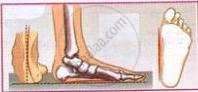
Bow Leg
Knock Knee
Flat Foot
Round Foot
Asanas shown in the picture are performed to correct:
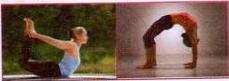
Kyphosis and Lordosis
Round shoulder and Kyphosis
Scoliosis and Lordosis
Lordosis and Round Shoulders
What is nutrition?
Essential substances of food like proteins, fats, carbohydrates, etc.
Consuming correct ratio of nutrients.
Dynamic process in which consumed food is digested.
Both Essential substances of food, like proteins, fats, carbohydrates, etc., and consuming correct ratio of nutrients
Female Athlete Triad does not include ______.
Amenorrhea
Oligomenorrhea
Osteoporosis
Bulimia Nervosa
Corrective exercises should be done under a ______ advice and supervision.
Physician’s or Physical Education teacher’s
Physical Education teachers’ or Physiotherapists’
Physical Education Teacher’s or Coaches
Physician’s or Physiotherapist’s
Which of the following asanas are practised to correct “Kyphosis”?
Chakrasan, Trikonasana, Adhomukhasana
Dhanurasana, Bhujangasana, Halasana
Bhujangasana, Trikonasan, Chakrasana
Dhanurasana, Chakrasana, Bhujangasana
Dr. Manu Sood solutions for फिजिकल एड्युकेशन [इंग्रजी] इयत्ता १२ 2 Unit-2: Children and Women in Sports MATCH THE COLUMN [Page 66]
Match List-I with List-II and select the correct option using the codes given below:
| LIST - I | LIST - II | ||
| (i) | Kyphosis | 1. | Inward curve of the spine. |
| (ii) | Lordosis | 2. | Sideways curve of the spine |
| (iii) | Scoliosis | 3. | Rounding of Upper Back |
| (iv) | Round Shoulders | 4. | Forward bending & rounding of shoulders |
(i) − 1 (ii) − 2 (iii) − 3 (iv) − 4
(i) − 2 (ii) − 3 (iii) − 4 (iv) − 1
(i) − 4 (ii) − 2 (iii) − 3 (iv) − 1
(i) − 3 (ii) − 1 (iii) − 2 (iv) − 4
Match the following:
| List I | List II | ||
| I. | Knock Knee/Genu Valgum | 1. | Increase exaggeration of backward curve |
| II. | Kyphosis | 2. | Wide gap between the knees when standing with feet together |
| III. | Lordosis | 3. | Knees touch each other in normal standing position |
| IV. | Bow legs | 4. | Inward curvature of the spine |
Choose the correct option from the following:
I - 3, II - 1, III - 4, IV - 2
I - 1, II - 3, III - 4, IV - 2
I - 4, II - 2, III - 1, IV - 3
I - 2, II - 3, III - 4, IV - 1
Dr. Manu Sood solutions for फिजिकल एड्युकेशन [इंग्रजी] इयत्ता १२ 2 Unit-2: Children and Women in Sports CASE STUDY [Pages 66 - 67]
| Anita was facing the problem of Kyphosis. Due to this, she was under stress and tension. One day, her Physical Education teacher came to know about the problem. She also advised Anita some corrective exercises to minimize the deformity of Kyphosis. After few months of regular exercise, she was confident enough to get rid of Kyphosis. |
Kyphosis is a problem related to:
heart
spine
brain
legs
| Anita was facing the problem of Kyphosis. Due to this, she was under stress and tension. One day, her Physical Education teacher came to know about the problem. She also advised Anita some corrective exercises to minimize the deformity of Kyphosis. After few months of regular exercise, she was confident enough to get rid of Kyphosis. |
Kyphosis is ...........
abnormal curvature of spine at front
sideways curve in the spine
rounding of upper back
rounding of lower back
| Anita was facing the problem of Kyphosis. Due to this, she was under stress and tension. One day, her Physical Education teacher came to know about the problem. She also advised Anita some corrective exercises to minimize the deformity of Kyphosis. After few months of regular exercise, she was confident enough to get rid of Kyphosis. |
Which of the following is a corrective measure for kyphosis?
Horse riding
Walking on toes
Tadasana (Mountain pose)
Sukhasana
| Anita was facing the problem of Kyphosis. Due to this, she was under stress and tension. One day, her Physical Education teacher came to know about the problem. She also advised Anita some corrective exercises to minimize the deformity of Kyphosis. After few months of regular exercise, she was confident enough to get rid of Kyphosis. |
The word Kyphosis comes from the Greek term '.........' and means bent or bowed.
kyph
Kyphosis
Kyphotic
Kinesis
| Anjali, a student of class IX was diagnosed with 'knock knees' which is becoming quite common in children due to lifestyle choices. She has seeked help from her physical education teacher. The teacher has advised her to practice certain exercises on a daily basis. |
- What are common causes for this postural deformity?
- Suggest any two exercises for curing knock knees.
- What other leg related postural deformities are there?
Priya, a student of class XI has very low BMI due to which her class teacher has asked the school counselor to help priya because it seems priya is not taking proper meals.
- List down the different types of eating disorders.
- What is the range for underweight students in BMI?
- What could be the possible causes of eating disorders?
Mr. Suresh is a Physical Education teacher at XYZ School. He observed that Rajesh, a student of class V has outward curve of vertebral column at thoracic region. He suggested some exercises to rectify this problem.
What is this deformity known as?
Scoliosis
Kyphosis
Lordosis
Flat foot
Mr. Suresh is a Physical Education teacher at XYZ School. He observed that Rajesh, a student of class V has outward curve of vertebral column at thoracic region. He suggested some exercises to rectify this problem.
Kyphosis is commonly known as:
Hollow back
Hunch back
Sideways bending
Lordosis
Mr. Suresh is a Physical Education teacher at XYZ School. He observed that Rajesh, a student of class V has outward curve of vertebral column at thoracic region. He suggested some exercises to rectify this problem.
Kyphosis is a deformity related to:
Foot
Vertebral column
Shoulder
Legs
Mr. Suresh is a Physical Education teacher at XYZ School. He observed that Rajesh, a student of class V has outward curve of vertebral column at thoracic region. He suggested some exercises to rectify this problem.
Kyphosis is defined as:
Sideward curvature of the spine
Rounding of the upper back
Inward curvature of the lumbar region
Flattening of the foot arch
Women and girls participating in activities which emphasize leanness are at especially high risk of developing Female Athlete Triad which involves three distinct and interrelated conditions.
Based on this case, answer the following questions:
Which of the following is not a condition of Female Athlete Triad?
Eating Disorders
Amenorrhea
Round shoulders
Osteoporosis
Women and girls participating in activities which emphasize leanness are at especially high risk of developing Female Athlete Triad which involves three distinct and interrelated conditions.
Based on this case, answer the following questions:
People with this disorder may see themselves as overweight, even when they are dangerously under weight:
Anorexia Nervosa
Bulimia
Binge Eating disorder
All the above
Women and girls participating in activities which emphasize leanness are at especially high risk of developing Female Athlete Triad which involves three distinct and interrelated conditions.
Based on this case, answer the following questions:
In which eating disorder a person binges and purges?
Anorexia Nervosa
Bulimia
Binge Eating disorder
All the above
Women and girls participating in activities which emphasize leanness are at especially high risk of developing Female Athlete Triad which involves three distinct and interrelated conditions.
Based on this case, answer the following questions:
Amenorrhea refers to:
Irregular menstrual cycle
Painful menstruation
Absence of menstrual period
Excessive menstrual bleeding
Dr. Manu Sood solutions for फिजिकल एड्युकेशन [इंग्रजी] इयत्ता १२ 2 Unit-2: Children and Women in Sports REASONING QUESTIONS [Pages 67 - 68]
Given below are two statements, one labelled as Assertion (A) and the other as Reason (R).
Assertion (A): Lordosis is abnormal curvature in lumbar region of the spine.
Reason (R): Medical name for Lordosis is genu valgum.
In the context of above two statements which one of the followings is correct:
Both (A) and (R) are true and (R) is the correct explanation of (A).
Both (A) and (R) are true but (R) is not the correct explanation of (A).
(A) is true but (R) is false.
(A) is false but (R) is true.
Given below are two statements, one labelled as Assertion (A) and the other as Reason (R).
Assertion (A): Bulimia is an abnormal eating disorder characterised by binge eating followed by purging behaviours.
Reason (R): Bulimia is considered abnormal because it leads to severe physical and mental health consequences due to the cycle of binge eating and purging.
In the context of the above two statements, which one of the following is correct?
Both (A) and (R) are true and (R) is the correct explanation of (A).
Both (A) and (R) are true, but (R) is not the correct explanation of (A).
(A) is true, but (R) is false.
(A) is false, but (R) is true.
Given below are two statements, one labelled as Assertion (A) and the other as Reason (R).
Assertion (A): Bow legs are a natural growth pattern in babies and toddlers and usually resolve without treatment by the age of two or three.
Reason (R): The bowing is caused by the position of the baby's legs in the womb.
In the context of the above two statements, which one of the following is correct?
Both (A) and (R) are true and (R) is the correct explanation of (A).
Both (A) and (R) are true but (R) is not the correct explanation of (A).
(A) is true but (R) is false.
(A) is false but (R) is true.
Given below are two statements labelled Assertion (A) and Reason (R):
Assertion (A): Menarche is usually considered the point of sexual maturity for girls.
Reason (R): Menstrual dysfunction is an abnormal condition in a woman's menstrual cycle.
In the context of the above two statements, which one of the following is correct?
Both Assertion (A) and Reason (R) are true and Reason (R) is the correct explanation of the Assertion (A).
Both Assertion (A) and Reason (R) are true and Reason (R) is not the correct explanation of the Assertion (A).
Assertion (A) is true, but Reason (R) is false.
Assertion (A) is false, but Reason (R) is true.
Given below are two statements labelled Assertion (A) and Reason (R).
Assertion (A): In a normal standing posture, both knees touch each other, while there is a gap of 3-4 inches between the ankles.
Reason (R): It is due to Genu Valgum and it can develop due to an injury or infection in the knee or leg, rickets, severe lack of lack of vitamin D and calcium, obesity, or arthritis in the knee.
In the context of the above two statements, which one of the following options is correct?
Both Assertion (A) and Reason (R) are true and Reason (R) is the correct explanation of the Assertion (A).
Both Assertion (A) and Reason (R) are true, but Reason (R) is not the correct explanation of Assertion (A).
Assertion (A) is true, but Reason (R) is false.
Assertion (A) is false, but Reason (R) is true.
Dr. Manu Sood solutions for फिजिकल एड्युकेशन [इंग्रजी] इयत्ता १२ 2 Unit-2: Children and Women in Sports FIGURE/PICTURE BASED QUESTIONS [Pages 68 - 69]
Posture plays a very significant role in our daily activities. Correct posture means the balancing of body in accurate and proper manner. Various types of postural deformities can be identified in individuals.
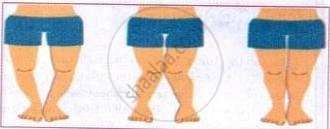
- The above given Fig a is a postural deformity known as ______.
- Walking on the inner edge of the feet can be a remedy for ______.
- The person in the middle is suffering with ______.
- Horse-riding is the suggested activity exercise for curing ______ deformity.
Or
Performing ______ asana regularly can be a remedy for Knock-knees.
Anu was assigned a project work by her physical education teacher. She had to make a report by checking the health status of all the security guards of her huge gated community. She found out that more than half of them showed a significant deformity in the upper part of their vertebral column.
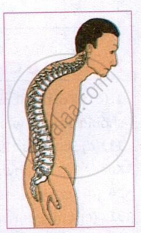
1. The term used to define this deformity is ______.
(a) Lordosis
(b) Scoliosis
(c) Kyphosis
(d) Both Lordosis & Scoliosis
2. This deformity is mainly caused due to:
(a) Carrying heavy loads
(b) Lack of exercise
(c) Weak muscles
(d) All of the above
3. Which of the following helps in rectifying such condition?
(a) Chakrasana
(b) Dhanurasana
(c) Halasana
(d) Both Chakrasana & Dhanurasana
4. Bending head backward in standing position helps in getting rid of:
(a) Lordosis
(b) Kyphosis
(c) Scoliosis
(d) Both Lordosis & Kyphosis
5. Due to Covid Pandemic, most of the children attending online classes with bad sitting posture may experience this condition later:
(a) Kyphosis
(b) Lordosis
(c) Scoliosis
(d) Flat foot
Identify the type of deformity and choose its correct name:
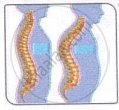
Kyphosis
Lordosis
Scoliosis
All of the above
Identify the type of deformity and choose its correct name:
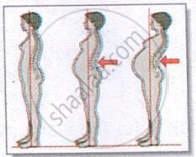
Scoliosis
Kyphosis
Lordosis
None of these
Identify the type of deformity and choose its correct name:
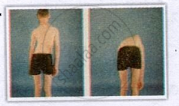
Knock Knees
Scoliosis
Bow legs
Both Knock Knees and Bow legs
Identify the type of deformity and choose its correct name:
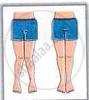
Flat foot
Kyphosis
Knock Knees
Bow Legs
Identify the type of deformity and choose its correct name:
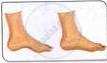
Curved foot
Club foot
Outward pointing foot
Flat foot
Identify the type of deformity and choose its correct name:
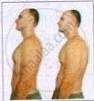
Round Shoulders
Cervical
Lordosis
Scoliosis
Identify the type of deformity and choose its correct name:
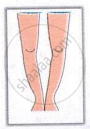
Knock Knees
Bow Legs
Kyphosis
All of the above
Dr. Manu Sood solutions for फिजिकल एड्युकेशन [इंग्रजी] इयत्ता १२ 2 Unit-2: Children and Women in Sports VERY SHORT ANSWER TYPE QUESTIONS [Page 71]
How much physical activity should children of age 3-4 years do daily? How much of it should be moderate to vigorous?
Name any two types of activities recommended for older adults.
What are aerobic activity guidelines?
Write any two psychological benefits of women's participation in sports.
State the common postural deformities.
What do you mean by Spinal Curvature deformities?
What do you mean by knock knee?
What do you understand by flat foot?
What do you mean by round shoulders?
Write down the causes of round shoulders.
What do you mean by Lordosis?
Which type of deformity is “Kyphosis”?
What do you mean by bow legs?
What is scoliosis?
State the causes of scoliosis.
What is "an abnormal curvature of spine at front" termed as?
Suggest any two free hand exercises for correcting round shoulder.
Suggest two exercises for correcting flat foot.
Name the deformity for which horse riding can be used as a corrective measure.
What is menopause?
Explain the term menarche.
Write the factors that may affect Menarche.
What is the duration of normal menstrual cycle?
What is meant by menstrual dysfunction?
By whom female athlete triad was described?
Who is at risk of being affected by female athlete triad?
Describe the meaning of "Amenorrhea".
Write the factors that can lead to osteoporosis?
What is Osteoporosis?
What is Female Athlete Triad?
What do you mean by Eating Disorders?
What is Bulimia?
What do you mean by “Anorexia Nervosa”?
Enlist any two-exercise guideline by WHO for different age groups.
Suggest any two corrective measures for bow legs.
Suggest any four corrective measures for round shoulders.
Differentiate between the three types of spinal deformity.
“Sports that require athletes to maintain a specific weight to perform well are at higher risk of developing eating disorders.” Justify this statement with your answer.
Dr. Manu Sood solutions for फिजिकल एड्युकेशन [इंग्रजी] इयत्ता १२ 2 Unit-2: Children and Women in Sports SHORT ANSWER TYPE QUESTIONS [Page 72]
Write the exercise guidelines given by WHO for children and youth of age 5-17 years.
Give the meaning of posture.
How does dynamic posture differ from static posture?
Write any three social benefits of women's participation in sports.
What is the difference between kyphosis and lordosis.
Explain the physical activities that can be undertaken to correct flatfoot deformity.
Write about the deformities of spinal curvature.
Enlist the spinal postural deformities?
Explain the cause of Kyphosis and precautions to avoid it.
Participation in physical activities can be utilised as corrective measures for correcting postural deformities among children. Justify.
Write a note on Menstrual Cycle.
What do you understand by female athlete triad?
Give suggestions to prevent osteoporosis.
Write in brief about osteoporosis.
What are the causes of osteoporosis in women?
What is Osteoporosis?
What are the causes of osteoporosis in women?
What are the symptoms of female athlete triad?
How can female athlete triad be prevented?
Write briefly about the prevention of 'Anorexia'.
Write briefly about the management of 'Anorexia'.
Explain briefly about eating disorder "BULIMIA".
What do you understand by Round shoulders deformity?
Suggest any four corrective measures for round shoulders.
Write in brief the corrective measure of Bow Leg.
Write in brief the corrective measure of Knock Knee.
Write in brief the corrective measure of Flat Foot.
What are the health problems faced by a woman due to the female athlete triad in sports and athletic performance?
Write short note on Female Athlete Triad.
Describe the physical benefits of women’s participation in sports.
Describe the psychological benefits of women’s participation in sports.
Devise a plan of physical activities in accordance with World Health Organization guidelines for adults aged 65 and above.
Dr. Manu Sood solutions for फिजिकल एड्युकेशन [इंग्रजी] इयत्ता १२ 2 Unit-2: Children and Women in Sports LONG ANSWER TYPE QUESTIONS [Page 72]
Explain any five postural deformities.
Suggest five exercises as corrective measures for Round shoulders and Kyphosis.
Mention the causes for the Flat Foot.
What are the causes of 'Knock-Knees?
Suggest corrective measures for flat foot deformities.
Suggest corrective measures for knock-knee deformities.
Suggest any five physical exercises as corrective measures for kyphosis.
Suggest any five physical exercises as corrective measures for lordosis.
Define Female Athlete Triad.
Write causes of Female Athlete Triad.
Explain factors of Female Athlete Triad in detail.
Explain symptoms of Female Athlete Triad in detail.
Write short note on Female Athlete Triad.
What are the causes of 'Knock-Knees?
State the causes of scoliosis.
Suggest corrective measures for knock-knee deformities.
State the corrective measures for scoliosis.
Define spinal curvature deformities.
List the causes of spinal curvature deformities.
List the precautions of spinal curvature deformities.
Write down Physical activities exercise guidelines for children under 5 years of age.
Explain in detail the various benefits of Women participation in Sports.
Explain any two postural deformities and suggest their corrective measures.
Differentiate between Scoliosis and Lordosis deformities.
Suggest corrective measures for knock-knee deformities.
Suggest corrective measures for flat foot deformities.
Solutions for 2: Unit-2: Children and Women in Sports
Dr. Manu Sood solutions for फिजिकल एड्युकेशन [इंग्रजी] इयत्ता १२ chapter 2 - Unit-2: Children and Women in Sports
Shaalaa.com has the CBSE Mathematics फिजिकल एड्युकेशन [इंग्रजी] इयत्ता १२ CBSE solutions in a manner that help students grasp basic concepts better and faster. The detailed, step-by-step solutions will help you understand the concepts better and clarify any confusion. Dr. Manu Sood solutions for Mathematics फिजिकल एड्युकेशन [इंग्रजी] इयत्ता १२ CBSE 2 (Unit-2: Children and Women in Sports) include all questions with answers and detailed explanations. This will clear students' doubts about questions and improve their application skills while preparing for board exams.
Further, we at Shaalaa.com provide such solutions so students can prepare for written exams. Dr. Manu Sood textbook solutions can be a core help for self-study and provide excellent self-help guidance for students.
Concepts covered in फिजिकल एड्युकेशन [इंग्रजी] इयत्ता १२ chapter 2 Unit-2: Children and Women in Sports are .
Using Dr. Manu Sood फिजिकल एड्युकेशन [इंग्रजी] इयत्ता १२ solutions Unit-2: Children and Women in Sports exercise by students is an easy way to prepare for the exams, as they involve solutions arranged chapter-wise and also page-wise. The questions involved in Dr. Manu Sood Solutions are essential questions that can be asked in the final exam. Maximum CBSE फिजिकल एड्युकेशन [इंग्रजी] इयत्ता १२ students prefer Dr. Manu Sood Textbook Solutions to score more in exams.
Get the free view of Chapter 2, Unit-2: Children and Women in Sports फिजिकल एड्युकेशन [इंग्रजी] इयत्ता १२ additional questions for Mathematics फिजिकल एड्युकेशन [इंग्रजी] इयत्ता १२ CBSE, and you can use Shaalaa.com to keep it handy for your exam preparation.
