Advertisements
Online Mock Tests
Chapters
2: Unit-2: Children and Women in Sports
3: Unit-3: Yoga as Preventive Measure for Lifestyle Disease
4: Unit-4: Physical Education and Sports for CWSN
5: Unit-5: Sports and Nutrition
6: Unit-6: Test and Measurement in Sports
▶ 7: Unit-7: Physiology and Injuries in Sports
8: Unit-8: Biomechanics and Sports
9: Unit-9: Psychology and Sports
Chapter 10: Unit-10: Training in Sports
Advertisements
Solutions for Chapter 7: Unit-7: Physiology and Injuries in Sports
Below listed, you can find solutions for Chapter 7 of CBSE Dr. Manu Sood for फिजिकल एड्युकेशन [इंग्रजी] इयत्ता १२.
Dr. Manu Sood solutions for फिजिकल एड्युकेशन [इंग्रजी] इयत्ता १२ 7 Unit-7: Physiology and Injuries in Sports MULTIPLE CHOICE QUESTIONS [Pages 231 - 235]
______ system provide energy during 5000 m race.
ATP CP system
Anaerobic System
Aerobic System
Endurance System
VO2 max is related to _____.
Muscular system
Respiratory system
Cardiovascular system
Energy production system
Which is not a property of muscles?
Contractility
Excitability
Extensibility
Durability
Which term is used to describe a resting heart rate of <60 beats per minute?
Tachycardia
Hypertrophy
Bradycardia
VO2 Max
It is the amount of blood pumped out by each side of the heart (actually each ventricle) in 1 minute ______.
Blood pressure
Cardiac Output
Blood volume
Both Blood pressure and Cardiac Output
What is the resting cardiac output in a normal individual?
2 litres
6 litres
8 litres
5 litres
Aerobic capacity describes the functional capacity of:
Heart
Lungs
Blood vessels
All of the above
Aerobic capacity depends upon:
Oxygen intake
Oxygen transport
Oxygen uptake
All of the above.
The amount of oxygen that can be taken by the lungs from the atmosphere is called ______.
Oxygen transport
Oxygen uptake
Oxygen intake
None of the above
Vital capacity depends upon:
Lung size
Strength of respiratory muscles
Chest cavity size
All of the above.
A higher lactate threshold:
Delays fatigue
Increases endurance
Both Delays fatigue as well as Increases endurance
None of the above
Anaerobic capacity is the ability to produce energy:
With use of oxygen
Without use of oxygen
With use of nitrogen
None of the above
The science of how living things function normally is called ______.
Psychology
Physiology
Kinesiology
Biomechanics
The ability to perform cardiovascular exercises like running, aerobic exercise or swimming, for an extended period of time is called ______.
Speed
Strength
Endurance
Flexibility
Athletes with high endurance generally possess high percentages of:
Fast twitch muscle fibres
Slow twitch muscle fibres
Flexibility
Fat
The slow-twitch muscles, which predominantly are supplied with red fibres, are adapted for:
strength
speed
endurance
dynamic balance
Physical exercise done in the presence of oxygen is called ______.
aerobic
anaerobic
isometric
isokinetic
The greater the percentage of fast twitch muscle fiber one has:
the stronger he is
the faster he is
the slower he is
more flexible he is
Cardio-Respiratory system is essential for efficient pumping of blood and ______ supply to all parts of the body.
Oxygen
Water
Vitamins
None of the above
The process of converting glucose into energy without utilizing oxygen is known as ______.
Anaerobic respiration
Aerobic respiration
Stroke volume
Pulmonary diffusion
Each movement in human body is the result of ______ of the muscles:
Contraction
Relaxation
Contraction & Relaxation
None of the above
The Muscles are attached to the ______.
Bones
Tissues
Cells
None of the above
The muscles control activities like:
Facial expressions
Posture
Body movements
All of the above
Exercise has ______ effects on the muscular system.
Only short-term
Only long-term
Both short-term as well as long-term
None of the above
The effect of exercise on muscles depends upon:
Type of exercise
Intensity of exercise
Time for which exercise is done
All of the above
Muscle hypertrophy is ______.
Decrease in muscle mass
Increase in muscle mass
Increase in muscle strength
None of the above
Which term is used to describe the amount of blood pumped by the heart during one contraction?
Vital Capacity
Stroke Volume
Tidal Volume
Residual Volume
Cardiac hypertrophy is ______.
plateauing of heart rate due to maximal exercise intensity
enlargement of heart due to chronic endurance training
lowering of heart rate due to physical training
increase in ventricular volume because of exercise
What is the normal respiratory rate for an adult?
10 to 12 breath per minute
40 to 60 breath per minute
12 to 20 breath per minute
30 to 40 breath per minute
The amount of breath per minute increases during exercise to:
20 breath per minute
40 breath per minute
30 breath per minute
10 breath per minute
Which is not a Short term effect of exercise on muscular system?
Accumulation of Lactate
Micro-tears in muscle fibers
Increase in muscle temperature
Increase in lactate acid tolerance
Physical activity helps to increase ______.
Size of muscle
Size of bone
Size of brain
Size of liver
Men and women usually attain their highest strength levels between the ages of:
1 and 2
5 and 7
7 and 11
20 and 40
The chemical substances synthesized by specific host glands, secreted into the blood and carried throughout the body are called ______.
hormones
sugar
electrolytes
capillaries
It is a disease in which bone weakening increases the risk of a broken bone:
Measles
Osteoporosis
Atherosclerosis
Beriberi
Decrease in size of a body part, cell, organ, or other tissue is called ______.
Myopia
Atrophy
Cardiac arrest
Cardiac cycle
A sprain is an injury to:
Muscle
Tendon
Ligament
Bone
A bone fracture is an example of injury to:
Skin
Soft tissue
Hard tissue
Eyes
A soft tissue injury damages:
Ligaments and tendons
Bone
Cartilage and muscles
Carpals
A fracture in which the bone breaks diagonally:
Greenstick
Impacted
Oblique
Transverse
Sports injuries refer to the kind of injuries that occur during:
Sports
Exercise
Both Sports as well as Exercise
None of the above
If injuries are to be classified according to the cause, which of the following doesn't fall under this category?
Direct injury
Indirect injury
Overuse injury
Soft tissue injury
Tendonitis in the shoulder of a swimmer from excessive amounts of training is an example of ______.
Direct injury
Indirect injury
Overuse injury
Hard tissue injury
Which of the following comes under the category of wound?
Abrasion
Laceration
Both Abrasion and Laceration
Tennis elbow
These are slanted fractures that occur when a force is applied at any angle other than a right angle to the bone:
Impact fracture
Dislocation
Oblique bone fracture
Green stick fracture
Sprains in the knee, wrist or ankle often occur on account of:
bad falls
hanging and swinging
excessive twisting motion
tendon tearing
Fracture of a bone without breaking into pieces is called ______.
Green stick fracture
Impacted fracture
Oblique fracture
Compression fracture
Which of the following are involved in injuries called "sprains"?
Bones
Tendons
Ligaments
Blood vessels
It is the injury of skin in which skin is scrapped or rubbed by friction:
Fracture
Dislocation
Tennis Elbow
Abrasion
It is a ligament injury:
Fracture
Dislocation
Sprain
Abrasion
Cardio-Respiratory system is essential for:
Efficient pumping of blood
Oxygen supply to all parts of the body
Both Efficient pumping of blood as well as Oxygen supply to all parts of the body
None of the above
The amount of oxygen which can be absorbed and consumed by the working muscles from Blood is called ______.
Oxygen intake
Oxygen transport
Oxygen uptake
Energy reserve
Which one of these is a long term effect of exercise on cardiovascular system?
↑ Heart rate
↑ Body temperature
↑ Cardiac output
↑ BP
Overstretching of ligaments causes ______.
Strain
Sprain
Contusion
Bruises
______ bone comes out of socket in hip dislocation.
Femur
Humerus
Tibia
Fibula
Dislocation is related to:
Bone injury
Skin injury
Muscular injury
Joint injury
Fracture where a part of broken bone enters another bone is called ______.
Simple fracture
Compound fracture
Impacted fracture
Green stick fracture
Which is not a long term effects of exercise on muscular system?
Hypertrophy of muscle
Increased metabolism
Increased Myoglobin
Increased blood supply
Increase in glycogen stored in muscle is an effect of:
Aerobic Training
Anaerobic Training
Cross Training
Multi training
The resting Cardiac output is approximately ______.
10.0 lt.
1.0 lt.
5.0 lt.
15.0 lt
The volume of blood pumped during one beat (contraction) is called ______.
Blood flow
Stroke volume
Veins and arteries
Capillaries
It is a measure of the amount of minerals (mostly calcium and phosphorus) contained in a certain volume of bone.
Body composition
Bone Mass
Pulmonary function
Neural function
The irregular tear-like wounds caused by some blunt trauma ______.
Laceration
Contusion
Abrasion
Incision
It is the amount of blood pumped out by each side of the heart (actually each ventricle) in 1 minute ______.
Blood pressure
Cardiac Output
Blood volume
Both Blood pressure and Cardiac Output
Which of the following is a physiological factor determining flexibility?
Bone density
Joint structure
Cardiac output
Tidal Volume
The ability to tolerate higher concentrations of ______ can help in improving endurance performance.
Lactic acid
Hydrochloric acid
Acetic acid
Sulphuric acid
Which of the following is a short term effect of exercise on the muscular system?
Hypertrophy of muscles
Increase in glycogen storage
Increase in muscle temperature
Increase in lactic acid tolerance
In which of the following fitness components an athlete gives better performance, if he/she has more slow twitch fibre in comparison to fast twitch fibres.
Speed
Strength
Endurance
Flexibility
Brisk walking, running, bicycling and jumping are related to which activities?
Speed activities
Strength activities
Endurance activities
Co-ordinative activities
Which of the following is not a short-term effect of exercise on muscular system?
Accumulation of lactate
Increased blood supply
Muscular hypertrophy
Increased muscle temperature
Which of these is not a soft tissue injury?
Abrasion
Dislocation
Strain
Incision
Identify the type of fracture:

Transverse fracture
Greenstick fracture
Comminuted fracture
Stress fracture
Identify the type of fracture:
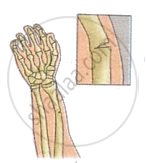
Transverse fracture
Greenstick fracture
Comminuted fracture
Stress fracture
Identify the type of fracture:
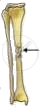
Transverse fracture
Greenstick fracture
Comminuted fracture
Stress fracture
Identify the type of fracture:
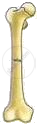
Transverse fracture
Greenstick fracture
Comminuted fracture
Stress fracture
The type of bone fracture shown in the figure given below is:
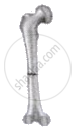
Linear
Transverse
Oblique displaced
None of these
Identify the type of injury shown in the picture given below:

Sprain
Strain in the muscle
Abrasion
None of these
Which of the following is the long-term effect of exercise on the respiratory system?
Residual volume increases
Respiratory rate increases
Stroke volume increases
The rate of exchange of gas increases
Dr. Manu Sood solutions for फिजिकल एड्युकेशन [इंग्रजी] इयत्ता १२ 7 Unit-7: Physiology and Injuries in Sports MATCH THE COLUMN [Pages 235 - 236]
Match the following.
| (a) Physiology | (i) Study of the long and short-term effects of training and conditions on athletes |
| (b) Sports physiology | (ii) Ability to carry out tasks without undue fatigue |
| (c) Exercise physiology | (iii) Science of how living things function normally |
| (d) Physical fitness | (iv) Study of how the body reacts to physical exercise |
(a) - (i), (b) - (iii), (c) - (iv), (d) - (ii)
(a) - (iv), (b) - (ii), (c) - (i), (d) - (iii)
(a) - (iii), (b) - (i), (c) - (iv), (d) - (ii)
(a) - (ii), (b) - (iv), (c) - (i), (d) - (iii)
Match the following.
| (a) Higher lactate threshold | (i) Improvement of muscle size and strength |
| (b) Types of skeletal muscle fibres | (ii) Delays fatigue |
| (c) Resistance training | (iii) Related to strength |
| (d) Body weight | (iv) Slow-twitch and fast-twitch |
(a) - (ii), (b) - (iv), (c) - (i), (d) - (iii)
(a) - (i), (b) - (iii), (c) - (ii), (d) - (iv)
(a) - (iii), (b) - (ii), (c) - (iv), (d) - (i)
(a) - (iv), (b) - (i), (c) - (iii), (d) - (ii)
Match the following.
| (a) Skin injury | (i) Stress fracture |
| (b) Bone injury | (ii) Sprain |
| (c) Joint injury | (iii) Laceration |
| (d) Ligament injury | (iv) Shoulder dislocation |
(a) - (iii), (b) - (i), (c) - (iv), (d) - (ii)
(a) - (i), (b) - (iii), (c) - (ii), (d) - (iv)
(a) - (ii), (b) - (iv), (c) - (i), (d) - (iii)
(a) - (iv), (b) - (ii), (c) - (iii), (d) - (i)
Given below are types of fractures in List – I with their features in List – II:
| List – I | List – II |
| Types of Fractures | Features |
| (a) Transverse | i. Bone breaks diagonally |
| (b) Oblique | ii. Bone is crushed into number of pieces |
| (c) Green stick | iii. Straight break right across a bone |
| (d) Comminuted | iv. Soft bone, in which bone bends |
Match the items of List – I with List – II and choose the correct option from the following:
(a) - iii, (b) - iv, (c) - ii, (d) - i
(a) - iii, (b) - i, (c) - iv, (d) - ii
(a) - i, (b) - ii, (c) - iii, (d) - iv
(a) - ii, (b) - iii, (c) - iv, (d) - i
Dr. Manu Sood solutions for फिजिकल एड्युकेशन [इंग्रजी] इयत्ता १२ 7 Unit-7: Physiology and Injuries in Sports CASE STUDY [Pages 236 - 238]
Mr. Raghav, aged 45 years was advised by his doctor to exercise regularly & take care of his dietary habits. This advice was given keeping in view his advancing age & sedentary working profile.
Considering his lifestyle answer the following questions.
1. The most commonly seen change in the cardiovascular system due to regular exercise is:
- ↑ BP
- ↓ Pulse rate
- Both ↑ BP & ↓ Pulse rate
- No change
2. Due to regular exercising, the viscosity of the blood ______.
- Increases
- Decreases
- Remains same
- Both Increases & Decreases
3. The changes in the chemical composition of blood due to exercises are:
- RBC increases
- Plasma Increases
- Platelets increases
- All of the above
4. This refers to highest rate at which oxygen can be taken up and consumed by body during intense exercise:
- VO2 max
- HbO2 max
- HgO2 max
- O2 max
Or
With regular exercise, the tidal volume and vital capacity of lungs ______.
- Increases
- Decreases
- Remains same
- Either Decreases or Remains same
The Godavari school attended a CBSE Cluster Basketball Tournament. During the semi-final match Varun, one of the players fell down and was injured on the shoulder. He was immediately given first aid by the coach Mr. Rahul, who had the knowledge of first aid. Warm-up session is essential for players to avoid any serious injuries during the match. Example: Dislocation and fracture, Sprain and Strain.
1. Breakage of bones is called:
- Fracture
- Sprain
- Contusion
- Laceration
2. Contusion is also known as:
- Bruise
- Abrasion
- Bone
- Tendons
3. The first aid given to sprain injury are:
- RICER
- Following doctor advice
- Giving massage to affected part
- Applying muscle ointment
4. Which of the following is a preventive measure to avoid sports injuries during a match?
- Proper warm-up and stretching
- Ignoring minor pain
- Playing without rest
- Skipping fitness training
Ramya and Deepthi were state level badminton players of our school. They used to practice hard even during off season. One day while practicing, due to lack of proper warm up, Ramya had injured her elbow and Deepthi had a sprain in her ankle joint. They were sent to hospital and first aid was administered.
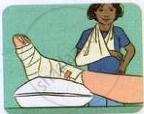
1. Sprain is an injury caused to:
- Bone
- Skin
- Ligament
- Muscle
2. The letter 'C' in PRICER stands for:
- Conduction
- Compression
- Concussion
- Contraction
3. The test to be conducted for bone injuries:
- X-ray
- Blood test
- ECG
- EEG
4. Who are usually affected by greenstick fracture?
- Adults
- Children
- Old aged
- None of the above
Or
4. The main objective of first aid is to:
- Save life
- Provide medical help
- Clear airways
- Check blood Circulation
Ramesh is an athlete of XYZ school. He used to do the 100m event for his school. He used to do hard work throughout the year to get his best performance. One day he got injured in the winter season due to improper warming-up. He has been given first -aid before being sent to hospital.
1. Sprain is an injury of ______.
- Ligament
- Muscle
- Bone
- Joint
2. In PRICE treatment I stands for:
- Icing
- Incline
- Incision
- Irritation
3. Abrasion is a ______.
- Type of fracture
- Joint dislocation
- Soft tissue injury
- Internal injury
4. Why warming up is necessary?
- To avoid injuries
- To increase pulse rate
- To increase body temperature
- All the above
| Diya went to sports training centre for the first time. Her coach informed her that participation in sports not only promotes physical growth but also has social and psychological benefits. He highlighted numerous physical benefits for muscles, heart and respiratory systems. He advised her to continue daily practice to improve her health related and skill related fitness. |
Answer the following questions based on the above case and your prior knowledge:
- Which is not a long-term effect of exercises on the muscular system?
- Hypertrophy of muscle
- Increase in glycogen stored
- Ligament and tendon strengthen
- Accumulation of lactate
- What is cardiac output?
- Choose the correct statement related to tidal volume:
- Amount of air inhaled and exhaled in one breath.
- Amount of air inhaled in one breath.
- Amount of blood pumped out by heart in one stroke.
- Amount of air exhaled in one breath.
- Lactic acid tolerance relates to ______.
- Strength
- Speed
- Flexibility
- Endurance
| Rohan, a 16-year-old student, got injured after colliding with Sachin during a football match. He was having unbearable pain in his ankle, and it was swollen. The coach noticed a collection of blood outside the blood vessel on Sachin’s forehead, too. He immediately gave first aid to both and rushed them to the hospital. |
Answer the following questions based on the above case and your prior knowledge:
- What type of injury did Rohan suffer?
- Strain
- Abrasion
- Sprain
- Laceration
- Sachin had ______ on his forehead.
- Contusion
- Fracture
- Laceration
- Incision
- If Sachin suffered abrasion during the injury, which of the following symptoms would he have?
- Tear of Ligament
- Rubbing away of upper layer of epidermis
- Tear of muscles
- Instability of joints
- A fracture in a soft bone, in which the bone bends, is known as ______.
- Comminuted fracture
- Transverse fracture
- Greenstick fracture
- Oblique fracture
Dr. Manu Sood solutions for फिजिकल एड्युकेशन [इंग्रजी] इयत्ता १२ 7 Unit-7: Physiology and Injuries in Sports REASONING QUESTIONS [Page 239]
Given below are two statements, one labelled as Assertion (A) and the other labelled as Reason (R):
Assertion (A): The nervous system is an important link between the brain and the muscles.
Reason (R): The greater the percentage of fast twitch muscle fibres, the faster the individual.
In the context of the above two statements, which one of the following is correct?
Both (A) and (R) are true and (R) is the correct explanation of (A).
Both (A) and (R) are true and (R) is not the correct explanation of (A).
(A) is true but (R) is false.
(A) is false but (R) is true.
Given below are two statements, one labelled as Assertion (A) and the other labelled as Reason (R):
Assertion (A): There are different types of joints in the human body.
Reason (R): All persons have the same range of motion of joints.
In the context of the above two statements, which one of the following is correct?
Both (A) and (R) are true and (R) is the correct explanation of (A).
Both (A) and (R) are true and (R) is not the correct explanation of (A).
(A) is true but (R) is false.
(A) is false but (R) is true.
Given below are two statements, one labelled as Assertion (A) and the other labelled as Reason (R):
Assertion (A): Contusion is a soft-tissue injury.
Reason (R): Bone injury is hard-tissue injury.
In the context of the above two statements, which one of the following is correct?
Both (A) and (R) are true and (R) is the correct explanation of (A).
Both (A) and (R) are true and (R) is not the correct explanation of (A).
(A) is true but (R) is false.
(A) is false but (R) is true.
Dr. Manu Sood solutions for फिजिकल एड्युकेशन [इंग्रजी] इयत्ता १२ 7 Unit-7: Physiology and Injuries in Sports FIGURE/PICTURE BASED QUESTIONS [Pages 239 - 241]
The most common cause of sports injuries include accidents during playing/training, poor training practices, improper sports gear etc. Not warming up or stretching enough before you play or exercise can also lead to injuries. These injuries often result in hampering performance of the athlete and require a period of rehabilitation before the player returns to his/her sports activity.
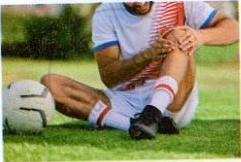
- A ______ injury is caused by an external blow or force causing injury at the point of contact.
- An ______ injury is sustained from continuous or repetitive stress, incorrect technique or equipment, or too much training.
- ______ is the crushing of soft tissues by a violent external force without breaking the continuity of skin.
- ______ is the injury of skin in which skin is scraped or rubbed by friction.
Or
An ______ is a cut made into the tissues of the body to expose the underlying tissue, bone or organ.
During a soccer game, Nitin collided with another player and fell, fracturing his arm. He experienced intense pain and swelling, prompting his parents to rush him to the emergency room. The doctor diagnosed Nitin with a broken bone and recommended a cast to immobilise the arm while it healed.
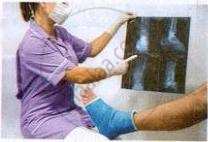
- Breaking of a bone is called ______.
- ______ fractures are caused by overuse and repetitive activity.
- ______ Fracture is very common in small kids.
- When the bone is broken into so many pieces or parts, it is called ______ fracture.
Or
______ fractures occur when the bone gets broken at an angle.
Study the picture given below:
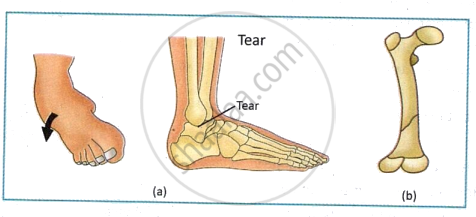
Based on the above study and your knowledge, answer the following questions:
- Identify the injury shown in picture 'A'.
- The injury shown in picture 'A' occurs due to overstretching of ______.
- Identify the type of fracture shown in picture 'B'.
Or
Fracture is a ______ tissue injury. - ______ is a joint injury that forces the ends of bones out of position.
Study the pictures given below:

Based on the above study and your knowledge, answer the following questions:
- Which type of fracture you see in image-1?
- When a bone breaks diagonally as shown in image-2, it is known as ______.
- ______ fracture occurs when the broken ends of the bones are jammed together by the force of the injury.
- In which type of fracture bone is broken, splinted, or crushed into number of pieces?
 |
 |
What is the primary effect of exercise on the cardiorespiratory system?
Decreased heart rate
Increased stroke volume
Decreased lung capacity
Decreased blood pressure
|
|
What is stroke volume?
The volume of blood ejected by the heart per minute.
The volume of blood ejected by the heart per beat.
The volume of blood in the ventricles at the end of diastole.
The volume of blood pumped by the heart during exercise.
|
|
Cardiac output is ______.
The volume of blood ejected by the heart per minute
The volume of blood ejected by the heart per beat
The volume of blood in the ventricles at the end of diastole
The volume of blood pumped by the heart during exercise
|
|
Blood pressure is ______.
The volume of blood ejected by the heart per minute
The force exerted by blood against the walls of arteries
The rate of blood flow through the veins
The amount of oxygen carried by red blood cells
In relation to the pictures, answer the following questions:

- When the two ends of the injured bone enter into each other it is said to be.
- Comminuted Fracture
- Greenstick Fracture
- Impacted Fracture
- Transverse Fracture
- ______ is a comminuted fracture.
- (d)
- (b)
- (e)
- (a)
- When the bone is broken into many pieces at one place or different places, it is called.
- Oblique Fracture
- Impacted Fracture
- Comminuted Fracture
- Greenstick Fracture
- ______ fracture occurs in a straight line at a right angle to the shaft of the bone. Usually caused by a direct blow
- Greenstick Fracture
- Oblique Fracture
- Transverse Fracture
- Impacted Fracture
Dr. Manu Sood solutions for फिजिकल एड्युकेशन [इंग्रजी] इयत्ता १२ 7 Unit-7: Physiology and Injuries in Sports VERY SHORT ANSWER TYPE QUESTIONS [Pages 243 - 244]
Define Physiology.
What is flexibility?
Name any 3 physiological factors that determine components of physical fitness.
What is Ageing?
What is Stroke Volume?
What is Oxygen Intake?
What is Oxygen Intake?
Discuss briefly about Oxygen uptake.
Define Physical Fitness.
What is meant by cardiac output?
Discuss briefly about Oxygen uptake.
What is cardio vascular system?
Explain the term hypertrophy of muscles.
What is Vital Capacity?
Define total lung capacity.
Define Muscle Fibre.
What is Sarcolemma?
What is anaerobic capacity?
Why does involvement in regular exercise delay the onset of fatigue?
What do you mean by Aerobic capacity?
What is sports injury?
How to classify sports injury?
What is sprain?
What is strain?
Explain what a contusion is.
Which type of sports injury is contusion?
What is a fracture?
What do you understand by the word PRICE?
What is dislocation of joint?
Explain the term stress fracture.
What is incision?
What kind of sports injury can be termed as "Abrasion"
What type of sports injury can be termed as 'Laceration' in sports?
Mention the various types of soft tissue injuries.
What type of fracture is known as Greenstick Fracture?
What is meant by soft-tissue injury?
Which type of sports injury is known as "Strain"?
What type of injuries are Laceration? Explain.
What type of injuries are Incision? Explain.
Elucidate any four types of fractures.
List down the types of bone injuries.
Elucidate any four types of fractures.
Point out physiological factor for strength.
Write a key point on cardio respiratory factors determining fitness.
Briefly explain 'R.I.C.E.' Therapy to manage soft tissue injuries.
Dr. Manu Sood solutions for फिजिकल एड्युकेशन [इंग्रजी] इयत्ता १२ 7 Unit-7: Physiology and Injuries in Sports SHORT ANSWER TYPE QUESTIONS [Page 244]
Elucidate any six effects of exercise on muscular system.
Elucidate any six effects of exercise on muscular system.
What is the difference between slow twitch fibre and fast twitch fibre.
How composition of muscle fibers effect speed?
Elaborate the effects of exercise on size of the heart.
Write briefly about the effect of training on Blood flow.
Write briefly about the effect of training on Blood volume.
What is pulmonary diffusion? How does it respond to training?
Explain any six changes due to ageing.
Elucidate three physiological changes that occur due to ageing.
Describe any three physiological changes due to ageing.
What are the most common causes of fracture?
Elucidate any four types of fractures.
What are some common soft tissue injuries? Discuss briefly about their causes & prevention.
How contusion can be prevented?
Discuss about the treatment of abrasion.
Discuss about the treatment of strain.
Discuss about the treatment of sprain.
What are joint injuries?
Write preventive measures of joint injuries
Mention briefly about the common sports injuries and their prevention.
How dislocation can be managed?
Create a flow chart for common Sports Injuries while enlisting the sub parts.
Describe the changes in the endocrine system due to ageing.
Define Fracture.
Elucidate any four types of fractures.
Describe the following:
Residual Volume
Describe the following:
Stroke Volume
Dr. Manu Sood solutions for फिजिकल एड्युकेशन [इंग्रजी] इयत्ता १२ 7 Unit-7: Physiology and Injuries in Sports LONG ANSWER TYPE QUESTIONS [Pages 244 - 245]
Explain the effects of exercise on cardio-respiratory system.
Explain the effects of exercise on cardio-respiratory system.
Explain the effects of exercise on cardio-respiratory system.
What are the various factors affecting physiological fitness? Explain.
What are the various factors affecting physiological fitness? Explain.
What are the various factors affecting physiological fitness? Explain.
What is Oxygen Intake?
Discuss briefly about Oxygen uptake.
Explain the effects of exercise on cardio-respiratory system.
Explain the effects of exercise on muscular system.
Describe any three physiological changes due to ageing.
What is Ageing?
Describe any three physiological changes due to ageing.
What is the difference between fracture and dislocation?
What is meant by soft-tissue injury?
Describe any two soft tissue injuries and their treatment.
What is a fracture?
What are the symptoms of fracture?
Mention the management of stress fracture and green stick fracture.
What are the symptoms of dislocation?
What are the treatment of dislocation?
What are the preventive measures for dislocation?
Write in detail about the Dislocation among joint injuries.
Write in detail about the Fractures among the bones injuries.
'Sprains' and 'Strains' are most common sports injuries. Write in detail about these soft tissue injuries and their management?
What is a fracture?
How can fractures be classified? Explain.
Contusion and dislocation are common sports injuries. Write in detail about the symptoms and management of these injuries.
Solutions for 7: Unit-7: Physiology and Injuries in Sports
Dr. Manu Sood solutions for फिजिकल एड्युकेशन [इंग्रजी] इयत्ता १२ chapter 7 - Unit-7: Physiology and Injuries in Sports
Shaalaa.com has the CBSE Mathematics फिजिकल एड्युकेशन [इंग्रजी] इयत्ता १२ CBSE solutions in a manner that help students grasp basic concepts better and faster. The detailed, step-by-step solutions will help you understand the concepts better and clarify any confusion. Dr. Manu Sood solutions for Mathematics फिजिकल एड्युकेशन [इंग्रजी] इयत्ता १२ CBSE 7 (Unit-7: Physiology and Injuries in Sports) include all questions with answers and detailed explanations. This will clear students' doubts about questions and improve their application skills while preparing for board exams.
Further, we at Shaalaa.com provide such solutions so students can prepare for written exams. Dr. Manu Sood textbook solutions can be a core help for self-study and provide excellent self-help guidance for students.
Concepts covered in फिजिकल एड्युकेशन [इंग्रजी] इयत्ता १२ chapter 7 Unit-7: Physiology and Injuries in Sports are Physiological Factors Determining the Component of Physical Fitness, Physical Fitness Components Determined by the Physiological Factors, Effect of Exercise on Muscular System, Types of Cardiorespiratory System, Effects of Exercise on Cardiovascular System, Effects of Exercise on Respiratory System, Physiological Changes Due to Ageing, Sports Injuries, Classification of Sports Injuries, Causes, Prevention, and Treatment of Soft Tissue Injuries, Causes, Prevention, and Treatment of Hard Tissue Injuries.
Using Dr. Manu Sood फिजिकल एड्युकेशन [इंग्रजी] इयत्ता १२ solutions Unit-7: Physiology and Injuries in Sports exercise by students is an easy way to prepare for the exams, as they involve solutions arranged chapter-wise and also page-wise. The questions involved in Dr. Manu Sood Solutions are essential questions that can be asked in the final exam. Maximum CBSE फिजिकल एड्युकेशन [इंग्रजी] इयत्ता १२ students prefer Dr. Manu Sood Textbook Solutions to score more in exams.
Get the free view of Chapter 7, Unit-7: Physiology and Injuries in Sports फिजिकल एड्युकेशन [इंग्रजी] इयत्ता १२ additional questions for Mathematics फिजिकल एड्युकेशन [इंग्रजी] इयत्ता १२ CBSE, and you can use Shaalaa.com to keep it handy for your exam preparation.
