Advertisements
Advertisements
प्रश्न
Information Transfer:
1) Non-verbal to verbal:
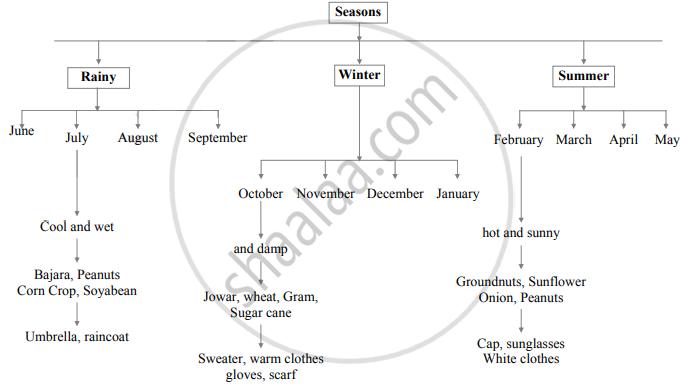
Write two short paragraphs on ‘Village life’ by using the points given in the following web diagram:

OR
2) Verbal to Non-verbal:
Read the following paragraph and complete the table by putting in the correct information. Suggest a suitable title.
|
While preparing to plant trees in a residential colony, highways or anywhere, one should consider three factors for taking a decision. What kind of (species) trees, where to plant and what kind of soil. One should consider the qualities of a tree such as a pattern of branching and its height. |
Title: __________________________________
| Kinds of trees | Where to plant | Uses |
| 1) Shade-giving (short trees) |
________________ | a) Children climb and play b) Enjoy shade of a tree |
| 2) ___________ ______________ (tall trees) |
Residential colonies | a) Withstand the wind b) _____________ |
| 3) ______________ (native trees) |
Rode side/highway | a) Birds and animals interact more with the native trees. b) Villagers consider them sacred. |
Advertisements
उत्तर १
Village life is simple, calm, and serene. It is advantageous as we get to inhale fresh and clean air. Villages have beautiful natural surroundings. People get to lead a healthy lifestyle. The environment is peaceful. On top of everything, people are much more cooperative than their urban counterparts.
However, there are a few disadvantages as well. The infrastructure is poor. Unfortunately, there is neither a mobile network nor road connectivity which hampers new businesses to come up in villages. It also adversely affects the daily lives of people staying there. More than roads there are potholes. Power and water supply are quite irregular. Also, people are not well educated. Due to this, they easily fall prey to blind faith.
उत्तर २
Title: Kinds of Trees and their Uses
| Kinds of trees | Where to plant | Uses |
| 1) Shade-giving (short trees) |
In a school | a) Children climb and play b) Enjoy shade of a tree |
| 2) Trees with thick branches like Ashoka and Eucalyptus (tall trees) |
Residential colonies | a) Withstand the wind b) Control pollution and trap dust |
| 3) Shade-giving tree like Tamarind and Peepel (native trees) |
Rode side/highway | a) Birds and animals interact more with the native trees. b) Villagers consider them sacred. |
APPEARS IN
संबंधित प्रश्न
A1. Information Transfer (Non-verbal to verbal)
'Transfer the following information into a paragraph form.
Manuscripts collected from both students and teachers.
↓
Throughly screened, necessary additions, alterations. omissions are made.
↓
Preparing a rough draft
↓
Manuscripts along with a dummy sent to the printer
↓
Proof correction
↓
Sent for final printing
OR
A2. Here are some tips about keeping healthy as given in a Science magazine. Read and
write in the form of Do's and Don'ts (table):
You must include vegetables and fruits in your diet and drink a lot of water. You should avoid junk food and aerated water. You shouldn't sit for long period of time. Rather you should exercise regularly. You shouldn't ignore the importance of good breathing habits. Try breathing deeply whenever you think of it. See to it that you leep for at least 7 hour a day. In fact, you should avoid irregular timings.
Read the following tree diagram about 'Morphemes' and write a short paragraph on it.

Read the following Intros of news items. Choose any ONE of them and write the headline, the dateline and a short continuing paragraph for it.
(i) A shortage of onions in Maharashtra has surged prices by 30 percent. It forced the authorities to import onions from abroad.
(ii) The birth anniversary of the late President Dr. S. Radhakrishnan was celebrated yesterday in Saraswati Kanya Pathshala as Teacher's Day.
Study carefully the following pie-chart about the Income Sources of a City Budget and write a short continuing paragraph based on it in about 120 words :

|
Courses
|
Intake capacity
|
Vacant seats
|
|
Engineering:
|
||
|
Degree
|
1, 55, 102
|
42, 497
|
|
Diploma
|
1, 65, 413
|
55, 107
|
|
Post - graduation
|
13, 651
|
1, 810
|
|
Pharmacy:
|
||
|
Degree
|
9, 712
|
924
|
|
Diploma
|
12, 959
|
1, 771
|
|
Post - graduation
|
5, 296
|
3, 506
|

Question:
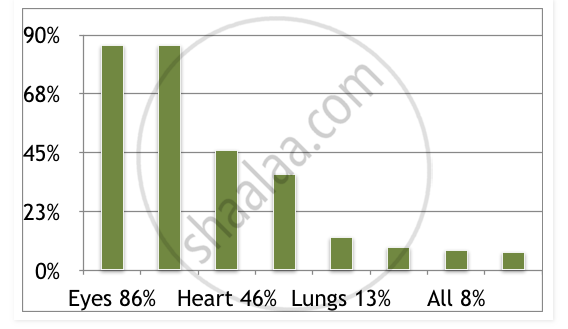
Read the following graph regarding ‘High Awareness but Little Action’ about organ donation. Write a paragraph based on it in about 120 words:
Read the following paragraph about ‘The causes of pollution and the possible solutions’ and tabulate the same information.
|
Pollution is the contamination into the natural environment that causes adverse change. Pollution levels are increasing day by day. There are various reasons for it. Air pollution is caused chiefly by industrial pollutants and by increased levels of RSPM due to higher flow of vehicular traffic. Water pollution is caused to a large extent by industrial effluents and the immersion of POP idols. Sound pollution levels have increased due to blaring loudspeakers during festival time and increased volume of traffic. In order to solve the problems of air pollution, the chief method seems to be tree plantation. More and more citizens and NGO’s should take up green causes with civic authorities. We need to protect our forest and conserve our mangroves. In order to solve the problem of water pollution, we need to develop effective waste management techniques. Also eco-friendly idols should be used during festival time. An awareness in general populace is very necessary to solve the problem of sound pollution. Strict enforcement of decibel levels during occasions and festival time by the police is a must. |
Use the following table for your answer.
| Pollution | Caused by | Solution |
The following graph shows the number of visitors (in millions) visiting the famous Salarjung Museum in Hyderabad between 2000 and 2010 as well as the number of visitors expected to visit it in the next ten years.

Look at the graph and the paragraph below which provides an interpretation of the data given in the graph.
Graph to show number of whales caught in Antarctic (1985-2010)

As whalers reduced catching of the large/r whales, they switched to smaller species. This is evident when we compare figures for the Antarctic catch of the larger sei whale with those for small minke whale. In 1985, fifteen times as many sei whales as minke whales were caught. By 1995, catches of both the species were virtually the same (9000). By the 2000, the situation had reversed and the number of minke whales killed more than doubled as compared to sei whales (6000). The graph shows that while the sei catch was reduced by 95% between 1985 and 2010, over the same period the minke whale catch was eight times greater. If these trends continue, the situation for the smaller species will be as bad as it used to be for the larger ones.
Discuss with a partner:
1. What expressions have been used for comparing the data? Underline them.
2. Does the analysis identify the main trends? Has any projection or guess been made based on the available data?
3. Can you spot a sentence that summarizes the data or draws a conclusion based on it?
4. Has the analysis been supported with figures from the given data?
5. Is there any unnecessary repetition?
6. How many times has the verb 'be' in its different forms been used? Some useful expressions :
|
{much ,many, far ,slightly, a little} |
more, greater,higher, less, lower, further, farther |
|
{half, twice, ten times, (etc.)} |
as { adj. adv.} as |
|
10 percent 150 percent |
{more less } than |
| almost the same ____ as | |
| as {adj adv.} as |
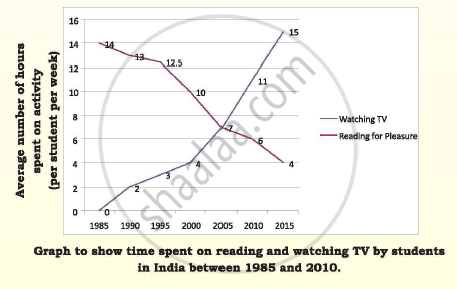
The graph below describes the average number of hours spent by students aged 11-15 years on two activities (per student per week) in India between 1985 and 2010 and gives projections for 2015. Study the information carefully and then write a paragraph interpreting the data. Include the following:
• A comparison of the trends in the two activities
• A comparison of the situation in 1985
• A comparison of the situation between 1985 and 2010
• Predictions for the future
A survey was conducted among the teachers of New Hope High School to find out whether Class X students should be allowed to use mobile phones in the campus. The results of the survey are shown in the pie-chart below.
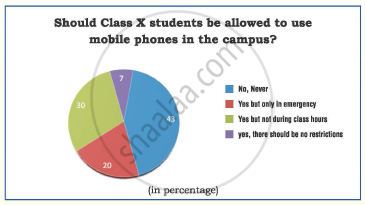
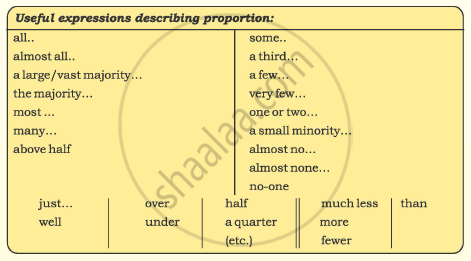
Look at the pie chart and the useful expressions above. Fill in the gaps in the following summary of results.
As can be seen from the above pie-chart, nearly a__________ of the teachers felt that Class X students must not be allowed to use mobile phones in the school campus. However, nearly one____________ believed
the phones should be permitted but not during class hours. About __________were of the opinion that the students may be allowed to use these phones only in times of emergency while a very__________ did not favour any restrictions on their use in the campus.
Read the following extract and complete the table given below about 'Types of Diseases':
Health is defined as not simply the absence of disease. It involves a state of feeling well, both in body and in mind.
The diseases may be classified into the following types, Some diseases are present at birth. They are called congenital diseases. They may develop during pregnancy or are inherited, Some of them may be caused by environmental factors. Examples of congenital diseases are Down's syndrome, sickle cell anaemia, cystic fibrosis, haemophilia, etc.
Some diseases are acquired by humans themselves and hence are called Self-Inflicted or Acquired diseases. Examples of acquired diseases are coronary heart diseases, hypertension.
Some diseases are transmitted from one person to another. They are called as Communicable or Infectious diseases. They are caused by biological agents, Examples of communicable diseases are Cholera, Typhoid, Measles, Malaria, etc.
Non- communicable diseases are caused by exogenous factors like physical, chemical, nutritional deficiencies. The examples are Kwashiorkor, Pellagra, Scurvy, and Rickets, etc.
Title
| Sr.No. | Types | Causes |
Examples |
| 1. | Congenital |
o develop during pregnancy o environmental factors |
|
| 2. | Self-Inflicted Acquired | Coronary heart disease. hypertension | |
| 3. | By biological agents | Cholera, typhoid, measles, malaria | |
| 4. | Non-communicable diseases | Kwashiorkor, Pellagra, Scurvy, and Rickets |
Extend the given extract by adding an imaginary paragraph of your own (about 120 words)
A couple of days later, I was walking around the camp, around the barracks, near the barbed-wire fence where the guards could not easily see. I was alone.
On the other side of the fence, I spotted someone: a little girl with light, almost luminous curls. She was half-hidden behind a birch tree.
I glanced around to make sure no one saw me. I called to her softly in German. 'Do you have something to eat?'
She didn't understand.
I inched closer to the fence and repeated the question in polish. She stepped forward. I was thin and gaunt, with rags wrapped around my feet, but the girl looked unafraid. In her eyes, I saw life.
She pulled an apple from her woollen jacket and threw it over the fence.
I grabbed the fruit and, as I started to run away, I heard her say faintly, 'I'II see you tomorrow."
Information Transfer (Non-verbal to Verbal):
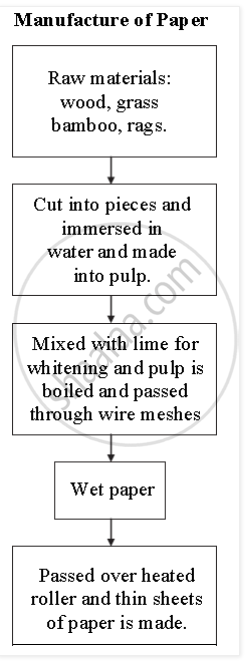
Do anyone of the following activities.
Transfer the given information into a paragraph.
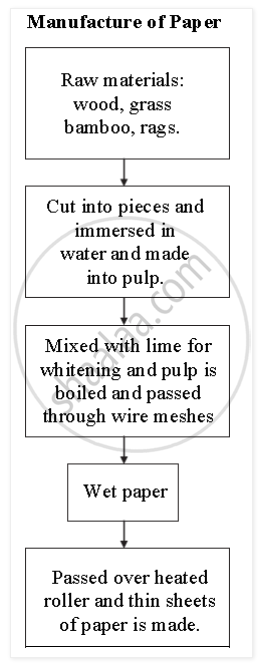
Read the following passage and complete the table
Dialect is a form of a language spoken in one area which may be different from other forms of the same language. Each language has dialects which change every few kilometers. India is a multi-lingual country. Each state follows its own language as official language. For example, Marathi is the official language of Maharashtra, while Ahirani, Wharadi, Konkani and Malwani are its dialects. Several languages in India are spoken but do not have any script. In Karnataka, Kannada is the official language. Tulu is spoken in Karnataka but has no script. In England, English is the official language while Scottish, spoken in Scotland and Welsh spoken in Wales are dialects of English.
| State | Official language | Dialects | Spoken/ Without script |
| Maharashtra | Marathi | ||
| Karnataka | |||
| England |
Transfer the information into a paragraph:
Read the following web diagram to transform into a paragraph:

Read the following paragraph and transfer the information in the form of a tree diagram:
The United Nations was established at the end of the second world war to maintain international peace and security.
In the central system of the UN, there are 15 members of the Security Council. The Economic and Social Council has 54 members. The Secretariat of the United Nations is headed by Secretary-General.
The UN has several specialized agencies such as the World Health Organisation (WHO), the Food and Agricultural Organisation (FAO), the International Labour Organization (ILO), the United Nations Educational, Scientific and Cultural Organisation (UNESCO).
Views :
Develop a paragraph on the view by using the points given below :
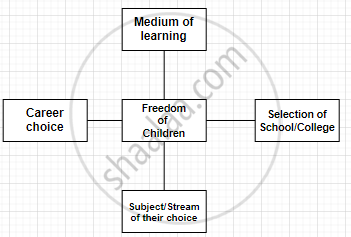
Read the following paragraph and transfer the information in the form of a tree diagram:
|
The United Nations was established at the end of the second world war to maintain international peace and security. The UN has several specialized agencies such as the World Health Organisation (WHO), the Food and Agricultural Organisation (FAO), the International Labour Organization (ILO), the United Nations Educational, Scientific and Cultural Organisation (UNESCO). |
Observe the following web diagram carefully and convert it into a paragraph.

Verbal to Non-Verbal:
Read the following information and complete the following table below it:
Chandrayaan-2, India’s second mission to the Moon will, for the first time, unravel secrets around the Moon’s the South Pole. Chandrayaan-2 is a three-part spacecraft - an orbiter, a lander, and a rover. The lander is named Vikram after Vikram Sarabhai, the founder of the Indian space programme. The rover is named Pragyan, meaning ‘wisdom’.
Chandrayaan-2 was launched on 22 July atop ISRO’s GSLV Mk-III at 2:43 p.m. from the Satish Dhawan Space Centre at Sriharikota. Performing as expected, the rocket released Chandrayaan-2 in a highly elliptic orbit around Earth about 17 minutes later. In fact, it was released 6,000 km higher than planned. The solar arrays on Chandrayaan-2 deployed smoothly as the probe began its journey.
| Table | Information | |
| 1. | Name of the Mission | |
| 2. | Date of Launch | |
| 3. | Centre of Launch | |
| 4 | Name of the Rover | |
| 5. | Founder of Indian Space Programme |
Non-verbal to Verbal:
Transfer the information into a paragraph:
Observe the tree diagram of types of disease and write a paragraph on it. Suggest a suitable title.

Verbal to Non-verbal:
Write Do’s and Don’ts for ‘In the Examination Hall’. Suggest a suitable title.
You should carry all necessary materials for exam such as pens, pencils, erasers, scale, geometrical box etc. You should not forget your identity card and hall tickets. After you enter the examination hall, keep all required things on your desk. You should follow the instructions given by the invigilator. You must read the question paper carefully. You should avoid observing other students because their tension might disturb you. You need not feel upset even if you notice other students writing very speedily. You stay calm. In any case do not talk to any of the students during the exam. It’s advisable to drink sufficient water before you enter the exam hall. Last but not the least, don’t forget to check all answers in last 10 minutes, before submitting your answer sheet to the invigilator.
Non-verbal to verbal:
Transfer the information into a paragraph.
Observe the web diagram and write a paragraph on it. Suggest a suitable title.

Transfer the given information in the form of a paragraph.
THE WATER CYCLE PROCESS

Non-verbal to verbal:
The following diagram shows important factors to be considered while choosing a career. Write a paragraph based on it. Give a suitable title to it:

Gurmeet Kaur is an aspiring candidate for a public- funded engineering college in the suburbs. She belongs to a nearby village, has minimal technological skills and exposure, has the required cut-off percentage and is looking for a complete or partial scholarship.
Write a paragraph in about 100-120 words analysing her SWOT notes to support your stand on whether she should /not join the college.
|
STRENGTH
|
WEAKNESS
|
|
OPPORTUNITIES
|
THREAT
|
Non-verbal to Verbal:
Transfer the given information into a paragraph. Suggest a suitable title:
| Caused by Man | Caused by Nature | Solutions | |
| i. | Too many people | Droughts | Stricter laws to control population. |
| ii. | More agricultural land required to meet the needs of the ever growing populations | Floods | Stricter laws and proper execution of laws |
| iii. | Cutting of forests for wood etc. | Forest fires | Use alternative products. |
| iv. | Poaching by hunters. | - | Reduce demand for illegal wildlife parts and products by not purchasing products made from these items. |
Non-verbal to verbal:
Read the information given in the following tree-diagram and write two short paragraphs based on it. Give a suitable title to your write up: