Advertisements
Advertisements
प्रश्न
Verbal to Non-verbal:
Write Do’s and Don’ts for ‘In the Examination Hall’. Suggest a suitable title.
You should carry all necessary materials for exam such as pens, pencils, erasers, scale, geometrical box etc. You should not forget your identity card and hall tickets. After you enter the examination hall, keep all required things on your desk. You should follow the instructions given by the invigilator. You must read the question paper carefully. You should avoid observing other students because their tension might disturb you. You need not feel upset even if you notice other students writing very speedily. You stay calm. In any case do not talk to any of the students during the exam. It’s advisable to drink sufficient water before you enter the exam hall. Last but not the least, don’t forget to check all answers in last 10 minutes, before submitting your answer sheet to the invigilator.
Advertisements
उत्तर
Do’s and don’ts for the Examination Hall
| Do’s | Don’ts |
| Carry all necessary materials for exam such as pens, pencils, erasers, scale, geometrical box. | Don’t Forget your identity card and hall tickets. |
| Keep all required things on your desk after entering the examination hall. | Don’t observe other students. |
| Follow the instructions given by the invigilator. | Don’t feel upset even if you notice other students writing very speedily. |
| Read the question paper carefully. | Don’t talk to any of the students during the exam. |
| Stay calm. | Don’t forget to check all answers in last 10 minutes. |
| Drink sufficient water before you enter the exam hall. | |
| Submit your answer sheet to the invigilator, timely. |
APPEARS IN
संबंधित प्रश्न
Question:
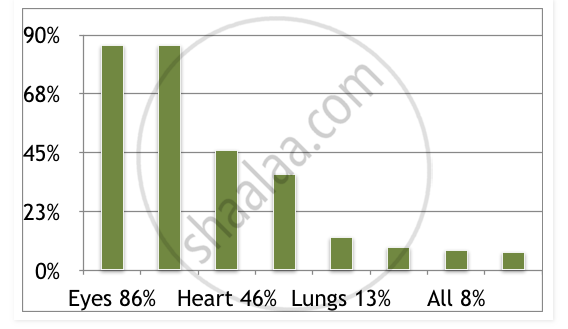
Read the following graph regarding ‘High Awareness but Little Action’ about organ donation. Write a paragraph based on it in about 120 words:
Information Transfer Non-Verbal to Verbal :
Observe the following web-chart carefully and write two short paragraphs of ‘Advantages of watching Television’ with the help of the points given.
Verbal to Non-verbal
Read the following paragraph and convert it into a tree diagram:
|
Two common types of oils are animal oil and vegetable oil. Vegetable oils are extracted from different plant parts such as seeds, nuts and the flesh of fruits. They are widely used in cooking. From very ancient times they have been used in households for various reasons. The oils of certain flowers are extracted to make perfumes. Vegetable oils such as castor oil are used as medicine and as lubricants. In recent times, there have been debates on using waste vegetable oils as fuel. |
Transfer the information into a paragraph:
Read the following web diagram to transform into a paragraph:

Non-verbal to Verbal
Study the table given below and prepare a paragraph on it.
| Alligators | Crocodiles | |
| 1. | U shaped round snout | V shaped round snout |
| 2. | Live in fresh water | Live in fresh water and saline water |
| 3. | Have wide jaws; upper jaw is wider than the lower jaw | Have narrow jaws; both the jaws are of the same size |
| 4. | Only upper teeth are visible when the mouth is closed | Both the teeth are visible when the mouth is closed. |
| 5. | No functioning salt glands | Very functional salt glands |
| 6. | Sensory pits on scales near the jaw | Sensory pits in every scale of the body |
Transfer the given information in the form of a paragraph.
THE WATER CYCLE PROCESS

Non-Verbal to Verbal
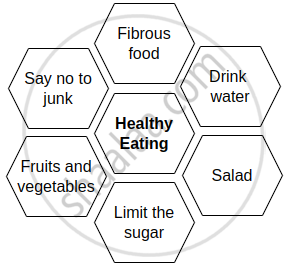
Transfer the given information in the form of a paragraph.
Verbal to Non-Verbal
Read the information in the given paragraphs and complete the table:
| Man and forest live in a close relationship. The forest fulfils most of man's needs. He collects resin, cane, timber, food and fruits from forests. The fallen branch gives him firewood. Trees purify the polluted air. But men have been unkind towards the forest for a few years. People must be made aware of the value of forests. Planting campaigns should be launched. The government of the world should enforce severe laws against wrongdoers. Vast areas of forest lands should be declared nature reserves. Scientists and engineers should be encouraged to find substitutes for wood like bamboo, hemp, etc. |
| ITEM | INFORMATION |
| Products of forest | |
| Firewood comes from | |
| Forests should be declared | |
| Substitutes for wood |
Non-verbal to verbal:
The following diagram shows important factors to be considered while choosing a career. Write a paragraph based on it. Give a suitable title to it:

A survey was conducted in the National Capital in over twenty schools about 40 different activities that interest the children in the age group of 13 years to 15 years. Write a paragraph in not more than 120 words, analyzing the following information.

