Advertisements
Advertisements
प्रश्न
Verbal to Non-verbal
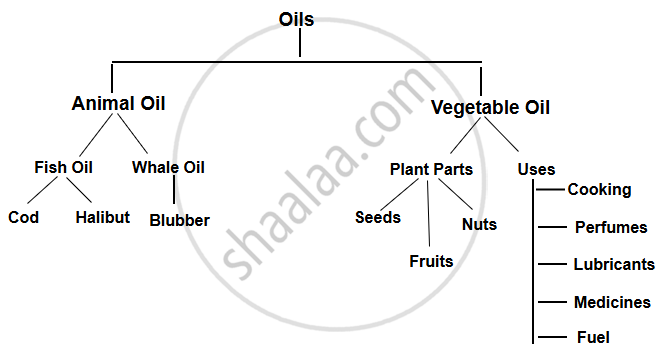
Read the following paragraph and convert it into a tree diagram:
|
Two common types of oils are animal oil and vegetable oil. Vegetable oils are extracted from different plant parts such as seeds, nuts and the flesh of fruits. They are widely used in cooking. From very ancient times they have been used in households for various reasons. The oils of certain flowers are extracted to make perfumes. Vegetable oils such as castor oil are used as medicine and as lubricants. In recent times, there have been debates on using waste vegetable oils as fuel. |
Advertisements
उत्तर
APPEARS IN
संबंधित प्रश्न
Read the following tree diagram about 'Morphemes' and write a short paragraph on it.

|
Courses
|
Intake capacity
|
Vacant seats
|
|
Engineering:
|
||
|
Degree
|
1, 55, 102
|
42, 497
|
|
Diploma
|
1, 65, 413
|
55, 107
|
|
Post - graduation
|
13, 651
|
1, 810
|
|
Pharmacy:
|
||
|
Degree
|
9, 712
|
924
|
|
Diploma
|
12, 959
|
1, 771
|
|
Post - graduation
|
5, 296
|
3, 506
|
A school carried out two surveys in Class X. Look at the pie charts below and write short summaries of the results as in the model above.
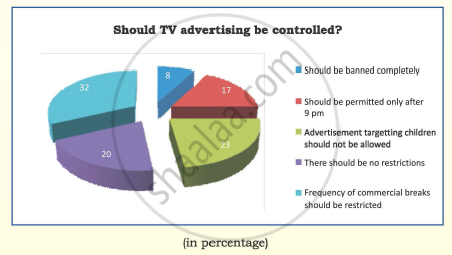
____________________________________________________________________
____________________________________________________________________
____________________________________________________________________
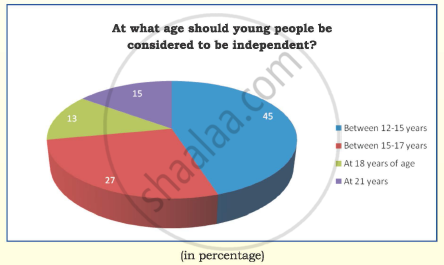
____________________________________________________________________
____________________________________________________________________
____________________________________________________________________
Observe the following table and transfer the information into a paragraph:
Statewise Distribution of Urban and Rural Population in India:
| States | Population in Millions | |
| Rural | Urban | |
| Maharashtra | 560 | 410 |
| Gujarat | 320 | 190 |
| Madhya Pradesh | 440 | 160 |
| Chhattisgarh | 170 | 40 |
| Andhra Pradesh | 550 | 210 |
| Karnataka | 350 | 180 |
Read the following tree-diagram and prepare a short paragraph regarding 'Soil Erosion'.

Do anyone of the following activities.
Transfer the given information into a paragraph.
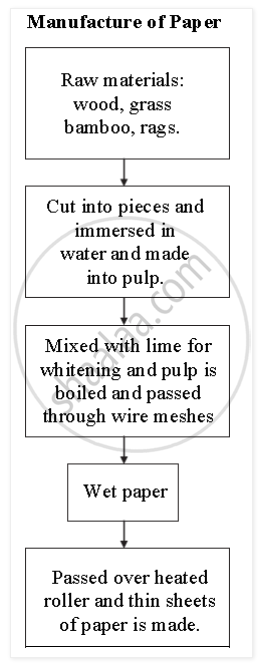
Write two short paragraphs on ‘Village life’ by using the points given in the following web diagram:

Non-verbal to verbal:
Transfer the information into a paragraph.
Observe the web diagram and write a paragraph on it. Suggest a suitable title.

(A1) Verbal to Non-Verbal:
Read the following information and complete the flowchart for the same, and give a suitable title.
|
Sugar beet grows through the summer and is harvested in autumn and winter. When it arrives on site, the sugar beet is washed. The sugar beet is sliced into thin strips called cossettes.‘These thin strips are mixed with hot water to extract the sugar and a lime solution is added to the raw juice to remove any impurities. |
Non-verbal to Verbal:
Transfer the given information into a paragraph. Suggest a suitable title:
| Caused by Man | Caused by Nature | Solutions | |
| i. | Too many people | Droughts | Stricter laws to control population. |
| ii. | More agricultural land required to meet the needs of the ever growing populations | Floods | Stricter laws and proper execution of laws |
| iii. | Cutting of forests for wood etc. | Forest fires | Use alternative products. |
| iv. | Poaching by hunters. | - | Reduce demand for illegal wildlife parts and products by not purchasing products made from these items. |
