Advertisements
Advertisements
प्रश्न
Sergius tells Bluntschli in the play "you're not a man, you're a machine." Do you agree with Sergius' assessment of Blunts ii? Give your views.
Advertisements
उत्तर
In the lesson, “Arms & The Man” written by George Bernard Shaw, is a play that describes Bulgarian – Serbian war in the 1880s. It includes romance, suspense & fear. As we all know the story that Raina & Sergius were engaged in & later there comes Bluntschli who was captain & was a Swedish professional soldier who fought servians during the war. He thought courage is overrated & that war is more ugly than noble. Raina used to call Bluntschli as “ Chocolate cream soldier”. Raina & Sergius were in “higher love” but then due to misunderstandings between both of them due to Bluntschli & Louka they both started creating distance between themselves. Raina could notice that Sergius was getting closer to their servant Louka wherein Sergius felt that Raina was getting close to Bluntschli. Anybody would feel jealous if they see their partner or fiance getting close to anyone else. Hence, out of anger & frustration. Sergius told Bluntschli that he was a machine & not men as he was an army person and used to deal with ammunitions all the time which was correct as he lost his partner & could feel that pain & emotion of losing someone from the life.
APPEARS IN
संबंधित प्रश्न
In the following items, sentence A is complete, while sentence B is not. Complete sentence B, making it as similar as possible to sentence A. Write sentence B.
(A) When she heard the news of her daughter’s result, she was very happy.
(B) On ........................................................................................
Fill in the blank with the suitable word.
Her aunt looks _____________ her aging grandparents.
Read the passage given below and answer the questions (a), (b) and (c) that follow :
(1) At the Literary Society’s meeting, Isola read out the letters written to her Granny Pheen, when she was but a little girl. They were from a very kind man – a complete stranger. Isola told us how these letters came to be written.
(2) When Granny Pheen was nine years old, her cat died. Heartbroken, sitting in the middle of the road, she was sobbing her heart out.
(3) A carriage, driving far too fast, came within a whisker of running her down. A very big man in a dark coat with a fur collar, jumped out, leaned over Pheen, and asked if he could help her. Granny Pheen said she was beyond help. Muffin, her cat, was dead.
(4) The man said, ‘Of course, Muffin’s not dead. You do know cats have nine lives, don’t you?’ When Pheen said yes, the man said, ‘Well, I happen to know your Muffin was only on her third life, so she has six lives left.’ Pheen asked how he knew. He said he always knew - cats would often appear in his mind and chat with him. Well, not in words, of course, but in pictures.
(5) He sat down on the road beside her and told her to keep still – very still. He would see if Muffin wanted to visit him. They sat in silence for several minutes, when suddenly the man grabbed Pheen’s hand.
(6) ‘Ah – yes! There she is! She’s being born this minute! In a mansion – in France. There’s a little boy petting her, he’s going to call her Solange. This Solange has great spirit, great verve – I can tell already! She is going to have a long, venturesome life.’
(7) Granny Pheen was so rapt by Muffin’s new fate that she stopped crying. The man said he would visit Solange every so often and find out how she was faring.
(8) He asked for Granny Pheen’s name and the name of the farm where she lived, got back into the carriage, and left.
(9) Absurd as all this sounds, Granny Pheen did receive eight long letters. Isola then read them out. They were all about Muffin’s life as the French cat − Solange. She was, apparently, something of a feline musketeer. She was no idle cat, lolling about on cushions, lapping up cream – she lived through one wild adventure after another – the only cat ever to be awarded the red rosette of the Legion of Honour.
(10) What a story this man had made up for Pheen – lively, witty, full of drama and suspense. We were enchanted, speechless at the reading. When it was over (and much applauded), I asked Isola if I could see the letters, and she handed them to me.
(11) The writer had signed his letters with a grand flourish :
VERY TRULY YOURS,
O.F. O’F. W.W.
It was highly possible that Isola had inherited eight letters written by Oscar Wilde, for who else could have had such a preposterous name as Oscar Fingal O’Flahertie Willis Wilde.
Adapted from : The Guernsey Literary & Potato Peel Pie Society – By Mary Ann Shaffer & Annie Barrows
(a) (i) Given below are four words and phrases. Find the words which have a similar meaning in the passage :[4]
(1) adventurous
(2) cat-like
(3) appreciated
(4) received something on someone’s death
(ii) For each of the words given below, write a sentence of at least ten words using the same word unchanged in form, but with a different meaning from that which it carries in the passage :[4]
(1) kind (line 2)
(2) mind (line 13)
(3) still (line 15)
(4) sounds (line 26)
(b) Answer the following questions in your own words as briefly as possible:
(i) Where did Isola get the letters from to read at the Literary Society’s meeting?[2]
(ii) Who consoled Granny Pheen when she was heart-broken? What did he say about Muffin’s lives?[2]
(iii) What did the man say when Granny Pheen asked him how he knew about cats’ lives?[2]
(iv) According to the man, what was Muffin’s new fate?[3]
(c) In not more than 100 words, summarise why the eight letters were a treasure to Granny Pheen. (Paragraphs 2 to 10). Failure to keep within the word limit will be penalised. You will be required to write the summary in the form of a connected passage in about 100 words.[8]
Why does the poet use repletion in the poem?
Comment on the contrasted viewpoints in the poem.
Ichabod Crane, the central character of the short story 'The Legend of Sleepy Hollow', is a person who arouses both our amusement and pity. Discuss.
The book was so interesting that I could not put in down.
(Begin : The book was too ……………… )
How did the narrator and Lord Otori overpower the intruder?
Last night’s dinner was cooked for us by father.
(Begin : Father …………… )
She battled her way ___________the crowd.
Give reasons for the following.
Tut’s body was buried along with gilded treasures.
Discuss the following in groups of two pairs, each pair in a group taking opposite points of view.
Advanced technology gives us conclusive evidence of past events.
Write a letter to the President, Residents’ Welfare Association of your locality suggesting some measures that could be taken for solving the problem of water scarcity and conserving water.
What do you learn about Columbia from the lesson you have read? What was its final fate?
Write the appreciation of the poem.
- About the poem/poet/title
- Theme
- Poetic devices, language, style
- Special features/novelties/focusing elements
- Values, message
- Your opinion about the poem.
You must have heard about the Film and Television Institute of India (FTII), Pune. It is India's top media Institute. It plays an important role in providing talent to commercial cinema, TV, and web serials. Browse the internet and find information about other institutes in India and abroad, write it in your notebook.
Write two lines from this poem which you find most humorous. Justify your choice.
Think and write in your own words.
How can the tender maiden Autumn become a full-grown woman? What change in nature does this imply?
Gather information on any one of the following by talking to your elders, family members, and from other sources in your mother tongue and write a short note on it in English.
Something that you use to decorate your home on special occasions.
Find more topics from your Environmental Studies or Mathematics textbooks for drawing tree diagrams. Draw and label the diagrams.
| Life on earth began with unicellular I organisms known as protozoa. The following are the stages of evolution of animals. Invertebrates are animals without a backbone, for e.g., a snail. The vertebrates are animals which have a backbone. E.g., Aquatic animals like fish. Animals which: live in water and also on land are called amphibians. E.g. A frog. A few invertebrates are worms and mosquitoes and a few I vertebrates are reptiles. |
Dos and Don’ts for delivering a speech. Add some more points.
| Dos | Don’ts |
| Talk slowly | Don’t mumble |
| Emphasize keywords | Don’t look up/down |
Pick out the nouns from the poem. Write as many Cinquain poems as you can.
______ do you get up?
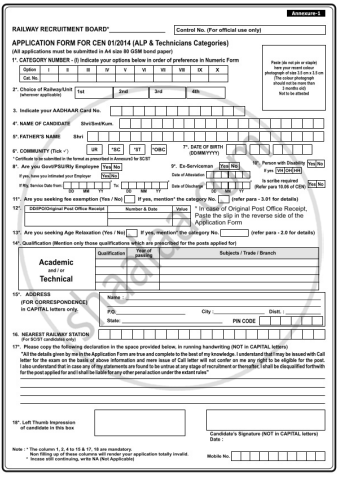
Fill in the following forms with imaginary details.
What does the title of the story convey?
Write a composition in approximately 350 – 400 words on the following subject:
(You are reminded that you will be rewarded for orderly and coherent presentation of material, use of appropriate style and general accuracy of spelling, punctuation, and grammar.)
International sports promote friendship between nations.
Argue FOR or AGAINST the given statement.
Write a composition in approximately 350 – 400 words on the following subject:
(You are reminded that you will be rewarded for orderly and coherent presentation of material, use of appropriate style and general accuracy of spelling, punctuation, and grammar.)
Online education during the pandemic has been a blessing in disguise.
Give your views on the above statement.
Suppose one of your parents or an older relative wants to know about online shopping and you are explaining how to do it. Write a conversation between you and your parent/relative about it.
Imagine you are a tourist guide at Sindhudurg. Write two sentences each about the following points to help foreign tourists.
- About the place: History, languages spoken, special attractions
- Food: speciality, local delicacies, options (Indian, continental)
- Shopping: authenticity of local artefacts, price, variety
Imagine someone has invited your family to a programme and you were the only person at home when the invitation was given orally.
Write a note (4-5 lines) to pass on the message to the other people in your family. Or, write an imaginary conversation in which you pass on the message to your parents.
