Advertisements
Advertisements
प्रश्न
Given below is a list of tools and equipment. Associate them with the appropriate profession and complete the table.
plough, hammer, oven, thermometer, voltmeter, wood, chisel, seed drill, voltage, detector, cutting boards, stone picker, spatula, cultivator, nail puller, wire strippers, framing square, fork, flashlight
| Farmer | Carpenter | Electrician | Chef |
| plough | hammer | ||
Advertisements
उत्तर
| Farmer | Carpenter | Electrician | Chef |
| plough | hammer | thermometer | oven |
| seed drill | wood | volt meter | cutting boards |
| cultivator | chisel | voltage detector | fork |
| stone picker | framing square | nail puller/flashlight | spatula |
APPEARS IN
संबंधित प्रश्न
You had gone on a trekking expendition with a group of friends. As night closed in, you realised that you were separated from the group. Describe your initial feelings and the place where you got lost. How did you spend the night alone before you were reunited with your group?
The poet refers to a dying fire. Who were sitting beside it and why?
Besides being an amusing tale about a failure to communicate the story “A Horse and Two Goats” makes some crucial points also. Justify.
Is the story Didactic and gives a moral?
Join the following sentence to make one complete sentence without using and, but or so.
Mumbai is densely populated. It is one of the major cities in the country.
Explain the statement, “King Tut is one of the first mummies to be scanned — in death, as in life...”
In what ways do you think we could help prevent the extinction of languages and dialects?
There is a parallel drawn between rain and music. Which words indicate this? Explain the similarity between the two.
Discuss with your partners
Talking about teachers among friends.
Find out the information about the qualification and eligibility required in the profession related to wildlife such as:
Geologist
We add ‘un-’ to make opposites. For example, true — untrue. Add ‘un’– to the word below to make its opposite. Then look up the meaning of the word you have formed in the dictionary.
identified ______
We add ‘un-’ to make opposites. For example, true — untrue. Add ‘un’– to the word below to make its opposite. Then look up the meaning of the word you have formed in the dictionary.
interesting: ____________
The person who makes mistake or commits crime should be punished because _________________.
- _______________________________
- _______________________________
- _______________________________
- _______________________________
Compose a poem on a farmer in 4 to 6 lines in continuation of the following.
- He sweats ________________
- He does not fret ________________
- He sows ________________
- To the soil he bows ________________
Imagine your younger sister is not paying attention to her studies and is seen wasting time playing games on her cell-phone. Suggest some ways that will help her to concentrate on her studies and overcome her bad habit.
Discuss with your partner on the following topic. Express your views and opinions in favour of and against the topic.
Are college council elections essential in Jr. Colleges?
You must have heard about the Film and Television Institute of India (FTII), Pune. It is India's top media Institute. It plays an important role in providing talent to commercial cinema, TV, and web serials. Browse the internet and find information about other institutes in India and abroad, write it in your notebook.
Given in a mixed order below are some good human attributes of the family. Pick out from the box and write it against the line that reflects it.
Ten years had passed and the young boys grew to be young men and their parents were proud of them.
Discuss the following and write about the following in your own words in 5-6 lines.
Which events in the story (Part I and Part II) changed Mathilde’s life?
Write at least 5 rhymes from the poem.
The man who came to the house gave the cross as a gift to the girl. Why did he do this? What do you think would have happened if he had taken back the cross with him?
Dinesh and Divya have been assigned homework on non-finite. They are not sure when to use a gerund and when to use an infinitive. They decide to meet their teacher and get their doubts cleared. The teacher introduces them to Mr. Gerund and Ms. Infinitive.
Write a narrative paragraph on Kamarajar, using the given information and add more information on your own.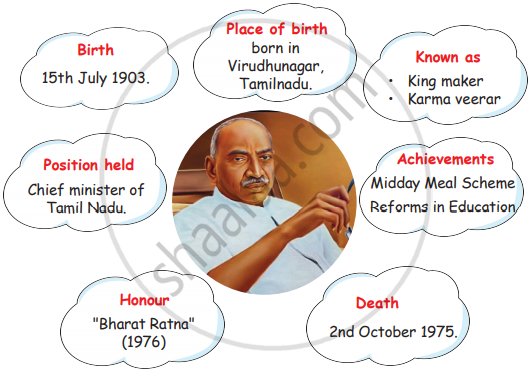
The word in the sentence is jumbled. Write them in order.
was afraid I now.
Discuss and write –
- Why do cats and dogs fight?
- Why do we walk across the road, not run?
- Why do people like ice-cream?
What difficulty did she experience while eating Chinese food?
What did Aunt Jane like about Jack’s ‘little nest’?
Summarizing is to briefly sum up the various points from the notes made from the below passage.
The Sherpas were nomadic people who first migrated from Tibet approximately 600 years ago, through the Nangpa La pass and settled in the Solukhumbu District, Nepal. These nomadic people then gradually moved westward along salt trade routes. During 14th century, Sherpa ancestors migrated from Kham. The group of people from the Kham region, east of Tibet, was called “Shyar Khamba”. The inhabitants of Shyar Khamba, were called Sherpa. Sherpa migrants travelled through Ü and Tsang, before crossing the Himalayas. According to Sherpa oral history, four groups migrated out of Solukhumbu at different times, giving rise to the four fundamental Sherpa clans: Minyagpa, Thimmi, Sertawa and Chawa. These four groups have since split into the more than 20 different clans that exist today.
Sherpas had little contact with the world beyond the mountains and they spoke their own language. AngDawa, a 76-year-old former mountaineer recalled “My first expedition was to Makalu [the world’s fifth highest mountain] with Sir Edmund Hillary’’. We were not allowed to go to the top. We wore leather boots that got really heavy when wet, and we only got a little salary, but we danced the Sherpa dance, and we were able to buy firewood and make campfires, and we spent a lot of the time dancing and singing and drinking. Today Sherpas get good pay and good equipment, but they don’t have good entertainment. My one regret is that I never got to the top of Everest. I got to the South Summit, but I never got a chance to go for the top.
The transformation began when the Sherpa Tenzing Norgay and the New Zealander Edmund Hillary scaled Everest in 1953. Edmund Hillary took efforts to build schools and health clinics to raise the living standards of the Sherpas. Thus life in Khumbu improved due to the efforts taken by Edmund Hillary and hence he was known as ‘Sherpa King’.
Sherpas working on the Everest generally tend to perish one by one, casualties of crevasse falls, avalanches, and altitude sickness. Some have simply disappeared on the mountain, never to be seen again. Apart from the bad seasons in 1922, 1970 and 2014 they do not die en masse. Sherpas carry the heaviest loads and pay the highest prices on the world’s tallest mountain. In some ways, Sherpas have benefited from the commercialization of the Everest more than any group, earning income from thousands of climbers and trekkers drawn to the mountain. While interest in climbing Everest grew gradually over the decades after the first ascent, it wasn’t until the 1990s that the economic motives of commercial guiding on Everest began. This leads to eclipse the amateur impetus of traditional mountaineering. Climbers looked after each other for the love of adventure and “the brotherhood of the rope” now are tending to mountain businesses. Sherpas have taken up jobs as guides to look after clients for a salary. Commercial guiding agencies promised any reasonably fit person a shot at Everest.
What might success mean to the following people? Think about it and write.
A politician
Write about your own experience. Do you remember an occasion when you did something successfully for the first time? Write about it in short (10-12 lines). Prepare an outline of your composition before you write it.
