Advertisements
Advertisements
प्रश्न
Discuss the following topic in groups of five and choose a representative to sum up the view and share them with the class.
Successful people neither brood over the past nor worry about the future.
Advertisements
उत्तर
Mahatma Gandhi and his followers were arrested and jailed many times. Gandhi’s followers were brutally lathi-charged. Gandhi had decided to silence the guns of the British with Ahimsha passive non-violent resistance. The brutal suppression of the struggle for freedom did not dishearten Gandhi. He did not brood about the strength of the British army and the weaknesses of unarmed peasants who believed in his leadership. He was a Karmayogi. Whatever the duty to be done it must be done with steadfast devotion and sincerity. Other leaders got worried. Some angry young men resorted to violence.
They burnt down a police station at Chauri chakra too. But Gandhi declared a fast unto death. He plunged into action. If he had worried about the unpleasant developments, he wouldn’t have launched Quit India Movement or Salt Satyagraha effectively.
Thomas Alva Edison was not able to find the element that would glow if electricity was passed. He had failed 1000 times to invent the bulb. But he said, “The light bulb was an invention with 1000 steps”. Each step taught him what did not work. He lost his hearing capacity. He had many failures. His teachers believed him to be mad and unteachable.
His entire schooling was only a few years. His mom taught him and made him believe in himself. This man who had been ill-treated in school and faced many challenges had no time to brood. He went on to make 1093 inventions and got them patented. Those who are busy building facilities for transforming the world have neither the time nor the inclination to brood about failures or about possibilities of success in the future.
APPEARS IN
संबंधित प्रश्न
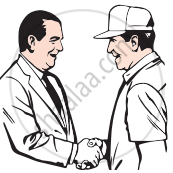
Guess what friendly words these two gentlemen exchange when shaking hands.
What happens to the poet when he visits someone for the third time?
Explain the following line with reference to the context.
I have learned to wear my faces Like dresses …
This poem is nothing but a criticism of modern life. Justify this statement.
Explain the following with reference to the context in about 50–60 word each.
They do not ever in their dealings Consider one another’s feelings…
Underline the alliterated word in the following line.
For this most modest physiques…
Do you go for leisurely walks? If you are a city-dweller, what or who would you expect to see on your way?
If you go to a village, what scenes would you observe?
Find words from the poem that convey the following ideas:
- connected together
- spread over the surface of the ground in a straggling manner
- make out or understand
- slender woody shoots growing from branches or stems of trees
Read the lines given below and answer the question that follow.
And I must think, do all I can,
That there was pleasure there…
- What did the poet notice about the twigs?
- What was the poet’s thought about then?
Why does the poet think that the birds were happy?
The poet experiences sadness because ______.
Answer in a paragraph of about 100−150 words.
Do you think the poet wants to say that man is unhappy because he has lost his link with nature and forgotten how to enjoy nature, or because man is cruel to other men?
Write a letter to the Councillor of your Ward, explaining why a park is necessary in your locality.
A French proverb goes thus: ‘The dog may be wonderful prose, but only the cat is poetry.’ You may have observed that all animals possess a number of unique qualities. Fill in the columns with words and phrases associated with each of the following animals.
| DOG | CAT | WOLF | ELEPHANT |
Explain the following line with reference to the context.
And his footprints are not found in any file of Scotland Yard’s
Identify the literary devices used in the following lines:
- He sways his head from side to side, with movements like a snake.
- They say he cheats at cards.
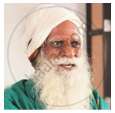
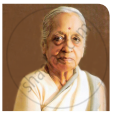
Identify the following personalities and their fields of achievement.
| Name | Field | |
 |
||
 |
||
 |
||
 |
||
 |
||
 |
||
 |
||
 |
- Mention a remarkable achievement of any of these personalities.
- What quality do you admire the most in each of these achievers?
- What are the qualities that you may share with them?
- Name a few more popular personalities who have made our nation proud.
- ______.
- ______.
- ______.
- ______.
Which path should we follow in life?
What does ‘hillock’ refer to in the line ‘Every hillock has a summit to boast!’?
The poem does not focus on the destination but the journey towards it. Discuss
The historical background:
The poem is an extract from William Shakespeare’s play King Richard the Second. The play is based on true events that occurred towards the end of the 14th century.
Richard II was crowned the King of England in the year 1367. He continued to be the British Monarch until 1399, when he was deposed by his cousin, Henry of Bolingbroke, who crowned himself King Henry the Fourth in the same year. Shakespeare’s play is a dramatic rendition of the last two years of King Richard II’s life. In this brief span of time, he was ousted from his royal position and sent to prison, where he died in captivity.
The following extract is set in the Coast of Wales. King Richard and some of his followers awaited the arrival of the Welsh army [after facing defeat at the hands of his cousin, Bolingbroke], of about 10000 warriors. But to their shock and surprise, they received the message that the army was not coming to their rescue. His followers tried to boost their King’s courage against the news, only in vain. When Richard came face to face with the reality of his terrible fate, he spoke the following verse, famously known as the “Hollow Crown” speech in theatrical circles. In it, King Richard is reminded of the power of Death that overshadows everything else, including the power of rulers, and renders them as powerless as any commoner at a moment’s notice.
Fill in the blanks using the words given in the box to complete the summary of the poem:
King Richard the Second, had surrendered to his (a)______cousin, Bollingbroke. He experienced deep distress at the horror of his circumstances. In that desperate situation, he speaks of (b)______, (c)______, (d)______and other things connected with death. He spoke of how people leave nothing behind and can call nothing their own, except for the small patch of (e)______, where they will be buried. King Richard yielded to dejection and talked of all the different ways in which defeated kings suffer how some had been deposed, (f)______in war, (g)______by their wives and so forth. He attributed this loss of lives to (h)______, who he personified as the jester who watches over the shoulder of every ruler, who mocks kings by allowing them to think their human flesh, was like (i)______brass. However, Death penetrates through the castle walls, silently and unnoticed like a sharp (j)______, thus bidding (k)______to him and all his pride forever. Finally, Richard appealed to his soldiers not to mock his mere flesh and blood by showing (l) ______and respect to him. He added that he too needed bread to live, felt want, tasted (m)______and needed (n)______. He concluded thus, urging his men not to call him a (o)______as he was only human, just like the rest of them.
| barren-earth | friends | graves | slain |
| rebellious | poisoned | worms | grief |
| impregnable | epitaphs | death | farewell |
| reverence | king | pin |
Fill in the blank with appropriate word from the box and complete the statement suitably:
The spectators died laughing at the ______of the clown.
Bring out King Richard’s feelings when he was defeated.
Explain the following line with reference to the context in about 5 to 8 line:
“Our lands, our lives, and all are Bolingbroke’s,
And nothing can we call our own but death;”
Read the poem once again carefully and identify the figure of speech that has been used in each of the following line from the poem:
“And yet not so – for what can we bequeath
Save our deposed bodies to the ground?”
Read the poem once again carefully and identify the figure of speech that has been used in each of the following line from the poem:
“Keeps Death his court, and there the antic sits,…”
Based on your reading of King Richard’s speech, answer the following questions in about 100 - 150 words each. You may add your own ideas if required to present and justify your point of view.
How are eternal truths and wisdom brought to the reader here?
