Topics
Living World and Classification of Microbes
Health and Diseases
Force and Pressure
Current Electricity and Magnetism
Inside the Atom
Composition of Matter
- Matter (Substance)
- Characteristics of Particles (Molecules) of Matter
- States of Matter
- The Solid State
- The Liquid State
- The Gaseous State
- Elements
- Earth and Elements
- Non-Metals
- Type of Element: Metalloid
- Compound
- Types of Compound
- Mixture
- Types of Mixtures
- Introduction to Solutions
- Suspension Solution
- Colloidal Solution
- Molecular Formula of Compounds
- Periodic Trends in the Modern Periodic Table
Metals and Nonmetals
Pollution
- Pollution
- Air Pollution
- Prevention and Control of Air Pollution
- Water Pollution
- Effects of Water Pollution
- Prevention and Control of Water Pollution
- Soil Pollution
- Effects of Soil Pollution
- Prevention and Control of Soil Pollution
- Relationship of Soil Pollution with Air and Water Pollution
- Laws for Control, Regulation, and Prevention of Pollution by Indian Government
Disaster Management
Cell and Cell Organelles
- Cell: Structural and Functional Unit of Life
- Prokaryotic and Eukaryotic Cell
- Plant Cell Vs Animal Cell
- Cell Organelles
- Structure of the Cell > Cell Wall: “Supporter and Protector”
- Structure of the Cell > Plasma Membrane / Cell Membrane
- Structure of the Cell > Cytoplasm: “Area of Movement”
- Structure of the Cell > Nucleus: “Brain” of the Cell
- Endoplasmic Reticulum (ER)
- Golgi Apparatus - "The delivery system of the cell"
- Lysosome - “Suicidal Bag”
- Mitochondria - “Power House of the Cell”
- Plastids
- Non-living Substances Or Cell Inclusion
Human Body and Organ System
- Human Body
- Human Organ System
- Mechanism of Respiration > Breathing
- Human Respiratory System
- Blood Circulatory System
- Human Heart
- Blood Vessels
- Circulation of Blood in the Heart (Functioning of Heart)
- Heart Beat
- Blood
- Plasma (The Liquid Portion of Blood)
- Composition of Blood > Cellular Elements: Red Blood Cells (Erythrocytes)
- Composition of Blood > Cellular Elements: White Blood Cells (Leukocytes)
- Composition of Blood > Cellular Elements: Blood Platelets (Thrombocytes)
- Functions of Blood
- Blood Transfusion and Blood Groups (ABO and Rh system)
- Blood Pressure (B.P.)
- Heart Related Conditions
Introduction to Acid and Base
Chemical Change and Chemical Bond
Measurement and Effects of Heat
Sound
Reflection of Light
Man Made Materials
Ecosystems
Life Cycle of Stars
- Thermoplastic
- Thermosetting Plastics
Maharashtra State Board: Class 8
Thermoplastic:
Plastics that can be softened by heating, moulded into different shapes, and cooled to harden. This process can be repeated multiple times without significant degradation of the material. Thermoplastics have a linear structure with weak bonds between polymer chains, which allows them to be remoulded when heated.
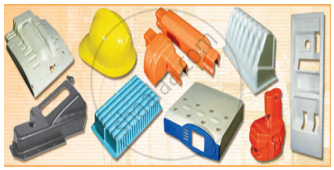
Thermoplastic
| Thermoplastic | Uses |
|---|---|
| 1. Polyvinyl chloride (PVC) | Bottles, raincoats, pipes, handbags, shoes, electric cable insulation, furniture, ropes, toys, etc. |
| 2. Polystyrene (PS) | Thermo-insulating parts of electric appliances like refrigerators, gears of machines, toys, protective coverings like covers of CD and DVDs, etc. |
| 3. Polyethylene (PE) | Milk bags, packing bags, flexible garden pipes, etc. |
| 4. Polypropylene (PP) | Parts of loudspeakers & vehicles, ropes, mattresses, laboratory appliances, etc. |
Maharashtra State Board: Class 8
Thermosetting Plastics:
Plastics that cannot be softened or remoulded once they are heated and set into a specific shape. These plastics retain their shape permanently after moulding. Thermosetting plastics have a cross-linked structure, forming strong bonds between polymer chains. This makes them rigid and resistant to heat.
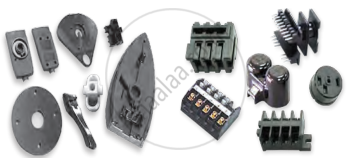
Thermosetting plastic
| Thermosetting Plastic | Uses |
|---|---|
| 1. Bakelite | Cabinets of radio, T.V., telephones, electric switches, toys, coverings over handles of cookers, etc. |
| 2. Melamine | Domestically useful items like cups, saucers, plates, trays, some spare parts of airplane engines, electric and sound-insulating coverings, etc. |
| 3. Polyurethane | Surfing boards, small boats, furniture, seats in vehicles, etc. |
| 4. Polyester | Fiberglass, toners of laser printers, textile industry, etc. |
