Topics
Exploration: Entering the World of Secondary Science
World of Living
Matter in Our Surroundings
- Matter (Substance)
- Characteristics of Particles (Molecules) of Matter
- The Solid State
- The Liquid State
- The Gaseous State
- Plasma
- Bose-einstein Condensate
- Change of State
- Concept of Evaporation
- Concept of Melting (Fusion)
- Vaporisation or Boiling
- Sublimation
- Concept of Freezing (Solidification)
- Concept of Condensation (Liquefaction)
- Concept of Desublimation (Deposition)
Is Matter Around Us Pure
- Matter (Substance)
- Natural substances
- Mixture
- Types of Mixtures
- Introduction to Solutions
- Concentration of a Solution
- Suspension Solution
- Colloidal Solution
- Evaporation Method
- Solvent Extraction (Using a Separating Funnel Method)
- Sublimation
- Chromatography Method
- Simple Distillation Method
- Fractional Distillation Method
- Crystallisation Method
- Classification of Change: Physical Changes
- Pure Substances
- Compound
- Elements
Matter - Its Nature and Behaviour
Cell: The Building Block of Life
Motion, Force, Work and Sound
Tissues in Action
Atoms and Molecules
- History of Atom
- Laws of Chemical Combination
- Law of Conservation of Mass
- Law of Constant Proportions (Law of Definite Proportions)
- Dalton's Atomic Theory
- Atoms: Building Blocks of Matter
- Symbols Used to Represent Atoms of Different Elements
- Atomic Mass
- Relative Atomic Mass (RAM)
- Molecules
- Classification of Molecules
- Difference Between Atoms and Molecules
- Ions (Radicals) and Its Types
- Chemical Formula or Molecular Formula
- Molecular Mass
- Formula Unit Mass
- Mole Concept
- Atoms and Molecules Numericals
Earth as a system
Reproduction: How Life Continues
Structure of the Atom
- Existence of Charged Particles in Matter
- Atoms: Building Blocks of Matter
- Discovery of Charged Particles in Matter
- Protons
- Electrons
- Neutrons
- J. J. Thomson’s Atomic Model
- Advantage and Limitations of Thomson’s Atomic Model
- Rutherford’s Atomic Model
- Limitations of Rutherford’s Atomic Model
- Neils Bohr’s Model of an Atom
- Electronic Configuration of Atom
- Periodic Trends in the Modern Periodic Table
- Different Ways to Determine Valency
- Atomic Number (Z) and Mass Number (A)
- Atomic Mass
- Uses of Radioactive Isotopes
- Isotopes
- Atoms and Molecules Numericals
Patterns in Life: Diversity and Classification
The Fundamental Unit of Life
- The Invention of the Microscope and the Discovery of Cell
- Cell Theory
- Prokaryotic and Eukaryotic Cell
- Cell Organelles
- Structure of the Cell > Plasma Membrane / Cell Membrane
- Structure of the Cell > Cell Wall: “Supporter and Protector”
- Structure of the Cell > Nucleus: “Brain” of the Cell
- Structure of the Cell > Cytoplasm: “Area of Movement”
- Endoplasmic Reticulum (ER)
- Golgi Apparatus - "The delivery system of the cell"
- Lysosome - “Suicidal Bag”
- Mitochondria - “Power House of the Cell”
- Plastids
- Non-living Substances Or Cell Inclusion
- Plant Cell Vs Animal Cell
- Cell Division: an Essential Life Process
Exploring Mixtures and their Separation
Tissues
- Tissues - “The Teams of Workers”
- Plant and Animals Tissue
- Plant Tissues
- Meristems or Meristematic Tissues
- Permanent Tissue
- Simple Permanent Tissues (Supporting Tissue)
- Complex Permanent Tissues
- Complex Permanent Tissue: Xylem Structure and Function (Conducting Tissue)
- Complex Permanent Tissue: Phloem Structure and Function (Conducting Tissue)
- Animal Tissues
- Epithelial Tissue
- Connective Tissue
- Muscular Tissue
- Nervous Tissue
Journey Inside the Atom
Diversity in Living Organisms
- Introduction of Biological Classification
- Classification of Living Organisms
- Taxonomic Hierarchy of Living Organisms: Unit of Classification
- Five Kingdom Classification
- Kingdom Monera
- Kingdom Protista
- Kingdom Fungi
- Kingdom Plantae
- Kingdom Animalia
- Differences Between Plantae (Plants) and Animalia (Animals)
- Kingdom Plantae
- Sub-division Algae
- Kingdom Plantae: Thallophyta (Fungi)
- Cryptogams > Division II- Bryophytes
- Cryptogams > Division III- Pteridophytes
- Phanerogams > Division I-Gymnosperms
- Phanerogams > Division II- Angiosperms
- Kingdom Animalia
- Phylum: Porifera
- Phylum: Cnidaria/Coelenterata
- Phylum: Platyhelminthes
- Invertebrate: Phylum Nematoda
- Phylum: Annelida
- Phylum: Arthropoda
- Phylum: Mollusca
- Phylum: Echinodermata
- Subphylum: Prochordata
- Subphylum: Vertebrata/Craniata
- Invertebrata and Vertebrata
- Taxonomy and Systematics
- Nomenclature
Motion
- Describing Motion
- Motion Along a Straight Line
- Types of Motion
- Measuring the Rate of Motion - Speed with Direction
- Rate of Change of Velocity
- Distance and Displacement
- Displacement - Time Graph Or Distance - Time Graph
- Velocity - Time Graphs
- Equations of Motion by Graphical Method
- Derivation of Velocity - Time Relation by Graphical Method
- Derivation of Displacement - Time Relation by Graphical Method
- Derivation of Displacement - Velocity Relation by Graphical Method
- Uniform Circular Motion (UCM)
- Motion (Numerical)
Atomic Foundations of Matter
Force and Laws of Motion
Describing Motion Around Us
Gravitation
Work and Energy
How Forces Affect Motion
Sound
- Sound Waves
- Production of Sound
- Propagation of Sound
- Sound Need a Medium to Travel
- Sound Waves Are Longitudinal Waves
- Characteristics of Sound
- Speed of Sound (Velocity of Sound)
- Reflection of Sound Waves
- Echo
- Reverberation
- Uses of Multiple Reflection of Sound
- Range of Hearing in Humans
- Ultrasonic Sound Or Ultrasound
- SONAR
- Sound (Numerical)
Work, Energy, and Simple Machines
Improvement in Food Resources
- Improvements in Food Resources
- Improvement in Crop Yields
- Crop Variety Improvement
- Crop Production Improvement
- Crop Protection Management
- Methods to Replenish Nutrients in Your Soil
- Manuring (Biomanuring)
- Fertilizers
- Improved methods of agriculture
- Agricultural Assistance Programme
- Animal Husbandry (Livestock) > Poultry Farm Management
- Animal Husbandry (Livestock) > Pisciculture (Fish Farming)
- Animal Husbandry (Livestock) > Apiculture (Bee Farming)
Sound Waves: Characteristics and Applications
Why Do We Fall ill
- Categories of Disease
- Acute and Chronic Diseases
- Causes of Disease
- Infectious Agents
- Manifestation of Diseases
- Modes of Transmission of Diseases
- Organ-specific and Tissue-specific Manifestations
- Principles of Prevention of Diseases
- Principles of Treatment of Diseases
Earth as a System: Energy, Matter, and Life
Natural Resources
- Experiment
- Elements
Experiment
1. Aim: To understand that all substances are made of tiny particles and learn about elements and molecules.
2. Requirements: teapot with a lid, water, heat source (stove or burner), and spray pump filled with water.
3. Procedure
- Boiling Water in Teapot: Pour water into the teapot and cover it with the lid. Heat the teapot until the water starts to boil. Observe the inside of the lid; you will notice water droplets.
- Using a Spray Pump: Fill the spray pump with water and spray it into the air. Observe how the water breaks into tiny droplets.
4. Conclusion
- The water droplets on the lid of the teapot form due to the condensation of vapour. The vapour is made of tiny particles that are too small to see.
- The spray forms small water droplets, showing that water can be broken into tiny particles.
- All substances are made of molecules, which are extremely small particles.
- If a molecule is made up of identical atoms, the substance is called an element (e.g., oxygen or hydrogen).
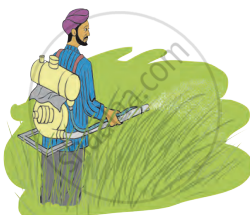
Spray-pump
Elements:
An element is a substance whose molecules are made of identical atoms. For example, oxygen, copper, and hydrogen. Elements can be normally divided into metals, non-metals and metalloids. Elements exist in solid, liquid, or gaseous states. The smallest particles of an element are called atoms. Atoms are too small to see with the naked eye, but when many atoms come together, they become visible. Molecules are made up of two or more atoms bonded together. For example, an oxygen molecule (O₂) has two oxygen atoms.
Contribution of Great Scientists:
- Antoine Laurent Lavoisier (1743–94), a French chemist, defined an element as a basic form of matter that cannot be broken down into simpler substances by chemical reactions.
- Democritus named the small particles of elements ‘atom’ because in the Greek language, atomos means indivisible.
- In 1803, John Dalton proposed his theory, stating that atoms cannot be created or divided into smaller particles or destroyed. He used certain symbols to represent elements.
For example : © Copper, ⊕ Sulphur, ⊖ Hydrogen.
| Property | Metals | Non-metals | Metalloids |
|---|---|---|---|
| Lustre | Lustrous (shiny) | Not shiny | Intermediate: may or may not be shiny |
| Colour | Silvery-grey or golden-yellow | Various colours | Various colours |
| Electrical Conductivity | Good conductors of electricity (e.g., copper) | Poor conductors of electricity (e.g., carbon) | Moderate conductors (e.g., silicon) |
| Ductility | Ductile (can be drawn into wires) | Non-ductile | May show partial ductility |
| Malleability | Malleable (can be beaten into thin sheets) | Not malleable | Intermediate malleability |
| Sonority | Sonorous (produces sound when struck) | Not sonorous | May or may not be sonorous |
| Examples | Copper, aluminum, gold | Hydrogen, oxygen, iodine, carbon | Boron, silicon, and germanium |
