Advertisements
Advertisements
प्रश्न
Write the structure of the major organic product in the following reaction:
\[\ce{CH3CH(Br)CH2CH3 + NaOH ->[water]}\]
Advertisements
उत्तर
\[\begin{array}{cc}
\ce{CH3 - CH - CH2CH3 + NaOH ->[H2O][Hydrolysis] CH3 - CH - CH2CH3 + NaBr + H2O}\\
|\phantom{................................................................}|\phantom{..................................}\\
\ce{\underset{2-Bromobutane}{Br}}\phantom{...................................................}\ce{\underset{Butan-2-ol}{OH}}\phantom{...................................}
\end{array}\]
APPEARS IN
संबंधित प्रश्न
Which would undergo SN2 reaction faster in the following pair and why ?

C–Cl bond length in chlorobenzene is shorter than C–Cl bond length in CH3–Cl.
Given reasons: SN1 reactions are accompanied by racemization in optically active alkyl halides.
Which would undergo SN2 reaction faster in the following pair and why ?
CH3 – CH2 – Br and CH3 – CH2 – I
What is the action of the following on ethyl bromide:
moist silver oxide
What is the action of the following on ethyl bromide?
silver acetate
Which of the following is optically inactive?
SN2 mechanism proceeds through intervention of ____________.
The process of separation of a racemic modification into d and l-enantiomers is called ____________.
2-Bromopentane is heated with potassium ethoxide in ethanol. The major product obtained is ____________.
Which of the following compounds will give a racemic mixture on nucleophilic substitution by OH ion?
1-Bromoethane, 1-Bromopropane, 1-Bromobutane, Bromobenzene
In which reaction mechanism carbocation is formed?
The number of chiral alcohol (s) with molecular formula C4H10O is ______.
Assertion (A) : Nucleophilic substitution of iodoethane is easier than chloroethane.
Reason (R) : Bond enthalpy of C-I bond is less than that of C-Cl bond.
Give the mechanism of the following reaction:
\[\ce{CH3CH2OH ->[H2SO4][413 K] CH3CH2-O-CH2CH3 + H2O}\]
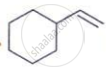 HCI, Major product ______.
Which of the following reactions is an example of nucleophilic substitution reaction?
Assertion (A):  undergoes SN2 reactions faster than
  .
.
Reason (R): Iodine is a better leaving group because of its large size.
In the light of the above statements, choose the correct answer from the options given below:
