Advertisements
Advertisements
प्रश्न
Regardless of the challenges faced, some women have achieved great success in the field of sports. Here is a list of Indian women celebrities who are accomplished in the field of sports and games. Match their names with the sports or games they are associated with, by drawing lines. One has been done for you as an example.
| Names of personalities | Sports / Games | |
| PV Sindhu | golf | |
| Geeta Phogat | weightlifting | |
| Koneru Humpy | swimming | |
| Karnam Malleshwari | badminton | |
| Anjali Bhagwat | cricket | |
| Sania Mirza | hockey | tennis |
| Dipika Pallikal | archery | |
| Bula Choudhury | athletics | |
| P.T. Usha | wrestling | |
| Saba Anjum Karim | chess | |
| Akanksha Singh | shooting | |
| Mithali Raj | basketball | |
| Sharmila Nicollet | squash | |
| Deepika Kumari | tennis |
Advertisements
उत्तर
| Names of personalities | Sports / Games | |
| PV Sindhu | golf | badminton |
| Geeta Phogat | weightlifting | wrestling |
| Koneru Humpy | swimming | chess |
| Karnam Malleshwari | badminton | weight lifting |
| Anjali Bhagwat | cricket | shooting |
| Sania Mirza | hockey | tennis |
| Dipika Pallikal | archery | squash |
| Bula Choudhury | athletics | swimming |
| P.T. Usha | wrestling | athletics |
| Saba Anjum Karim | chess | hockey |
| Akanksha Singh | shooting | basketball |
| Mithali Raj | basketball | cricket |
| Sharmila Nicollet | squash | golf |
| Deepika Kumari | tennis | archery |
APPEARS IN
संबंधित प्रश्न
Nuclear Family or Joint Family
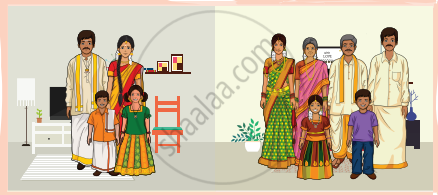
Based on the visuals given above, give five words/phrases each, to describe these two family types.
| Nuclear family | Joint family | ||
What does Lynd actually wonder at?
When does human memory work with less than its usual capacity?
How do the chemists make fortunes out of the medicines people forget to take?
What kind of absent-mindedness is regarded as a virtue by Lynd?
Many of us have unused, old but valuable items at home. If we wish to get rid of them, we can sell them at an auction. Items like paintings, jewels, household articles, vehicles, even houses can be auctioned.
The flowchart below will help you understand how an auction is conducted.

What can you say about the author’s attitude when he high-handedly participated in the auction?
Why was the author sure he would not be caught?
How had the author managed the auction without getting involved in the deal?
Why did the friend desert the narrator, a second time?
‘Tight Corner’ means a ______.
Barbizon refers to a ______.
The narrator visited the sale-room as he ______.
“And I got it.” Here ‘it’ refers to the ______.
What is a tight corner? What happens when one finds oneself in a tight corner?
Why did the narrator feel he could have welcomed a firing party?
Discuss this aspect with your partner and share your views on how students can give back to society.
Why are universities necessary for a society?
In what ways have universities improved the society?
According to the speaker, how should Universities mould the students of the present day?
What are the hindrances graduates face in their task of serving the society?
Give a few instances of Bryson’s confused acts.
What were the contents of Bryson’s bag?
How did Bryson free himself from the crash position?
What did Bryson wish to avoid in his life?
Bring out the pun in the title ‘The Accidental Tourist’ (one who happens to travel by accident or one who meets with accidents often on his or her trips!).
