Advertisements
Advertisements
प्रश्न
Read the poem once again carefully and identify the figure of speech that has been used in each of the following line from the poem:
“Scoffing his state and grinning at his pomp,…”
Advertisements
उत्तर
Personification
APPEARS IN
संबंधित प्रश्न
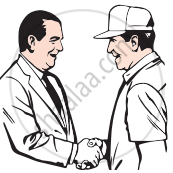
Guess what friendly words these two gentlemen exchange when shaking hands.
What does the poet long for?
Interpret each of the following expression used in the poem, in one or two line.
laugh with their eyes
Interpret each of the following expression used in the poem, in one or two line.
shake hands without hearts
Interpret each of the following expression used in the poem, in one or two line.
to unlearn all these muting things
Why would the referee ask whether there was a doctor in the stands? What stands is he referring to?
The poet does not wish to exchange places with the athletes. How does he justify his view?
Read the given line and answer the question that follow in a sentence or two
When snaps the knee and cracks the wrist….
Identify and explain the use of the literary device in this line.
Explain the following with reference to the context in about 50–60 word each.
They do not ever in their dealings Consider one another’s feelings…
If you go to a village, what scenes would you observe?
Read the lines given below and answer the question that follow.
And ‘tis my faith that every flower
Enjoys the air it breathes…
- What is the poet’s faith?
- What trait of Nature do we see here?
Explain the following line with reference to the context in about four to five sentence each.
The birds around me hopp’d and play’d,
Their thoughts I cannot measure.
Why does the poet think that the birds were happy?
Work in groups of 4−6. Discuss how you would preserve the environment and protect Nature. One or two representatives may share their ideas with the class.
Which law does Macavity break?
What makes the fakir stare in wonder?
Why does the poet say Macavity is ‘outwardly’ respectable?
Explain the following line with reference to the context.
His powers of levitation would make a fakir stare
Which path should we follow in life?
What does ‘Everest’ in the title stand for?
What do the three words, ‘graves, worms and epitaphs’, refer to?
What does ‘flesh’ mean here?
How does the king establish that he and his subjects are equal in the end?
Bring out King Richard’s feelings when he was defeated.
Explain the following line with reference to the context in about 5 to 8 line:
“How can you say to me, I am a king?”
Read the poem once again carefully and identify the figure of speech that has been used in each of the following line from the poem:
“Keeps Death his court, and there the antic sits,…”
Pick out the alliteration from the following lines:
“Comes at the last, and with a little pin…”
Based on your reading of King Richard’s speech, answer the following questions in about 100 - 150 words each. You may add your own ideas if required to present and justify your point of view.
How are eternal truths and wisdom brought to the reader here?
