Advertisements
Advertisements
प्रश्न
Explain metamerism with suitable examples of ethers
Advertisements
उत्तर
The property in which ethers have same molecular formula but different alkyl groups in their structures is called metamerism and the isomers obtained are called as metamers.
Examples :
e.g. C2H5 - O - C2H5 - Diethyl ether;
CH3 - O - C3H7 - Methyl n-propyl ether
In the above example both ethers are having same molecular formula i.e. C4H10 but different alkyl groups in their structure, so they are metamers of each other.
APPEARS IN
संबंधित प्रश्न
Name the following compound according to the IUPAC system.
\[\begin{array}{cc}
\ce{H2C = CH - CH - CH2 - CH2 - CH3}\\
|\phantom{...............}\\
\ce{OH}\phantom{............}
\end{array}\]
Write the IUPAC name of the following compound:
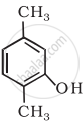
Write IUPAC name of the following compound:

Write the IUPAC name of the following compound:
C6H5 – O – C7H15(n−)
- Draw the structures of all isomeric alcohols of molecular formula C5H12O and give their IUPAC names.
- Classify the isomers of alcohols in the above question as primary, secondary and tertiary alcohols.
Give the IUPAC name of the following ether:
\[\begin{array}{cc}
\ce{C2H5OCH2 - CH - CH3}\\
\phantom{.........}|\\
\phantom{.............}\ce{CH3}
\end{array}\]
Give the IUPAC name of the following ether:
CH3OCH2CH2Cl
Give the IUPAC name of the following ether:

How is phenol converted into the following?
benzoquinone
How is phenol converted into the following?
picric acid
Write IUPAC name of the following compound (CH3)2 N − CH2CH3
Give reasons Fluoride ion has higher hydration enthalpy than chloride ion.
How do you convert the Ethanal to Propanone
Write IUPAC name of the following

Isopropyl alcohol on oxidation forms:
C6H5OCH2CH3 is called:
Cresol has ____________.
The IUPAC name of the ether CH2 = CH–CH2OCH3 is:
Which of the following gives a positive iodoform test?
Among the following sets of reactants which one produces anisole?
Give IUPAC name of the compound given below.
\[\begin{array}{cc}
\phantom{}\ce{CH3 - CH - CH2 - CH2 - CH - CH3}\phantom{.}\\
\phantom{.........}|\phantom{...................}|\phantom{...........}\\
\phantom{..}\ce{Cl}\phantom{.................}\ce{OH}\phantom{..}
\end{array}\]
Write a chemical reaction for the following conversion:
Acetic acid into ethyl alcohol.
Draw structure of the following compound.
2. 5-Diethylphenol
Draw structure of the following compound.
2-Methoxypropane
Draw structure of the following compound.
Prop-2-en-1-ol
Give the structures of Thiosulphuric acid and Peroxy monosulphuric acid.
