Advertisements
Advertisements
प्रश्न
Do biomolecules (DNA, protein) exhibit biological activity in anhydrous conditions?
Advertisements
उत्तर
No, biomolecules like DNA and protein cannot exhibit biological activity in anhydrous conditions. Hence, life is unsustainable without water.
APPEARS IN
संबंधित प्रश्न
Draw a labelled sketch of sparged-stirred-tank bioreactor. Write its application.
Can you list 10 recombinant proteins which are used in medical practice? Find out where they are used as therapeutics (use the internet).
Can you recall meiosis and indicate at what stage recombinant DNA is made?
Explain briefly:
PCR
Answer the following question:
Describe the formation of recombinant DNA by the action of EcoRI.
______ plays an important role in blood clotting.
During the purification process for recombinant DNA technology, the addition of chilled ethanol precipitates out ______.
Which of the following contributed in popularising the PCR (polymerase chain reactions) technique?
An antibiotic resistance gene in a vector usually helps in the selection of ______.
A bacterial cell was transformed with a recombinant DNA molecule that was generated using a human gene. However, the transformed cells did not produce the desired protein. Reasons could be ______.
While doing a PCR, ‘denaturation’ step is missed. What will be its effect on the process?
Illustrate the design of a bioreactor. Highlight the difference between a flask in your laboratory and a bioreactor which allows cells to grow in a continuous culture system.
Identify the part of a bio-reactor which is used as a foam braker from the given figure.
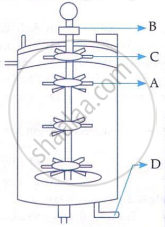
Given below are two statements:
Statement I: The DNA fragments extracted from gel electrophoresis can be used in construction of recombinant DNA.
Statement II: Smaller size DNA fragments are observed near anode while larger fragments are found near the wells in an agarose gel.
In the light of the above statements, choose the most appropriate answer from the options given below:
What is the primary definition of recombinant DNA technology?
Which enzyme is utilized in Polymerase Chain Reaction (PCR) because it remains active at high temperatures?
How are bacterial cells typically made competent to facilitate the uptake of recombinant DNA during transformation?
Which series of operations is collectively referred to as 'downstream processing'?
