Topics
Solid State
- Introduction to Solid State
- Amorphous and Crystalline Solids
- Crystal Lattices and Unit Cells
- Calculations Involving Unit Cell Dimensions
- Close Packed Structures of Solids
- Efficiency of Packing in Body-centred Cubic Structures
- Close Packed Structures - Formula of a Compound and Number of Voids Filled
- Number of Atoms in a Unit Cell
- Imperfections in Solids - Introduction
- Properties of Solids: Magnetic Properties
- Band Theory of Metals
- Properties of Solids: Electrical Properties
- Applications of n-type and p-type Semiconductors
Solid State
Solutions
- Introduction to Solutions
- Types of Solutions
- Capacity of Solution to Dissolve Solute
- Solubility
- Vapour Pressure of Solutions of Liquids in Liquids
- Colligative Properties of Nonelectrolyte Solutions
- Vapour Pressure Lowering
- Boiling Point Elevation
- Depression in Freezing Point
- Osmosis and Osmotic Pressure
- Colligative Properties of Electrolytes
- Overview of Solutions
Solutions and Colligative Properties
- Types of Solutions
- Expressing Concentration of Solutions
- Solubility of a Gas in a Liquid
- Solubility of a Solid in a Liquid
- Colligative Properties and Determination of Molar Mass
- Relative Lowering of Vapour Pressure
- Depression of Freezing Point
- Osmosis and Osmotic Pressure
- Abnormal Molar Masses
- Elevation of Boiling Point
Chemical Thermodynamics and Energetic
- Chemical Thermodynamics and Energetic
- Concepts of System
- Types of Systems
- Surroundings
- Work, Heat, Energy, Extensive and Intensive Properties
- State Functions
- First Law of Thermodynamics
- Internal Energy and Enthalpy
- Hess’ Law of Constant Heat Summation
- Enthalpy of Bond Dissociation
- Combustion, Formation, Atomization, Sublimation
- Phase Transition
- Ionization and Solution
- Dilution Introduction of Entropy as a State Function
- Free Energy Change for Spontaneous and Non Spontaneous Processes
- Equilibrium Constant
- Second and Third Law of Thermodynamics
Ionic Equilibria
Chemical Thermodynamics
- Chemical Thermodynamics
- Terms Used in Thermodynamics
- Nature of Heat and Work
- Expression for Pressure-volume (PV) Work
- Concept of Maximum Work
- Internal Energy (U)
- First Law of Thermodynamics
- Enthalpy (H)
- Enthalpies of Physical Transformations
- Thermochemistry
- Spontaneous (Irreversible) Process
- Overview of Chemical Thermodynamics
Electrochemistry
- Electrochemical Cells
- Conductance of Electrolytic Solutions
- Variation of Conductivity and Molar Conductivity with Concentration
- Electrolytic Cells and Electrolysis
- Primary Batteries
- Lead Accumulator
- Galvanic or Voltaic Cell
- Nernst Equation
- Relation Between Gibbs Energy Change and Emf of a Cell
- Fuel Cells
- Factors Affecting Corrosion
- Concept of Redox Reactions
Chemical Kinetics
Electrochemistry
- Concept of Electrochemistry
- Electric Conduction
- Electrical Conductance of Solution
- Electrochemical Cells
- Electrolytic Cells
- Galvanic or Voltaic Cell
- Electrode Potential and Cell Potential
- Thermodynamics of Galvanic Cells
- Reference Electrodes
- Galvanic Cells Useful in Day-to-day Life
- Fuel Cells
- Electrochemical Series (Electromotive Series)
- Overview of Electrochemistry
General Principles and Processes of Isolation of Elements
Chemical Kinetics
- Concept of Chemical Kinetics
- Rate of Reactions
- Rate of Reaction and Reactant Concentration
- Molecularity of Reaction
- Integrated Rate Equations
- First Order Reactions
- Zero Order Reactions
- Half Life Period of a Reaction
- Pseudo First Order Reaction
- Integrated Rate Law for Gas Phase f Reactions
- Collision Theory of Bimolecular Reactions
- Temperature Dependence of Reaction Rates
- Effect of a Catalyst on the Rate of Reaction
- Overview of Chemical Kinetics
Elements of Groups 16, 17 and 18
- Occurrence of Elements of Groups 16, 17 and 18
- Electronic Configuration of Elements of Group 16, 17 and 18
- Atomic and Physical Properties of Elements of Group 16, 17 and 18
- Anomalous Behaviour of Oxygen
- Anomalous Behaviour of Fluorine
- Chemical Properties of Elements of Groups 16, 17 and 18
- Oxoacids
- Oxygen and Compounds of Oxygen
- Chlorine
- Group 18 Elements - The Noble gas Family
- Overview of Elements of Groups 16, 17 and 18
P-block Elements
Group 15 Elements
Group 16 Elements
Group 17 Elements
Group 18 Elements
D and F Block Elements
Transition and Inner Transition Elements
- Transition and Inner Transition Elements
- Position in the Periodic Table - d-block Elements
- Electronic Configuration of Transition and Inner Transition Elements
- Oxidation States of First Transition Series
- Physical Properties of First Transition Series
- Trends in Atomic Properties of the First Transition Series
- Preparation of Potassium Permanganate
- Chemical Properties of KMnO4
- Uses of KMnO4
- K2Cr2O7: Preparation of Potassium Dichromate
- Chemical Properties of K2Cr2O7
- Common Properties of d Block Elements
- Basic Principles of Metallurgy > Extraction of Metals
- Inner Transition (f-block) Elements: Lanthanoids and Actinoids
- Properties of f-block Elements
- Properties of Lanthanoids
- Applications of Lanthanoids
- The Actinoids
- Properties of Actinoids
- Applications of Actinoids
- Postactinoid Elements
- Overview of Transition and Inner Transition Elements
D-block Elements
- General Indroduction
- Position in the Periodic Table - d-block Elements
- Electronic Configurations of the d-block Elements
- Physical Properties of the Transition Elements (d-block)
- Some Important Compounds of Transition Elements
F-block Elements
Coordination Compounds
- Introduction
- Importance of Coordination Compounds
- Important Terms Pertaining to Coordination Compounds
- Colour in Coordination Compounds
- Magnetic Properties of Coordination Compounds
- Bonding in Coordination Compounds
- Werner’s Theory of Coordination Compounds
- Valence Bond Theory (VBT)
- Crystal Field Theory (CFT)
- Stereoisomerism
- Structural Isomerism
- Importance of Coordination Compounds
Coordination Compounds
- Concept of Coordination Compounds
- Types of Ligands
- Terms Used in Coordination Chemistry
- Classification of Complexes
- Nomenclature of Coordination Compounds
- Effective Atomic Number (EAN) Rule
- Isomerism in Coordination Compounds
- Stability of the Coordination Compounds
- Theories of Bonding in Complexes
- Importance and Applications of Coordination Compounds
- Overview of Coordination Compounds
Halogen Derivatives of Alkanes (And Arenes)
Halogen Derivatives
- Classification of Halogen Derivatives
- Nomenclature of Halogen Derivatives
- Methods of Preparation of Alkyl Halides
- Physical Properties of Halogen Derivatives
- Optical Isomerism in Halogen Derivatives
- Chemical Properties of Halogen Derivatives
- Reaction with Active Metals
- Polyhalogen Compounds
- Nomenclature of Haloalkanes and Haloarenes
- Reactions of Haloalkanes - Elimination Reactions
- Overview of Halogen Derivatives
Haloalkanes
- Concept of Haloalkanes and Haloarenes
- Nomenclature of Haloalkanes and Haloarenes
- Nature of C-X Bond of Haloalkanes and Haloarenes
- Physical Properties of Haloalkanes and Haloarenes
- Methods of Preparation of Haloalkanes
- Reactions of Haloalkanes - Nucleophilic Substitution Reactions
- R-s and D-l Configuration
Haloarenes
- Concept of Haloalkanes and Haloarenes
- Nature of C-X Bond of Haloalkanes and Haloarenes
- Reactions of Haloarenes - Nucleophilic Substitution
- Nucleophilic Substitution
- Electrophilic Substitution Reactions
- Reaction with Metals
- R-S and D-l Configurations
- Polyhalogen Compounds
Alcohols, Phenols and Ethers
Alcohols, Phenols and Ethers Alcohols
Alcohols
Phenols
- Phenols
- Methods of Preparation
- Physical and Chemical Properties
- Acidic Nature of Phenol
- Electrophillic Substitution Reactions
- Uses of Phenols
Ethers
- Ethers
- Physical and Chemical Properties of ether
- Uses of Ethers
Aldehydes, Ketones and Carboxylic Acids
- Concepts of Aldehydes, Ketones, and Carboxylic Acids
- Classification of Aldehydes, Ketones and Carboxylic Acids
- Nomenclature of Aldehydes, Ketones and Carboxylic Acids
- Preparation of Aldehydes and Ketones
- Methods of Preparation of Carboxylic Acids
- Physical Properties
- Polarity of Carbonyl Group
- Chemical Properties of Aldehydes and Ketones
- Chemical Properties of Carboxylic Acids
- Chemical Reactions of Aldehydes and Ketones - Reactions Due to α-hydrogen
- Overview: Aldehydes, Ketones and Carboxylic Acids
- Overview of Aldehydes, Ketones and Carboxylic Acids
Aldehydes, Ketones and Carboxylic Acids
Aldehydes and Ketones
- Nomenclature of Aldehydes and Ketones
- Nature of Carbonyl Group
- Physical Properties of Aldehydes and Ketones
- Chemical Reactions of Aldehydes and Ketones - Nucleophilic Addition Reactions
- Reactivity of Alpha Hydrogen in Aldehydes
- Uses of Aldehydes and Ketones
- Chemical Reactions of Aldehydes and Ketones - Other Reactions
Carboxylic Acids
- Carboxylic Acids
- Nomenclature of Carboxylic Acids
- Structure of the Carboxyl group
- Physical Properties of Carboxylic Acids
- Chemical Properties and Reactions of Carboxylic Acid
- Chemical Reactions of Carboxylic Acids - Reactions Involving Cleavege of O-H Bond
- Chemical Reactions of Carboxylic Acids - Reactions Involving Cleavege of C-OH Bond
- Chemical Reactions of Carboxylic Acids - Reactions Involving –COOH Group
- Chemical Reactions of Carboxylic Acids - Substitution Reactions in the Hydrocarbon Part
- Uses of Carboxylic Acids
Organic Compounds Containing Nitrogen
Amines
Amines
- Concept of Amines
- Classification of Amines
- Structure of Amines
- Physical Properties of Amines
- Uses of Amines
- Identification of Primary, Secondary and Tertiary Amines
- Secondary and Tertiary Amines
- Chemical Reactions of Amines - Carbylamine Reaction
- Chemical Reactions of Amines - Reaction with Nitrous Acid
- Chemical Reactions of Amines - Reaction with Arylsulphonyl Chloride
- Chemical Reactions of Amines - Electrophilic Substitution
- Preparation of Amines
Cyanides and Isocyanides
Diazonium Salts
Biomolecules
- Principal Molecules of the Living World
- Biomolecules in the Cell > Carbohydrates
- Biomolecules in the Cell > Proteins
- Overview of Biomolecules
- Overview: Biomolecules
Biomolecules
Carbohydrates
Proteins
Vitamins
- Biomolecules in the Cell > Proteins
- Classification of Vitamins
- Important Vitamins, Their Sources and Their Deficiency Diseases
Nucleic Acids
Polymers
- Introduction to Polymers
- Classification of Polymers> Based on Source or Origin
- Types of Polymerisation Reactions - Addition Polymerisation or Chain Growth Polymerisation
- Types of Polymerisation Reactions - Copolymerisation
- Some Important Polymers
- Types of Polymerisation Reactions - Condensation Polymerisation Or Step Growth Polymerisation
- Nylon 6
- Nylon 66
- Types of Polymerisation Reactions - Rubber
- Classification of Polymers> Based on Biodegradability
- Preparation of Polytetrafluoroethene (Teflon)
- Preparation of Polyacrylonitrile
Introduction to Polymer Chemistry
- Polymer Chemistry
- Classification of Polymers> Based On Type of Different Monomers
- Some Important Polymers
- Molecular Mass and Degree of Polymerization of Polymers
- Classification of Polymers> Based on Biodegradability
- Commercially Important Polymers
- Preparation of Polytetrafluoroethene (Teflon)
- Overview of Introduction to Polymer Chemistry
Green Chemistry and Nanochemistry
- Green Chemistry and Nanochemistry
- Principles of Green Chemistry
- The Role of Green Chemistry
- Introduction to Nanochemistry
- Characteristic Features of Nanoparticles
- Synthesis of Nanomaterials
- History of Nanotechnology
- Applications of Nanomaterials
- Nanoparticles and Nanotechnology
- Overview of Green Chemistry and Nanochemistry
Chemistry in Everyday Life
Chemicals in Medicines
Chemicals in Food
Cleansing Agents
CISCE: Class 12
Definition: Nucleic Acids
Nucleic acids are large biological macromolecules that store and transmit genetic information in living organisms.
CISCE: Class 12
Definition: Nucleotide
A nucleotide is the basic structural unit of nucleic acids, composed of a nitrogenous base, a pentose sugar, and a phosphate group.
CISCE: Class 12
Definition: Nucleoside
A nucleoside consists of a nitrogenous base linked to a pentose sugar without a phosphate group.
CISCE: Class 12
Definition: Nitrogenous Base
A nitrogenous base is an organic molecule (purine or pyrimidine) that carries genetic information in nucleic acids.
CISCE: Class 12
Definition: DNA (Deoxyribonucleic Acid)
DNA is a double-stranded nucleic acid that stores and transmits hereditary information and can replicate itself.
CISCE: Class 12
Definition: RNA (Ribonucleic Acid)
RNA is a single-stranded nucleic acid that helps in protein synthesis and information transfer.
CISCE: Class 12
Introduction
Nucleic acids are large polymeric macromolecules (polynucleotides) found in the acid-insoluble fraction of living tissues. They constitute the genetic material of all living organisms.
- Discovery: Discovered and isolated from pus cells by Friederich Miescher in 1869.
- Types: There are two main types based on the sugar they contain: deoxyribonucleic acid (DNA) and ribonucleic acid (RNA).
CISCE: Class 12
Composition of Nucleic Acids (The Building Blocks)
Nucleic acids are polymers made of repeating monomeric units called nucleotides. Each nucleotide consists of three chemically distinct components:
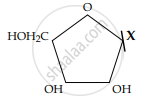
A. Pentose Sugar (5-carbon monosaccharide):
- Deoxyribose: Found in DNA (ribose with one oxygen removed from C2).
- Ribose: Found in RNA.
B. Phosphoric Acid (Phosphate Group):
- Derived from H₃PO₄.
- It links with sugars to form the sugar-phosphate backbone of the polynucleotide chain.
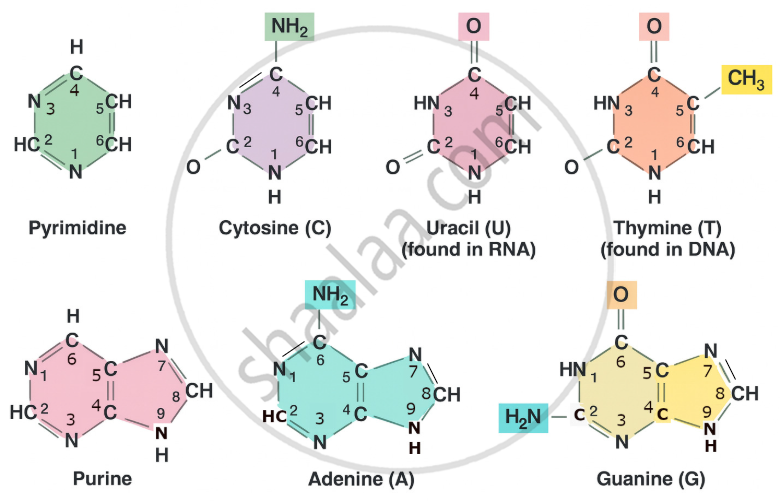
C. Nitrogenous Bases (Heterocyclic Rings): Categorised into two types:
- Purines (double-ring): Adenine (A) and Guanine (G).
- Pyrimidines (single-ring): Cytosine (C), Thymine (T - found only in DNA), and Uracil (U - found only in RNA).
CISCE: Class 12
Structure of Nucleic acid Component
CISCE: Class 12
Important Chemical Linkages
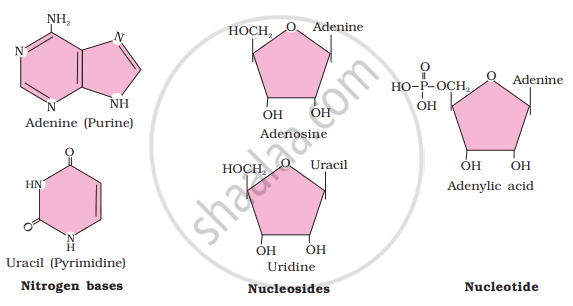
- N-glycosidic linkage: Connects a nitrogenous base to the 1'C of the pentose sugar to form a nucleoside.
- Phosphoester linkage: Connects a phosphate group to the 5'C OH of a nucleoside to form a nucleotide.
- 3'–5' Phosphodiester linkage: Joins two distinct nucleotides together to form a dinucleotide and subsequently a polynucleotide chain.
CISCE: Class 12
Key Structural Principles
- Chargaff’s Rule (1950): In DNA, the amount of purines always equals the amount of pyrimidines. The base ratio (A+T / G+C) remains constant for a particular species.
- Watson & Crick Model: Proposed the double helix structure of DNA, resembling a twisted ladder where the rails are the sugar-phosphate backbone and the rungs are pairs of purine/pyrimidine bases.
- Directionality: A polynucleotide chain has a free phosphate moiety at the 5'-end of the sugar (5'-end) and a free OH group at the 3'C of the sugar (3'-end).
CISCE: Class 12
Functions & Applications
- DNA: Acts as the blueprint of the cell, storing hereditary information to maintain genetic continuity between generations. It is unique because it can replicate itself.
- RNA: Primarily responsible for transmitting genetic information from the nucleus to ribosomes for protein synthesis. It functions as a messenger (mRNA), an adapter (tRNA), a structural component (rRNA), and sometimes as a catalyst.
- Medical/Legal Applications: Nucleic acid principles are used in DNA fingerprinting (personal identification, forensics), gene therapy, and diagnosing inherited diseases like sickle cell anaemia and haemophilia.
Maharashtra State Board: Class 12
CISCE: Class 12
Key Points: Biomolecules in the Cell > Nucleic Acids
- Nucleic acids are biomacromolecules present in the acid-insoluble fraction and are responsible for the storage and transmission of genetic information (DNA and RNA).
- They are polynucleotides, formed by repeated units called nucleotides.
- Each nucleotide consists of three components: a nitrogenous base, a pentose sugar, and a phosphate group.
- Nitrogenous bases are of two types: purines (adenine, guanine) and pyrimidines (cytosine, thymine, uracil).
- The sugar present is either ribose (in RNA) or 2′-deoxyribose (in DNA).
- DNA is double-stranded and contains bases A, T, G, and C, while RNA is single-stranded and contains A, U, G, and C.
- DNA stores genetic information, while RNA plays a key role in protein synthesis and the expression of genetic information.