Advertisements
Online Mock Tests
Chapters
1: GST [Goods and Service Tax]
▶ 2: Banking (Recurring Deposit Account)
3: Shares and Dividend
Unit 2. Algebra
4: Linear Inequations (In one variable)
5: Quadratic Equations
6: Solving (simple) Problems (Based on Quadratic Equations)
7: Ratio and Proportion (Including Properties and Uses)
8: Factorization of Polynomials (Remainder and Factor Theorems)
9: Matrices
10: Arithmetic Progression
11: Geometric Progression
Unit 3. Co-ordinate Geometry
12: Reflection
13: Section Formula and Mid-Point Formula
14: Equation of a Line
Unit 4. Geometry
15: Similarity (With Applications to Maps and Models)
16: Loci (Locus and Its Constructions)
17: Circles
18: Tangents and Intersecting Chords
19: Constructions (Circles)
Unit 5. Mensuration
20: Cylinder, Cone and Sphere
Unit 6. Trigonometry
21: Trigonometrical Identities
22: Height and Distances
Unit 7. Statistics
23: Graphical Representation
24: Measure of Central Tendency (Mean, Median, Quartiles and Mode)
25: Probability
![Selina solutions for Concise Mathematics [English] Class 10 ICSE chapter 2 - Banking (Recurring Deposit Account) - Shaalaa.com](/images/concise-mathematics-english-class-10-icse_6:7eb8c97e7ccc4a1c956f7ac8305d25e3.jpg "Selina solutions for Concise Mathematics [English] Class 10 ICSE chapter 2 - Banking (Recurring Deposit Account)")
Advertisements
Solutions for Chapter 2: Banking (Recurring Deposit Account)
Below listed, you can find solutions for Chapter 2 of CISCE Selina for Concise Mathematics [English] Class 10 ICSE.
Selina solutions for Concise Mathematics [English] Class 10 ICSE 2 Banking (Recurring Deposit Account) EXERCISE 2 [Pages 20 - 21]
Multiple Choice Type: Choose the correct answer from the options given below.
₹ P per month is deposited for n months in a recurring deposit account which pays interest at the rate of r% per annum. The nature and time of interest calculated is ______.
compound interest for n number of months.
simple interest for n number of months.
compound interest for one month.
simple interest for one month.
₹ 900 is deposited every month in a recurring deposit account at 10% rate of interest, the interest earned in 8 months is ______.
₹ 270
₹ 2,700
₹ 27
₹ 210
A man gets ₹ 1,404 as interest at the end of one year. If the rate of interest is 12% per annum in R.D. account, the monthly instalment is ______.
₹ 1,200
₹ 1,800
₹ 2,400
₹ 3,600
Manish opened an R.D. account in a bank and deposited ₹ 1,000 per month at the interest of 10% per annum and for 2 years. The total money deposited by him is ______.
₹ 12,000
₹ 24,000
₹ 2,400
₹ 4,000
₹ 800 per month is deposited in an R.D. account for one and half years. If the depositor gets ₹ 2,280 as interest at the time of maturity, the rate of interest is ______.
20%
15%
10%
12%
Each of A and B both opened a recurring deposit accounts in a bank. If A deposited Rs. 1,200 per month for 3 years and B deposited Rs. 1,500 per month for 2 ½ years; find, on maturity, who will get more amount and by how much? The rate of interest paid by the bank is 10% per annum.
Ashish deposits a certain sum of money every month is a Recurring Deposit Account for a period of 12 months. If the bank pays interest at the rate of 11% p.a. and Ashish gets ₹ 12,715 as the maturity value of this account, what sum of money did money did he pay every month?
A man has a Recurring Deposit Account in a bank for `3 1/2` years. If the rate of interest is 12% per annum and the man gets Rs. 10,206 on maturity, find the value of monthly instalments.
Amit deposited Rs. 150 per month in a bank for 8 months under the Recurring Deposit Scheme. What will be the maturity value of his deposits, if the rate of interest is 8% per annum and interest is calculated at the end of every month?
Mr. Gulati has a Recurring Deposit Account of Rs. 300 per month. If the rate of interest is 12% and the maturity value of this account is Rs. 8,100; find the time (in years) of this Recurring Deposit Account.
Mr. Gupta opened a recurring deposit account in a bank. He deposited Rs. 2,500 per month for two years. At the time of maturity he got Rs. 67,500. Find:
- the total interest earned by Mr. Gupta.
- the rate of interest per annum.
Mohan has a recurring deposit account in a bank for 2 years at 6% p.a. simple interest. If he gets Rs. 1200 as interest at the time of maturity, find:
- the monthly instalment.
- the amount of maturity.
Mr. Anil has a recurring deposit account. He deposits a certain amount of money per month for 2 years. If he received an interest whose value is the double of the deposit made per month, then find the rate of interest.
Selina solutions for Concise Mathematics [English] Class 10 ICSE 2 Banking (Recurring Deposit Account) TEST YOURSELF [Pages 21 - 22]
Multiple Choice Type: Choose the correct answer from the options given below.
In a recurring deposit account, John deposits ₹ 500 per month for 24 months. If the interest he earns is one-tenth of his total deposit, the rate of interest is ______.
4.8%
9.6%
7.2%
3.2%
₹ 50 per month is deposited for 20 months in a recurring deposit account. If the rate of interest is 10%; the maturity value is ______.
₹ 187.50
₹ 87.50
₹ 2,175
₹ 1,087.50
A certain money is deposited every month for 8 months in a recurring deposit account at 12% p.a. simple interest. If the interest at the time of maturity is ₹ 36, the monthly instalment is ______.
₹ 200
₹ 1,000
₹ 100
₹ 500
In a recurring deposit account, Mohit deposited ₹ 5,000 per month for one year and at maturity gets ₹ 67,500; the total interest earned is ______.
₹ 60,000
₹ 67,500
₹ 52,500
₹ 7,500
A certain money is deposited in a recurring deposit account for 15 months. If the interest earned for this deposit is one-fifth of the monthly instalment; the rate of interest is ______.
6%
2%
10%
4%
In a cumulative deposit account, a man deposited ₹ 5,000 per month for 6 months and received ₹ 33,000 on maturity.
Assertion (A): The interest received by him is ₹ 3,000.
Reason (R): Interest received in a cumulative deposit account = Maturity value - Total sum deposited.
A is true, R is false.
A is false, R is true.
Both A and R are true and R is the correct reason for A.
Both A and R are true and R is the incorrect reason for A.
Devanand deposited ₹ 2,000 per month in a recurring deposit account on which the bank pays an interest of 10% per month.
Assertion (A): The total sum deposited in `1 1/2` years = ₹ 36,000
Reason (R): Maturity value of this account = 36,000 + Interest on it.
A is true, R is false.
A is false, R is true.
Both A and R are true and R is the correct reason for А.
Both A and R are true and R is the incorrect reason for A.
Mr. David deposited ₹ 100 per month in a cumulative deposit account for 1 year at the rate of 6% р.a.
Statement (1): Qualifying sum of his whole deposit = ₹ 7,800.
Statement (2): Let a sum of P be deposited every month in a bank for n months. If the rate of interest be r% p.a., then interest on the whole deposit = `P xx (n (n + 1))/12 xx r/100`.
Both the statements are true.
Both the statements are false.
Statement 1 is true, and statement 2 is false.
Statement 1 is false, and statement 2 is true.
For a recurring deposit account in a bank, the deposit is ₹ 1,000 per month for 2 years at 10% p.a. rate of interest.
Statement (1): The interest earned is 10% of ₹ (24 × 1,000).
Statement (2): For monthly instalment = ₹ P, number of instalment = n and rate of interest r% p.a.; the interest earned = `(p xx n xx (n + 1))/12 xx r/100`.
Both the statements are true.
Both the statements are false.
Statement 1 is true, and statement 2 is false.
Statement 1 is false, and statement 2 is true.
The maturity value of a R.D. Account is ₹ 3,320. If the monthly instalment is ₹ 400 and the rate of interest is 10%; find the time (period) of this R.D. Account.
Mr. Bajaj needs Rs. 30,000 after 2 years. What least money (in multiple of 5) must he deposit every month in a recurring deposit account to get required money at the end of 2 years, the rate of interest being 8% p.a.?
Mr. Richard has a recurring deposit account in a post office for 3 years at 7.5% p.a. simple interest. If he gets Rs. 8,325 as interest at the time of maturity, find:
- the monthly instalment.
- the amount of maturity.
Gopal has a cumulative deposit account and deposits Rs. 900 per month for a period of 4 years he gets Rs. 52,020 at the time of maturity, find the rate of interest.
Shahrukh opened a Recurring Deposit Account in a bank and deposited Rs. 800 per month for `1 1/2` years. If he received Rs. 15,084 at the time of maturity, find the rate of interest per annum.
Katrina opened a recurring deposit account with a Nationalised Bank for a period of 2 years. If the bank pays interest at the rate 6% per annum and the monthly instalment is Rs. 1,000, find the:
- Interest earned in 2 years.
- Matured value.
Mr. Krishnan deposits ₹ 1,000 per month in a recurring deposit account with State Bank of India for 2 years at 8% p.a. simple interest
Based on above information answer the following:
(i) Find the equivalent principal for 1 month.
(ii) Find the amount of maturity Mr. Krishnan will get at the end of 2 years.
(iii) If the bank revised the rate of interest 6% p.a. from 8% p.a., then by how much the interest paid by the bank will be reduced.
A recurring deposit account is opened with Dena Bank, Meerut Cantt. For this ₹ 2,000 per month (at 10% p.a.) is deposited in the bank. If the maturity value is ₹ 25,300, find the total time for which account was held.
Manisha deposited ₹ 1,000 per month in a recurring deposit account for a period of `2 1/2` years. She received ₹ 33,100 at the time of maturity. Find:
- the rate of interest
- how much less interest will Manisha receive, if she deposited ₹ 200 less per month at the same rate of interest and for the same time?
Mr. Ahuja deposited ₹ 500 per month in an R.D. account for a period of 3 years. He received ₹ 20,220 at the time of maturity. Find:
- rate of interest.
- how much more interest Mr. Ahuja will receive, if he had deposited ₹ 100 more every month.
Premlata deposits ₹ 5,000 in an R.D. account at 8% p.a. rate of interest. How much per month must she deposit to get the same interest when the rate of interest is increased by 2%. Time in both the cases is same.
Case-Study Based Question
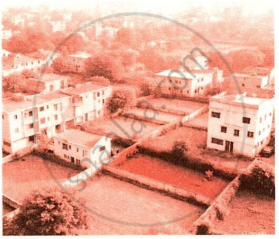
Manish, a bank employee, purchased a plot (15m × 18m) in Ghaziabad. He paid ₹ 2,00,000 at the beginning as down payment and agreed to pay the remaining ₹ 6,00,000 at the end of 2 years from the date of purchase.
In order to pay ₹ 6,00,000 at the end of two years, he opened an R.D. account in his bank, with ₹ 20,000 per month at 8% rate of interest.
- Find the maturity value of this account at end of 2 years.
- Is the M.V. of the above R.D. account equal to ₹ 6,00,000?
If not, how much more/less should the monthly instalment be so that Manish gets the required money (₹ 6,00,000) at the end of two years?
Solutions for 2: Banking (Recurring Deposit Account)
Selina solutions for Concise Mathematics [English] Class 10 ICSE chapter 2 - Banking (Recurring Deposit Account)
Shaalaa.com has the CISCE Mathematics Concise Mathematics [English] Class 10 ICSE CISCE solutions in a manner that help students grasp basic concepts better and faster. The detailed, step-by-step solutions will help you understand the concepts better and clarify any confusion. Selina solutions for Mathematics Concise Mathematics [English] Class 10 ICSE CISCE 2 (Banking (Recurring Deposit Account)) include all questions with answers and detailed explanations. This will clear students' doubts about questions and improve their application skills while preparing for board exams.
Further, we at Shaalaa.com provide such solutions so students can prepare for written exams. Selina textbook solutions can be a core help for self-study and provide excellent self-help guidance for students.
Concepts covered in Concise Mathematics [English] Class 10 ICSE chapter 2 Banking (Recurring Deposit Account) are Mathematics of Recurring Deposit (R.D.), Money and Banking in Arithmetic, Mathematics of Recurring Deposit (R.D.), Money and Banking in Arithmetic, Mathematics of Recurring Deposit (R.D.), Money and Banking in Arithmetic.
Using Selina Concise Mathematics [English] Class 10 ICSE solutions Banking (Recurring Deposit Account) exercise by students is an easy way to prepare for the exams, as they involve solutions arranged chapter-wise and also page-wise. The questions involved in Selina Solutions are essential questions that can be asked in the final exam. Maximum CISCE Concise Mathematics [English] Class 10 ICSE students prefer Selina Textbook Solutions to score more in exams.
Get the free view of Chapter 2, Banking (Recurring Deposit Account) Concise Mathematics [English] Class 10 ICSE additional questions for Mathematics Concise Mathematics [English] Class 10 ICSE CISCE, and you can use Shaalaa.com to keep it handy for your exam preparation.
