Advertisements
Advertisements
With reference to the role of the British officers in India, match Column-B with column-A, by using the codes given below.
| Column-A | Column-B |
| A. Lord Cornwallis | 1. Observer |
| B. Augustus Cleveland | 2. Economist |
| C. Francis Buchanan | 3. Governor General of Benga |
| D. David Ricardo | 4. Policy of Pacification |
Concept: Bengal and the Zamindars
Rumours and Prophecies played a part in moving people to action.’ Explain the statement in the context of the Revolt of 1857.
Concept: Awadh in Revolt
Describe the role of any six prominent leaders of northern India who fought against the British in the Revolt of 1857.
Concept: Awadh in Revolt
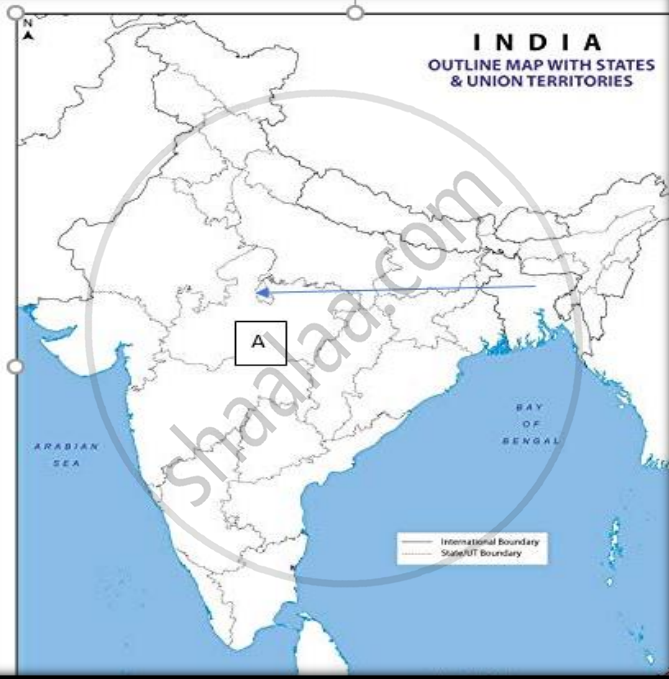
On the same outline map of India, a place related to the centres of the Revolt of 1857 is marked as A. Identify it and write its name on the line drawn near them.
Concept: Pattern of the Rebellion
Which among the following is correctly matched?
| List I CENTRE | List II LEADER |
| A. Delhi | Nana Saheb |
| B. Kanpur | Kunwar Singh |
| C. Arrah | Bahadur Shah |
| D. Lucknow | Birjis Qadr |
Concept: Pattern of the Rebellion
Find out from the following pairs which one is NOT correctly matched:
Concept: Awadh in Revolt
Explain the main provisions of Subsidiary Alliance as devised by Lord Wellesley in 1798.
Concept: Awadh in Revolt
"The British used military power on gigantic scale and passed number of Acts to suppress the Revolt of 1857." Elucidate the statement with suitable examples.
Concept: Repression
Explain why the Revolt of 1857 became an expression of popular resistance in Awadh than any where else to the British rule.
Concept: Awadh in Revolt
"The link between sepoys and the rural peasant folk had important implications in the course of the Revolt of 1857." Elucidate the statement with suitable examples.
Concept: Awadh in Revolt
Explain the impact of Nawab Wajid Ali Shah's exile in 1856 on the people of Awadh.
Concept: Awadh in Revolt
'The Revolt of 1857 was seen as a war that glorified the co-existence of different communities.' Explain the statement with examples.
Concept: What the Rebels Wanted
How did the rebels of 1857 give emphasis on the vision of unity? Explain with examples.
Concept: What the Rebels Wanted
'British, did not have an easy time in putting down the Revolt of 1857.' Explain the statement with examples.
Concept: Pattern of the Rebellion
Which of the following issues did not contribute to the spread of the Revolt of 1857?
Concept: Pattern of the Rebellion
Who among the following led the Flag of the Revolt 1857 against the British in Bihar?
Concept: Pattern of the Rebellion
On the given political outline map of India, locate and label the following with the appropriate symbol:
The place where Gandhiji withdrew Non-Cooperation Movement.

Concept: The Making and Unmaking of Non-cooperation
On the given political outline map of India, locate and label the following with the appropriate symbol:
The place where Gandhiji started satyagraha for the indigo planters.

Concept: The Making and Unmaking of Non-cooperation
What was the main demand of khilafat movement?
Concept: The Making and Unmaking of Non-cooperation
Which of the following options is correct?
Concept: A Leader Announces Himself
