Advertisements
Advertisements
Question
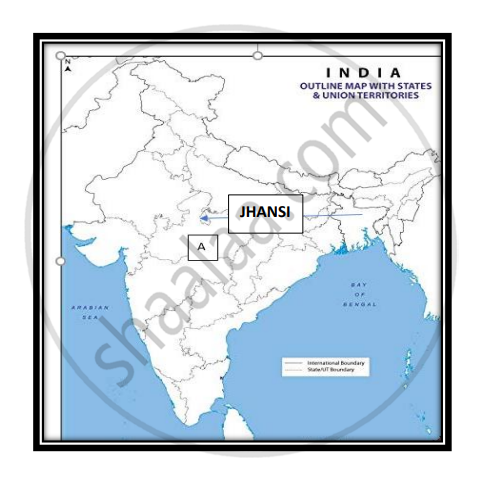
On the given political outline map of India, locate and label the following with the appropriate symbol:
The place where Gandhiji started satyagraha for the indigo planters.

Advertisements
Solution
Champaran
APPEARS IN
RELATED QUESTIONS
Answer in 100-150 Words
How Did Mahatma Gandhi Seek to Identify with the Common People?
Answer in 100-150 Words
How Was Mahatma Gandhi Perceived by the Peasants?
Answer in 100-150 Words
Why Was the Charkha Chosen as a Symbol of Nationalism?
Write a Short Essay (250-300 Words) on the Following:
How Was Non-cooperation a Form of Protest?
Write a short essay (250-300 words) on the following:
In what way did Mahatma Gandhi transform the
nature of the national movement?
Who led the Khilafat Movement in India?
Match the following.
| (i) | Jallianwala Massacre | (a) | 1918 |
| (ii) | Peasant movement in Kheda | (b) | April 1919 |
| (iii) | Second Round Table conference | (c) | 1939 |
| (iv) | Second World War started | (d) | 1931 |
Choose the correct option.
On the given political outline map of India, locate and label the following with the appropriate symbol:
The place where Gandhiji withdrew Non-Cooperation Movement.

Consider the following events:
- Jallianwala Bagh Massacre
- Khilaf at Movement
- Formation of Swaraj Party
- Arrival of Simon Commission
The correct chronological order of these events is:
Who drafted the resolution on fundamental rights for the Karachi Session of Congress in 1931?
Who of the following organized a march on the Tanjore coast to break the Salt Law in April 1930?
In which Satyagraha, Gandhiji asked for the remission of taxes for peasants following the failure of their harvest?
In which year, Jallianwala Bagh Massacre took place?
What was the main demand of khilafat movement?
Match the following.
| List I | List II |
| A. Parallel government | 1. Dandi |
| B. Assassination of Mahatma Gandhi | 2. Amritsar |
| C. Salt Satyagraha | 3. Delhi |
| D. Jallianwala Bagh Massacre | 4. Satara |
Explain the importance of the Non-Cooperation Movement.
On the given political outline map of India mark and label of the follow with appropriate symbol:
The place where Jallianwala Bagh Massacre happened.

"Mahatma Gandhi's own role was vital in the growth of 'Gandhian Nationalism' but it also depended on his followers". Explain the statement with examples.
Assertion (A): Gandhiji called for a countrywide agitation against the Rowlatt Act.
Reason (R): British authorized the government to imprison people without trial.
Describe the role of Gandhiji in the Indian freedom struggle from 1922 till 1931.
Explain the role Gandhiji in Indian Freedom movement from 1916 till 1922.
