Definitions [11]
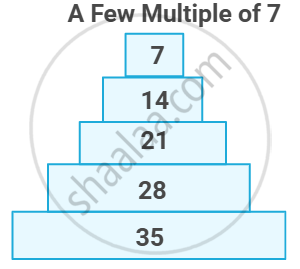
A number is called a multiple of another if it is exactly divisible by that number, i.e., the division leaves no remainder.
A common factor of two or more numbers is a number that divides each of the given numbers exactly, without leaving any remainder.
A factor of a number is any number that divides the given number completely without leaving a remainder.
or
When two numbers are multiplied, the result is called their product, and the numbers that are multiplied are called factors of the product.

Numbers having more than two factors are called composite numbers. 4, 6, 8, 9, 10, and so on are examples of composite numbers.
If the difference between two coprime numbers is 2, the numbers are said to be twin prime numbers. For example: (3, 5)
A prime number is a natural number greater than 1 that has exactly two factors: 1 and the number itself.
2, 3, 5, 7, 11, and so on are examples of prime numbers.

Co-prime numbers:
Two numbers with only 1 as a common factor are said to be co-prime, relatively prime, or mutually prime numbers.
For example, 10 and 21 are co-primes.
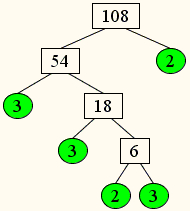
Prime factors of a number are the prime numbers that divide it exactly.
A number is divisible by 5 if the digit in its units (ones) place is either 0 or 5.
A number is divisible by 2 if it has any of the digits 0, 2, 4, 6, or 8 in its ones place.
A number is divisible by 4 if the last two digits of the given number are divisible by 4.
Note: If the last two digits of a number are “00”, then it is also divisible by 4.
Concepts [13]
- Multiples and Common Multiples
- Factors and Common Factors
- Prime and Composite Numbers
- Eratosthenes’ Method of Finding Prime Numbers
- Co-prime Numbers
- Prime Factorisation
- Tests for Divisibility of Numbers
- Divisibility by 10
- Divisibility by 5
- Divisibility by 2
- Divisibility by 4
- Divisibility by 8
- Exploring Special Numbers & Logical Reasoning
