Advertisements
Advertisements
Question
Write the related words as shown in the example:

Advertisements
Solution

APPEARS IN
RELATED QUESTIONS
How did Griffin meet his end ?
When and how did the people of Iping grow suspicious of the invisible man ?
Read the following passage carefully and do the given activities:
A.1) True or False:
Write the statements and state whether they are true or false:
(i) Those who choose to live well must help others.
(ii) If neighbors grow inferior corn, cross-pollination will steadily improve the quality.
(iii) The farmer grew award-winning corn.
(iv) The reporter discovered that the farmer didn’t share his seed corn with his neighbors.
There once was a farmer who grew award-winning corn. Each year he entered his corn in the state fair where it won a blue ribbon. One year a newspaper reporter interviewed him and learned something interesting about how he grew it. The reporter discovered that the farmer shared his sweet corn with his neighbors. “How can you afford to share your best seed corn with your neighbors when they are entering corn in competition with yours each year?” the reporter asked.
“Why sir”, said the farmer, “didn’t you know? The wind picks up pollen from the ripening corn and swirls it from field to field. If my neighbors grow inferior corn, cross-pollination will steadily degrade the quality of my corn. If I am to grow good corn, I must help my neighbors grow good corn.” He is very much aware of the connectedness of life. His corn cannot improve unless his neighbor's corn also improves. So it is with our lives. Those who choose to live in peace must help their neighbors to live in peace. Those who choose to live well must help others to live well, for the value of a life is measured by the lives it touches.
The lesson for each of us is this: if we are to grow good corn, we must help our neighbors grow good corn.
A.2) Consequences:
Write the consequences:
(i) The farmer shares the corn.
(ii) The farmer doesn’t share the corn.
A.3) Antonyms:
Find out the words opposite in meaning from the passage:
(i) superior x _______
(ii) lost x _______
(iii) improve x _______
(iv) inconstantly x _______
A.4) Language study:
(i) We must help our neighbors. (Replace the modal auxiliary showing advice).
(ii) The wind picks up pollen from ripening corn and swirls it field to field. (Use “not only…….. but also” and rewrite)
A.5) Personal Response:
What do you learn from the story? Suggest a suitable title.
Answer the following question in 150-200 words:
Attempt a character sketch of Mr. Gilman.
What has not changed over the years? Does this suggest something to you?
Discuss in groups and share your answer with the class.
Can you name the famous musician in Emperor Akbar’s court, who could perform miracles, when he sang different Ragas?
Expansion of Idea:
Expand the following idea in about 100-150 words by using the points.
'Beauty is truth, truth beauty'.
- Meaning of the proverb
- Significance of the proverb
- Add your own points.
What do the following event/action tell us about the characters? Discuss.
Arthur agreed to bring Sir Kay a sword at once.
Find the pairs of rhyming words used at the end of the lines in the poem.
Talk about your favourite season. (A one-minute activity.)
Find out how the following game is played.
Football
List the rhyming words in the (On the water) poem.
Write a short note on ‘money’.
Find out the difference between the fingerspelling method, sign language and Braille.
Use this passage to play the game. You can collect information on other famous personalities and play too.
Charlie Chaplin was born on April 16, 1889, in London England. His birth name was Charles Spencer Chaplin, though he had many nicknames growing up such as Charlie, Charlot, and The Little Tramp. His father, Charles Chaplin, and his mother, Hannah Chaplin, were inducted into the music hall of fame, leading the way to his exposure even as a young boy. His first onstage moment was when he was 5 years old; he sang a song that was intended to be sung by his own mother; she had become ill at the time of the performance, so little Charlie Chaplin stood instead and performed for his mother.
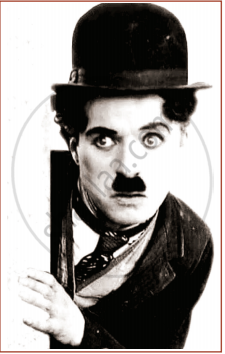
Charlie Chaplin came to the United States in 1910, at the age of 21. He was brought to New York, which was known to be a great place to start out for anyone trying to become a professional actor. Two years later, in 1913, Chaplin signed his very first contract at Keystone and it was no time before he headed to Hollywood. His first movie premiered in 1914, “Making a Living,” and went on to make over 35 movies total in that year alone. Charlie Chaplin grew to become one of the most popular and successful actors of all time. The moment that really kicked off his long career was in 1921 when he starred in, and produced, his first full-length film called “The Kid.” From then on, most people all over the world knew Charlie Chaplin and loved his movies. He had a great career and life, dying on December 25, 1977, in Vevey, Switzerland. He had apparently died of natural causes in his sleep from old age.
Read the following lines from the poem and answer the question given below.
There's a family nobody likes to meet;
They live, it is said, on Complaining Street
- Where does the family live?
- Why do you think the street is named as ‘Complaining Street’?
What commotion did the boomerang cause in the neighborhood?
Write the name of the toy against the picture.

Why did Granny scold Hamid?
Which mode of transport did Fogg choose?
It is a problem for sea turtles to come ashore because ______.
The eggs hatched and the babies flew away.
How do we work?
How can we make our nation proud?
How was he honoured by the Indian government?
Write the rhyming word.
Nature - ______.
Match the rhyming words.
| mars | crime |
| bed | cars |
| time | head |
What is the name of the girl?
Do you love to seek answers to the questions?
Which disaster had hit the village?
All the animals called the sparrow ______.
Which is as important as our health?
What do you save? Why it is needed?
Do you think it is right for the tanker to take water? Why?
What did Nasruddin boast about?
List three questions that the little boy asks.
- ______
- ______
- ______
According to Tagore, when will India get the opportunity to win the gift of freedom?
How does Tagore acknowledge Gandhi’s noble work?
Read the following sentence.
‘A very wise man once remarked that of the unspoken word, you are a master; of the spoken word, you are a slave.’
The sentence has two pairs of opposites - spoken and unspoken, and master and slave. The contrasting ideas make the sentence more effective. Putting together opposite or contrasting ideas in one sentence is a literary device. It is called antithesis.
Read the following examples of antithesis.
- Give every man thy ear, but few thy voice.
- Man proposes and God disposes.
- Speech is silver, but silence is gold.
- Patience is bitter, but it has a sweet fruit.
