Advertisements
Advertisements
Question
Write the name of the base present in DNA but not found in RNA.
Advertisements
Solution
Thymine
APPEARS IN
RELATED QUESTIONS
Give scientific reasons:
On complete hydrolysis DNA gives equimolar quantities of adenine and thymine.
The following statement applies to DNA only, some to RNA only, and some to both. Label them accordingly.
The polynucleotide contains uracil. (________)
The following statement applies to DNA only, some to RNA only, and some to both. Label them accordingly.
The polynucleotide contains guanine. (_______)
Given below is the diagrammatic representation of one of the categories of small molecular weight organic compounds in the living tissues. Identify the category shown & one blank component “ X” in it.
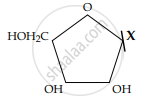
Write the characteristic feature of DNA.
Identify the INCORRECT match.
Which pair of bases is present both in DNA and RNA?
Identify the CORRECT statement.
Purine derivative among the following bases is ____________.
Which of the following is not present in DNA?
Nucleotides are linked together through ____________.
What is the number of \[\begin{array}{cc}\\\backslash\phantom{.......}\\\phantom{}\ce{C = O}\\/\phantom{........}\end{array}\] groups present in nitrogen bases of nucleic acids, thymine and uracil respectively?
The correct statement regarding RNA and DNA respectively is ____________.
What type of linkages holds together monomers of DNA?
Write a note on the formation of α-helix.
If Adenine makes 30% of the DNA molecule, what will be the percentage of Thymine, Guanine, and Cytosine in it?
Which of the following are substituted purines?
Draw a neat diagram for the following:
AMP
Watson and Crick (1953) proposed DNA double helix model and won the Nobel Prize; their model of DNA was based on:
- X-ray diffraction studies of DNA were done by Wilkins and Franklin.
- Chargaff’s base equivalence rule
- Griffith's transformation experiment
- Meselson and Stahl's experiment
Which of the following are correct combination of purine bases?
Which scientist discovered and isolated nucleic acids from pus cells in 1869?
What are the three distinct chemical components that make up a nucleotide?
Which pentose sugar is found specifically in DNA?
According to Chargaff's Rule, what is the relationship between purines and pyrimidines in DNA?
Which application of nucleic acid principles is used for personal identification and forensic investigation?
Which genetic disorders are mentioned as examples where nucleic acid principles are applied in medical diagnosis?
