Advertisements
Advertisements
Question
Write chemical reactions for the preparation of high-density polythene.
Advertisements
Solution
Chemical reaction for the preparation of high-density polythene (HDP) is as follows:

APPEARS IN
RELATED QUESTIONS
Based on molecular forces, what type of polymer is neoprene?
Write the formulae of the raw materials used for preparation of Dextran.
Draw the structures of veronal and thymine.
Write the monomers of the following polymer :
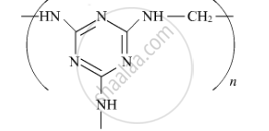
Answer the following in one sentence.
Identify 'A' in the following reaction:

Answer the following in one sentence.
Define the term: Vulcanization
Name and draw structure of the repeating unit in natural rubber.
Answer the following.
Write name and formula of raw material from which bakelite is made.
Identify condensation polymers and addition polymers from the following.

Attempt the following:
Write the chemical reactions involved in the manufacture of Nylon 6,6.
Attempt the following:
Explain the vulcanisation of rubber. Which vulcanizing agents are used for the following synthetic rubber?
a. Neoprene
b. Buna-N
Attempt the following:
What is meant by LDP and HDP? Mention the basic difference between the same with suitable examples.
Answer the following.
Is synthetic rubber better than natural rubber? If so, in what respect?
Monomer used for preparation of polyacrylonitrile is _____________
Monomer of natural rubber is __________
Write preparation of low density polythene.
Write chemical reaction for preparation of the following.
Buna-S
Write the name and formulae of the monomers used for the preparation of dacron.
Explain the reactions involved in the preparation of viscose rayon.
Which of the following polymer is used in paints?
Identify additional polymers from the following.
I. \[\begin{array}{cc}
\ce{-(CH2 - CH -)_{{n}}}\\
\phantom{....}|\\
\phantom{.......}\ce{C6H5}
\end{array}\]
II. \[\ce{-(CH2 - CH = CH - CH2 -)_{{n}}}\]
III. \[\ce{-(CO(CH2)4 - CONH(CH2)6NH -)_{{n}}}\]
IV.
Identify the INCORRECT match.
Identify the monomers used in the preparation of Novolac.
Which of the following polymers is prepared by using phenol?
Which of the following pair of compounds is used as monomers for bakelite?
Identify addition polymer from the following.
Which of the following polymers is used as insulation for cables?
The commercial name of polyacrylonitrile is ______.
Name the polymers used in laminated sheets and give the name of monomeric units involved in its formation.
Phenol and formaldehyde undergo condensation to give a polymar (A) which on heating with formaldehyde gives a thermosetting polymer (B). Name the polymers. Write the reactions involved in the formation of (A). What is the structural difference between two polymers?
Which of the following is not a copolymer?
Which of the following products is formed when benzaldehyde is treated with CH3MgBr and the addition product so obtained is subjected to acid hydrolysis?
F2C = CF2 is monomer of the polymer -
Trans - form of poly isoprene is:-
Nylon threads are made of ______.
The catalyst used for the polymerisation of olefins is ______.
Which among the following polymers has high tensile strength and is used to obtain tyre cords?
Which of the foolowing polymer is used in the manufacture of insulators.
The monomer of natural rubber is ______.
Name the compound which reacts with formaldehyde to produce ethyl alcohol.
Write the name of the monomer of natural rubber.
Another name of terylene is ______.
Name and draw structure of the repeating unit in natural rubber.
Match the following pairs:
| Polymer | Monomer | ||
| (i) | Teflon | (a) | CH2 = CH2 |
| (ii) | PVC | (b) | CF2 = CF2 |
| (iii) | Natural rubber | (c) | Isoprene |
| (iv) | Polythene | (d) | H2C=CHCl |
Write the structure and name of monomer of natural rubber.
Write the structure of isoprene and the polymer obtained from it.
Name and draw the structure of the repeating unit in natural rubber.
Name and draw structure of the repeating unit in natural rubber.
Name and draw structure of the repeating unit in natural rubber.
Write the structure of isoprene and the polymer obtained from it.
Write the structure of isoprene and the polymer obtained from it.
Write the structure of isoprene and the polymer obtained from it.
Identify polyamide polymer from following.
