Advertisements
Advertisements
Question
Monomer of natural rubber is __________
Advertisements
Solution
Monomer of natural rubber is isoprene
APPEARS IN
RELATED QUESTIONS
Explain the following term: Homopolymers
Draw the structures of veronal and thymine.
Write the monomers of the following polymer :
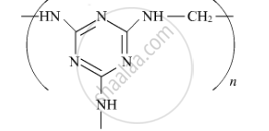
Answer the following in one sentence.
Identify 'A' in the following reaction:

Answer the following.
Write the reaction of the formation of Nylon 6.
Answer the following.
Write structure of natural rubber and neoprene rubber along with the name and structure of their monomers.
Draw the structures of polymers formed from the following monomers
\[\ce{n HOOC–R–COOH + n HO–R'–OH}\]
Answer the following.
Write name and formula of raw material from which bakelite is made.
Attempt the following:
Explain the vulcanisation of rubber. Which vulcanizing agents are used for the following synthetic rubber?
a. Neoprene
b. Buna-N
Attempt the following:
What is meant by LDP and HDP? Mention the basic difference between the same with suitable examples.
Write the structure of isoprene and the polymer obtained from it.
Write a chemical reaction for the preparation of the following polymer.
polyacrylonitrile
Mention two uses of LDP.
Write chemical reaction for preparation of the following.
Neoprene
Explain vulcanization of rubber.
Define rubber.
Which of the following is used as a substitute for wool?
Which among the following polymers is used for making handles of cooker?
Identify the CORRECT statement regarding the following polymer.
\[\begin{array}{cc}
\phantom{....}\ce{O}\phantom{............}\ce{O}\phantom{...................}\ce{H}\phantom{.....}\\
\phantom{....}||\phantom{.............}||\phantom{...................}|\phantom{......}\\
\ce{-[C - (CH2)4 - C - NH - (CH2)6 - N -]_{{n}}}
\end{array}\]
Which of the following is the monomer of neoprene?
Select the CORRECT match for both the polymers.
\[\ce{{n} CH2 = CH2 ->[333 K - 343 K][6 - 7 atm, catalyst] X}\]
Which of the following is CORRECT about polymer 'X'?
Which of the following polymers is obtained from chloroprene?
Identify the polymer obtained by polymerization of n moles of acrylonitrile.
Identify the monomers used in the preparation of Novolac.
Identify the catalyst used in the manufacture of high density polythene.
Which among the following polymers is an example of addition polymer?
Which of the following polymer is used to make blankets?
Which among the following polymers is used to manufacture chemical containers?
Which of the following polymers is used as insulation for cables?
Which of the following polymers, need atleast one diene monomer for their preparation?
(i) Dacron
(ii) Buna-S
(iii) Neoprene
(iv) Novolac
Match the polymers given in Column I with their repeating units given in Column II.
| Column I | Column II |
| (i) Acrilan |
(a) \[\begin{array}{cc} |
| (ii) Polystyrene | (b) \[\begin{array}{cc} \ce{Cl}\phantom{.......}\\ |\phantom{........}\\ \phantom{}\ce{-(CH2 - C = CH - CH2)\underset{n}{-}} \end{array}\] |
| (iii) Neoprene | (c) \[\begin{array}{cc} \phantom{................................}\ce{CN}\\ \phantom{..............................}|\\ \ce{-(CH2 - CH = CH - CH2 - CH2 - CH)\underset{n}{-}} \end{array}\] |
| (iv) Novolac | (d) \[\begin{array}{cc} \ce{-(CH2 - CH)\underset{n}{-}}\\ \phantom{.....}|\\ \phantom{.......}\ce{CN} \end{array}\] |
| (v) Buna—N | (e)  |
| (f) \[\begin{array}{cc} \ce{-(CH2 - CH)\underset{n}{-}}\\ \phantom{.....}|\\ \phantom{......}\ce{Cl} \end{array}\] |
The monomer of Teflon is ______.
Which of the following polymer has ester linkage?
Which one of the following polymers are prepared by addition polymerization?
Nylon threads are made of ______.
Identify the monomer used to prepare neoprene.
Answer the following.
Write the structure of isoprene and the polymer obtained from it.
Answer the following.
Name and draw structure of the repeating unit in natural rubber.
Answer the following.
Write the structure of isoprene and the polymer obtained from it.
Name and draw the structure of the repeating unit in natural rubber.
Write the structure of isoprene and the polymer obtained from it.
Name and draw structure of the repeating unit in natural rubber.
Match the following pairs:
| Polymer | Monomer | ||
| (i) | Teflon | (a) | CH2 = CH2 |
| (ii) | PVC | (b) | CF2 = CF2 |
| (iii) | Natural rubber | (c) | Isoprene |
| (iv) | Polythene | (d) | H2C=CHCl |
Write the structure and name of the monomer of Nylon-6.
Name and draw structure of the repeating unit in natural rubber.
Write the structure of isoprene and the polymer obtained from it.
Name and draw structure of the repeating unit in natural rubber.
Write the structure of isoprene and the polymer obtained from it.
Write the structure of isoprene and the polymer obtained from it.
Which from following statements is NOT true regarding neoprene?
Which among the following is a monomer of natural rubber?
