Advertisements
Advertisements
Question
Which do you think would be more fun — travelling by aeroplane or sailing on a ship? Write why you think so.
Advertisements
Solution
Do it yourself.
APPEARS IN
RELATED QUESTIONS
Photographs
Comment on the feminine elements in Naidu’s poetry.
Why does the bride have preference for yellow coloured bangles for her wedding morning?
Why has the red colour of bangles been compared to the flame of the bride’s marriage fire?
What is the theme of all summer in a day by Ray Bradbury?
The programme ran________six hours.
If Mary catches the first bus, she will be on time for school.
(Begin : Unless …………….)
List the pair of opposites found in the poem.
Discuss in groups of four.
The problems of over population that directly affect our everyday life.
Multiple Choice Question:
Why did the quarrel take a serious turn?
Write your views/opinions in brief on the following topic.
We must always cast our votes.
Imagine that Revathi’s father is abroad on business and she wishes to convey the news of her prize - winning plants. Draft an email for the above subject.
(Use an email format.)
Note that it is possible to feel both kinds of emotions at the same time. Have you experienced it? Try to describe the situation in short.
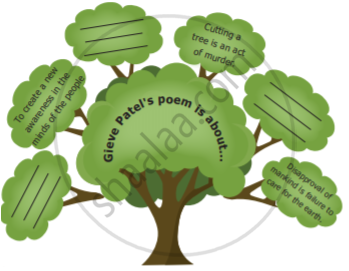
Based on the reading of the poem, complete the web chart given below.
Select three words that best describe Mr. Scotti.
clever / unlucky / stupid / successful / miserable / happy.
Fill in the value trees with the best qualities you like to follow in your life from the given list. Write a few lines about your favourite quality in the box.
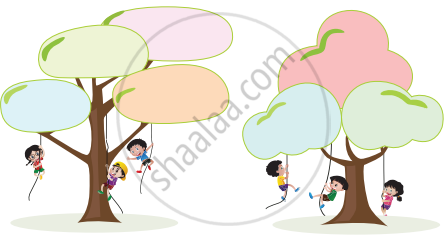
| Best qualities in life | ||||
| Affectionate | Cooperative | Gratitude | Loving | Responsible |
| Ambitious | Courageous | Happiness | Loyal | Self-confident |
| Brave | Dependability | Helpfulness | Good manners | Self-control |
| Calm | Diligence | Honest | Patriotic | Self-esteem |
| Caring | Enthusiastic | Humble | Peaceful | Sensitive |
| Cheerful | Fairness | Imaginative | Perseverance | Sincerity |
| Committed | Faithfulness | Intelligent | Polite | Successful |
| Compassionate | Flexible | Joyful | Positive | Tolerant |
| Concerned | Forgiveness | Kind | Rational | Truthful |
| Confident | Generosity | Leader | Resourceful | Versatile |
| Contented | Giving | Logical | Respect | Witty |
| My favourite quality is... __________________________________________________________________________________ __________________________________________________________________________________ |
||||
Imagine that you will go to the bookshop tomorrow. What will you do there? Write five sentences beginning with –
- I shall______
- I shall______
- I shall______
- I shall______
- I shall______
How was she felicitated on her return to India?
Study the pie-chart carefully and answer the questions that follow.
Percentage of people who speak each language as their first language.

- Which language is spoken by most people?
- What are the Indian languages that rank among the top five spoken languages?
- Which are the languages that are spoken by less than three percent of people?
- With the help of the questions and answers, draw your own conclusions from the pie chart. Then, write a paragraph on the popular spoken languages.
Write a composition (in approximately 400 – 450 words) on the following subject.
Life
