Advertisements
Advertisements
Question
What was the quarrel about between the brother and his sister? How did they become friends again?
Advertisements
Solution
It is common for brothers and sisters to quarrel. Many a time they don’t know the point of dispute. But their quarrel does not last long. One day, the narrator quarrelled with her brother for no valid reason. Both stuck firmly to their claim of being right. They began to hate each other. But that very afternoon the brother took the initiative and admitted his mistake. Thus they patched up and forgot their bitterness.
RELATED QUESTIONS
Wrestling mostly a male sport – Sakshi born in conservative surroundings – most unfavourable gender ratio for females – parental encouragement – one can't forget the look of determination on her face in the last three minutes of the bout.
Which figure of speech is used in the lines:
(Last week in someone’s place we saw
A dozen eyeballs on the floor.)
How does the poem make use of contrast? Consider the contrast between the poet and the daffodils, and between his feeling before, while and after seeing the daffodils.
Which poetic device is used in the line: ‘Making it rich, and like a lily in bloom,’
Describe the angel. How did he look at Abou?
Who was talking to the old man?
The chairman says that he will look________their complaints.
How are the earth's principal biological systems being depleted?
Explain the extended metaphor related to dentistry in the poem.
Write what you think about the following thoughts and actions of Mathilde :
Mathilde did not tell her friend about the loss and replacement.
Write about your own daydream in short.
Write an appreciation of the poem.
| Point: | |
| Title | |
| Poet | |
| Rhyme scheme | |
| Favorite line | |
| Theme/Central idea | |
| Figures of speech | |
| Special features - Type of the poem, language, style, tone, implied meanings, etc. | |
| Why I like/dislike the poem |
Your goal, this year, is to successfully pass out from secondary school. So let us be SMART and note down the following.
(a) Specific Area:
(Subjects) and number of units/lessons
- English 4 units
- ...........
- ...........
- ...........
- ...........
- ...........
(b) Measurable:
Comparison of scores in previous examinations and in recent one.
| Test I | Test II | Semester I | |
| 1. | Poor | Fair | Fair |
| 2. | |||
| 3. | |||
| 4. | |||
| 5. | |||
| 6. |
(c) Achievable goal:
(Target scores/performance in SSC Exams.)
- Good %
- ...........
- ...........
- ...........
- ...........
- ...........
(d) Realisitc approach:
Plan of action that matches with your expertise/resources.
For example:
- Make a study time table and follow it regularly.
- ...........
- ...........
- ...........
- ...........
(e) Time-bound Action:
Days required for revision
| Subject | Days for revision | |
| 1. | English | |
| 2. | ||
| 3. | ||
| 4. | ||
| 5. |
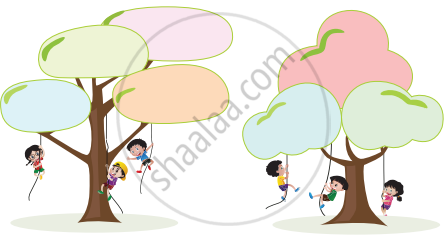
Fill in the value trees with the best qualities you like to follow in your life from the given list. Write a few lines about your favourite quality in the box.
| Best qualities in life | ||||
| Affectionate | Cooperative | Gratitude | Loving | Responsible |
| Ambitious | Courageous | Happiness | Loyal | Self-confident |
| Brave | Dependability | Helpfulness | Good manners | Self-control |
| Calm | Diligence | Honest | Patriotic | Self-esteem |
| Caring | Enthusiastic | Humble | Peaceful | Sensitive |
| Cheerful | Fairness | Imaginative | Perseverance | Sincerity |
| Committed | Faithfulness | Intelligent | Polite | Successful |
| Compassionate | Flexible | Joyful | Positive | Tolerant |
| Concerned | Forgiveness | Kind | Rational | Truthful |
| Confident | Generosity | Leader | Resourceful | Versatile |
| Contented | Giving | Logical | Respect | Witty |
| My favourite quality is... __________________________________________________________________________________ __________________________________________________________________________________ |
||||
What does each of the following mean in the story? Choose the right option.
arm in arm:
Why did they sympathize with the first patient?
How did the author react on seeing his photograph?
The photographer made the author wait for ______.
Write an essay of about 200 word
A memorable journey
"That which we obtain too easily, we esteem too lightly. It is dearness only which gives everything its value."- Thomas Paine
Do we value only what we struggle for? Plan your response, and then write an essay to explain your views on this issue. Be sure to support your position with specific points and examples. (You may use examples from your reading, observations, and inputs from subjects such as History, Science and literature)
