Advertisements
Advertisements
Question
What is interference?
Advertisements
Solution
Interference of light is defined as the modification in the intensity of light (larger at some places and smaller at some places) produced by the superposition of two or more light waves.
APPEARS IN
RELATED QUESTIONS
Four light waves are represented by
(i) \[y = a_1 \sin \omega t\]
(ii) \[y = a_2 \sin \left( \omega t + \epsilon \right)\]
(iii) \[y = a_1 \sin 2\omega t\]
(iv) \[y = a_2 \sin 2\left( \omega t + \epsilon \right).\]
Interference fringes may be observed due to superposition of
(a) (i) and (ii)
(b) (i) and (iii)
(c) (ii) and (iv)
(d) (iii) and (iv)
A long narrow horizontal slit is paced 1 mm above a horizontal plane mirror. The interference between the light coming directly from the slit and that after reflection is seen on a screen 1.0 m away from the slit. If the mirror reflects only 64% of the light energy falling on it, what will be the ratio of the maximum to the minimum intensity in the interference pattern observed on the screen?
The intensity at the central maximum (O) in a Young’s double slit experimental set-up shown in the figure is IO. If the distance OP equals one-third of the fringe width of the pattern, show that the intensity at point P, would equal `(I_0)/4`.
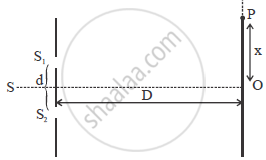
Describe Young's double-slit interference experiment and derive conditions for occurrence of dark and bright fringes on the screen. Define fringe width and derive a formula for it.
What are the conditions for obtaining a good interference pattern? Give reasons.
What are the two methods for obtaining coherent sources in the laboratory?
One of Young’s double slits is covered with a glass plate as shown in figure. The position of central maximum will,

What is interference of light?
Obtain the equation for bandwidth in Young’s double slit experiment.
A graph is plotted between the fringe-width Z and the distance D between the slit and eye-piece, keeping other adjustment same. The correct graph is
A.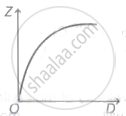 |
B.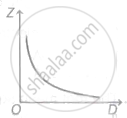 |
C.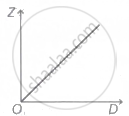 |
D.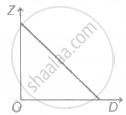 |
Two identical light waves having phase difference 'Φ' propagate in same direction. When they superpose, the intensity of the resultant wave is proportional to ______.
In Young's experiment for the interference of light, the separation between the silts is d and the distance of the screen from the slits is D. If D is increased by 0.6% and d is decreased by 0.2%, then for the light of a given wavelength, which one of the following is true?
"The fringe width ____________."
In Young's experiment, the distance between the slits is doubled and the distance between the slit and screen is reduced to half, then the fringe width ____________.
In Young's double slit experiment with a source of light of wavelength 5860 Å, the first maxima will occur when ____________.
In Young's double slit experiment fifth dark fringe is formed opposite to one of the slits. If D is the distance between the slits and the screen and d is the separation between the slits, then the wavelength of light used is ______.
In Young's double slit experiment the source is white light. One slit is covered with red filter and the other with blue filter. There shall be ____________.
If the two slits in Young's double slit experiment have width ratio 9 : 1, the ratio of maximum to minimum intensity in the interference pattern is ______.
In the Young's double slit experiment, if the phase difference between the two waves interfering at a point is `phi`, the intensity at that point is proportional to ____________.
`phi "and" phi_2 (phi_1 > phi_2)` are the work functions of metals A and B. When light of same wavelength is incident on A and B, the fastest emitted electrons from A are ____________ those emitted from B.
If two light waves reaching a point produce destructive interference, then the condition of phase difference is ______
Light waves from two coherent sources arrive at two points on a screen with a path difference of zero and λ/2. The ratio of the intensities at the points is ______
In Young's double-slit experiment, if the two sources of light are very wide, then ______.
In Young's double slit experiment, for wavelength λ1 the nth bright fringe is obtained at a point P on the screen. Keeping the same setting, source of light is replaced by wavelength λ2 and now (n + 1)th bright fringe is obtained at the same point P on the screen. The value of n is ______.
Two waves with same amplitude and frequency superpose at a point. The ratio of resultant intensities when they arrive in phase to that when they arrive 90° out of phase is ______.
`[cos pi/2=0]`
Interference fringes are produced on a screen by using two light sources of intensities I and 9I. The phase difference between the beams is `pi/2` at point P and π at point Q on the screen. The difference between the resultant intensities at point P and Q is ______.
The path difference between two interference light waves meeting at a point on the screen is `(87/2)lambda`. The band obtained at that point is ______.
In biprism experiment, the distance of 20th bright band from the central bright band is 1.2 cm. Without changing the experimental set-up, the distance of 30th bright band from the central bright band will be ______.
In a biprism experiment, fifth dark fringe is obtained at a point. A thin transparent film of refractive index ‘μ’ is placed in one of the interfering paths. Now 7th bright fringe is obtained at the same point. If ‘A’ is the wavelength of light used, the thickness of film is equal to ______.
