Advertisements
Advertisements
Question
What is the action of p-toluenesulphonychloride on ethylamine and diethylamine?
Advertisements
Solution

It help to distinguish between primary and secondary amines
APPEARS IN
RELATED QUESTIONS
Which among the following molecular formulae represents urotropine?
(a) C6H12N4
(b) C6H24H4
(c) C6H12N4O2
(d) C6H24N4O2
Write the IUPAC name of the following compound and classify it as primary, secondary and tertiary amine.
C6H5NHCH3
Write the IUPAC name of the following compound and classify it as primary, secondary and tertiary amine.
m−BrC6H4NH2
Give one chemical test to distinguish between the following pair of compounds.
Ethylamine and aniline
Give one chemical test to distinguish between the following pair of compounds.
Aniline and N-methylaniline
Account for the following:
Ethylamine is soluble in water, whereas aniline is not.
How will you convert ethanoic acid into methanamine?
How will you convert hexanenitrile into 1-aminopentane?
How will you convert methanol to ethanoic acid?
How will you convert ethanamine into methanamine?
How will you convert ethanoic acid into propanoic acid?
How will you convert methanamine into ethanamine?
How will you convert propanoic acid into ethanoic acid?
Accomplish the following conversion:
Benzoic acid to aniline
Accomplish the following conversion:
Chlorobenzene to p-chloroaniline
Accomplish the following conversion:
Aniline to benzyl alcohol
An aromatic compound ‘A’ on treatment with aqueous ammonia and heating forms compound ‘B’ which on heating with Br2 and KOH forms a compound ‘C’ of molecular formula C6H7N. Write the structures and IUPAC names of compounds A, B and C.
Complete the following reaction:
\[\ce{C6H5NH2 + Br2 (aq) ->}\]
Complete the following reaction:
\[\ce{C6H5NH2 + (CH3CO)2O ->}\]
Complete the following reaction:
\[\ce{C6H5N2Cl ->[(i) HBF4][(ii) NaNO2/Cu, \Delta]}\]
Do the following conversions in not more than two steps :
Propanone to Propene
Write the IUPAC name of the given compound :
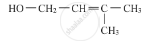
Give simple chemical tests to distinguish between the following pair of compounds:
Benzaldehyde and Benzoic acid
Using IUPAC norms, write the formula of Hexaamminecobalt(III) sulphate.
The following amine is called as:

Do the following conversions in not more than two steps:

