Advertisements
Advertisements
Question
State the steps involved in the process of gene therapy for the treatment of ADA-deficiency.
Advertisements
Solution
- Stem cells from the bone marrow, responsible for producing lymphocytes in ADA-deficient patients, are extracted. These cells harbor the faulty ADA gene.
- A retrovirus, a specialized RNA virus, serves as a vector in this process.
- The normal ADA gene is replicated through recombinant DNA technology and incorporated into the nucleic acid of a retrovirus, engineered to be non-pathogenic.
- The bone marrow stem cells from ADA-deficient individuals undergo infection with the retrovirus.
- The virus introduces its nucleic acid (rDNA), which includes the functional ADA gene, into the chromosome of the stem cell.
- This provides these bone marrow stem cells with a functional copy of the gene alongside the pre-existing defective gene.
- The treated stem cells continue to replicate over the patient's lifetime. Possessing a fully functional ADA gene, they produce the ADA enzyme. These modified cells supply the lacking enzyme, leading to the cure of the ADA-deficient patient.
RELATED QUESTIONS
One of the major contributions of biotechnology is to develop pest-resistant varieties of cotton plants. Explain how it has been made possible.
From the following identify the methods of electrophoresis.
The main reason for the presence of both a leading and a lagging strand during DNA replication is, ______
DNA fingerprinting refers to ______.
Name a recombinant vaccine that is currently being used in vaccination programme.
What is meant by gene cloning?
| Oil spill is a major environmental issue. It has been found that different strains of Pseudomonas bacteria have genes to break down the four major groups of hydrocarbons in oil. Trials are underway to use different biotechnological tools to incorporate these genes and create a genetically engineered strain of Pseudomonas - a ‘super-bug’, to break down the four major groups of hydrocarbons in oil. Such bacteria might be sprayed onto surfaces polluted with oil to clean thin films of oil. |
(a) List two advantages of using bacteria for such biotechnological studies?
(b) For amplification of the gene of interest PCR was carried out. The PCR was run with the help of polymerase which was functional only at a very low temperature. How will this impact the efficiency of the PCR? Justify.
(c) If such bacteria are sprayed on water bodies with oil spills, how will this have a positive or negative effect on the environment? Discuss.
What is polymerase chain reaction (PCR)?
In vitro amplification of DNA segments is called______.
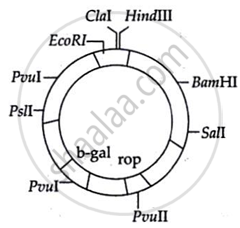
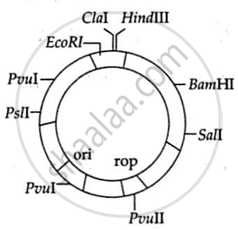
Suneeta is planning an experiment to clone a gene in a vector. So, she has to choose a good cloning vector.
Which one of the vectors shown below should she choose? Justify your answer by giving two reasons.
 |
 |
 |
| Vector A | Vector B | Vector C |
