Advertisements
Advertisements
Question
State Darwin’s theory of evolution.
Advertisements
Solution
- Darwin’s theory of evolution is better known as theory of natural selection.
- Darwin opined that only the fittest can survive. Those plant and animals which are not fit for survival,die.
- The fitter species reproduce in greater numbers and pass on their genes to the next generations. This process of selection of characteristics which contribute to the fitness for survival was termed as natural selection.
- Darwin’s theory of naturals selection emphasises on the fact that there is always overproduction of individuals in nature. This causes a struggle for existence. Only those organisms that have characters useful for survival are selected and hence they survive. While some organisms that do not have favourable characters, perish. This process takes place for many generations.
- As a result the species which are better adapted for survive are selected. The individuals belonging to this species may be different from the originals ones. But if this changed species shows successful adaption and growth in the given environment then it gets evolved.
- The process of natural selection is not deliberate but is gradual and natural. This process further leads to the development of species.
- Darwin’s theory is widely accepted but it has one drawback. It did not explain how the favourable characters were developed in the fit individuals.
- Darwin’s theory is now universally accepted.
APPEARS IN
RELATED QUESTIONS
Explain Darwinian theory of evolution with the help of one suitable example.
Explain the interpretation of Charles Darwin when he observed a variety of smallblack birds on Galapagos Islands.
Objection to Darwin's theory of natural selection.
Given below are two figures (A and B) showing a phenomenon that was first observed in Manchester before and after the year 1850.
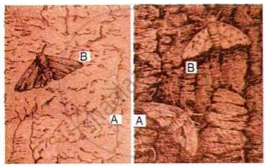
Answer the following:
- What name has been given to this phenomenon?
- Give the common name and the scientific name of the insect involved in this phenomenon.
- Briefly mention why the changes shown in the two figures appeared.
- The following phenomenon provides a classical explanation of a scientific theory given by a certain scientist.
- Name and explain the said theory.
- Give the name of the scientist who gave this theory.
List any three drawbacks of Darwinism.
Answer the following question.
Explain ‘fitness of a species’’ as mentioned by Darwin.
In which book Darwin had published his theory of Natural selection?
The more characteristics two species have in common ______
Natural selection is called ‘survival of the fittest. Which of the following statements best describes an organism?
Wild cabbage has evolved into new varieties like cabbage, broccoli, and cauliflower by ______
If the fossil of an organism is found in the deeper layers of earth, then we can predict that
Which one of the following was not explained by Darwinism?
The scientist who is regarded as the “Father of Evolution” is ______.
The famous book "The Origin of Species" was written by ______.
Mention four main postulates of Darwin's theory.
Differentiate between Lamarck's Theory and Darwin's Theory.
Which of the following correctly lists the three chief factors of evolution identified by Darwin?
Alfred Russel Wallace independently arrived at the same conclusions as Darwin while studying the fauna of which region?
