Advertisements
Advertisements
Question
Prepare a Fact file of any of the following plants/trees, using the points given.
[coconut/neem/basil/cactus/apple]
- Name of Plant/Tree .................
- Scientific name .................
- Region and climate .................
- Features .................
- Growth .................
- Size, shape and colour .................
- Uses .................
- Any special feature .................
Advertisements
Solution
- Name of Plant/Tree: Neem
- Scientific name: Azadirachta Indica
- Region and climate: Native to India, but also grown in Nepal, Pakistan, Sri Lanka, and Bangladesh. It grows in tropical and semitropical regions and requires a sub-arid and sub-humid climate. It can tolerate temperatures of up to 50 degrees Celsius.
- Features: It is a tall evergreen tree that bears flowers and fruit. Neem tree has a similar appearance to the Chinaberry tree.
- Growth: It is a fast-growing tree and requires plenty of sunlight to grow healthily.
- Size, shape and colour: The tree can reach a height of about 16-21 metres. It has wide branches and a dense, roundish crown. The leaves are pinnate and alternating. They can be about 20-40 cm long. The tree has green to dark green leaves and white flowers. It has a straight trunk and rough, scaly bark. It grows a fruit that is oval or round in shape and has a thin skin.
- Uses: Various parts of the neem tree are used for the following purposes:
- The neem leaves are used to treat skin ailments, and the powder is taken as a herbal supplement to moisturise the skin.
- Neem oil, obtained from its seeds, is used in skin care products, pesticides and in organic gardening.
- The bark of the tree is used in dental care for its antiseptic and anti-inflammatory properties.
- The twigs of the tree are used as a natural toothbrush in Indian villages, as they prevent cavities and gum diseases.
- Any special feature: It is one of the very few shade-giving trees in the dry, drought-prone regions of India.
APPEARS IN
RELATED QUESTIONS
What things in nature teach us the following:
Problems are not permanent.
What things in nature teach us the following:
Make the best use of time and opportunity.
What things in nature teach us the following:
Be persistent
Read the question from the lesson. What do they imply?
Are you listening?
Read the question from the lesson. What do they imply?
What if we too are consistent, organised, focused...?
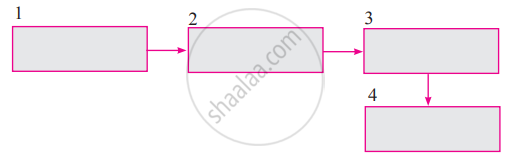
Go through the lesson again and complete the flow-chart that highlights the life of a ‘hibiscus’ flower.
The writer has very positively described the different things in nature. Discuss with your partner the special features of each one of them. Add on the list.
| Part of Nature | Special feature | Value learnt |
| 1. Rainbow | ||
| 2. Caterpillar | ||
| 3. | ||
| 4. | ||
| 5. | ||
| 6. | ||
| 7. |
The writer explains the contrasting features of ‘water’ and ‘rock’ in the text. Write all the features of both water and rock in the given table.
| Water | Rock |
| 1. | 1. |
| 2. | 2. |
| 3. | 3. |
| 4. | 4. |
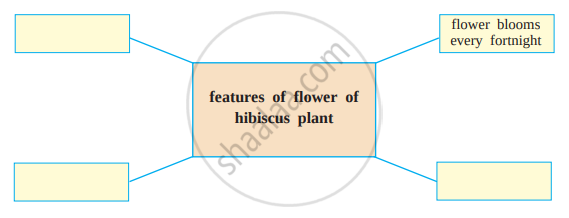
Go through the text again and complete the web that highlights the various features of flower of the ‘hibiscus’ plant. One is done for you.
Discuss in pairs, the role played by nature and complete the web diagram.


